















This New Novel Explores Being In Middle School During the Pandemic
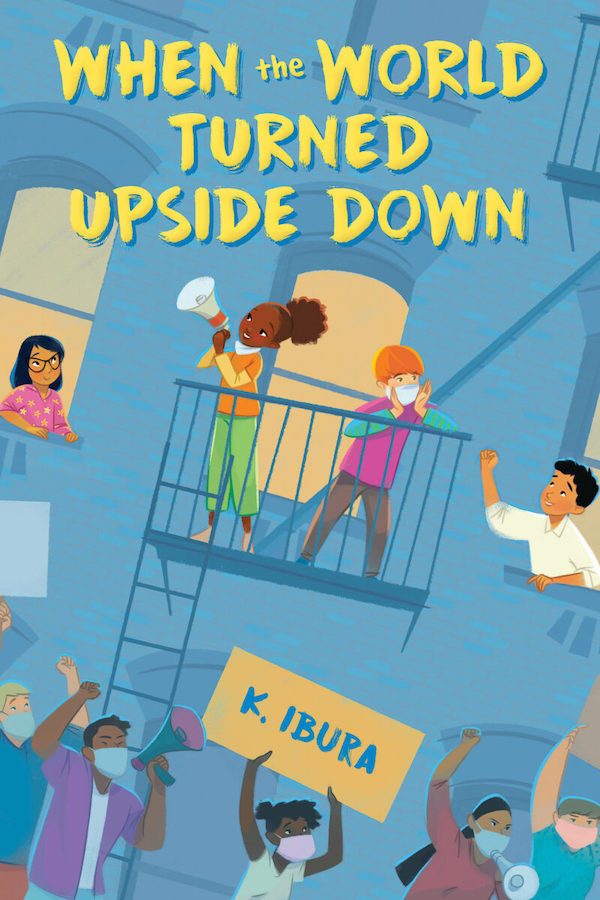
Navigating middle school can be tough in the best of times. But for a generation of young people whose middle school years will be defined by the COVID-19 pandemic, the confusion and abruptness of school closures and the fear that followed made the experience uniquely challenging. It’s for those students that author K. Ibura wrote her new novel, When the World Turned Upside Down, which is being released on February 1 by Scholastic.
The book follows four lifelong friends who live in the same apartment building in Brooklyn. When they get the abrupt announcement that their school will be going remote because of the virus, they are confused and wonder what it will all mean for themselves and their neighbors. We had the chance to chat with Ibura over email about writing a very contemporary novel and her message for her middle school readers.
This book is one of the first books for younger readers set during the pandemic. What was it like writing a story set in mid-2020 that incorporated not only the COVID-19 pandemic but also the racial uprising after the death of George Floyd, two events that are very fresh in the minds of readers?
Writing this book was an interesting journey. When I started to write it, it was going to be solely focused on the pandemic. I had been reflecting on how everything adults went through during that first year of the pandemic, kids were going through it too. We weren’t able to shelter children from the scope and magnitude of the crisis, and they saw so many impacts in their homes. I had already written the pitch, the outline, and the sample pages when George Floyd was murdered. After crying and thinking and processing his death, I realized I would not be able to write this book without addressing social justice. It was almost like life events shaped the book and determined what it was going to be about, and I, as the writer, followed the shifts in our day-to-day lives. After I wrote the book, the magnitude of what I had done dawned on me. ‘Who writes about a current event while we’re in the middle of the event?’ I wondered. Writing a book that is so ‘of the moment’ was an exercise in surrender and responsiveness. I am extremely grateful to have had the opportunity to write a contemporary history and grapple with some of the book’s questions.
One of the most interesting aspects of this book is its exploration of anxiety and the impact of the pandemic on mental health. Your character Liam thinks to himself in the book that "it's one thing to talk himself out of a panic attack when there was no real danger around him, but now that a virus . . . was harming so many people, everyone had reason to panic." Ai and Shayla are incredibly attuned to Liam’s anxiety and know how to support him through the roughest moments. How can readers who see friends struggling in similar ways do the same?
One thing that came to light during the pandemic is the range of mental health needs that all human beings have. Liam is dealing with a chronic mental health issue, and his relationship with his friends is part of his coping strategies. For so many people, their daily routines formed an important part of their coping strategies. From running into people during the commute, from lunchtime at school to chatting with coworkers, there are so many ways that our everyday lives form part of our coping strategies. While I’m not a mental health professional, I recognize how mental health issues are on a spectrum. We all have to work to maintain optimum mental health. So, first, I think it’s important for people to recognize their own mental health needs and be aware of their own coping strategies. This can help create empathy with others who may be dealing with more chronic mental health issues.
If readers have friends struggling in similar ways, I would recommend having a conversation with them, saying that you know that certain times of the day or certain experiences are challenging for them. Share your own challenges and ask them what helps them during those times. If they are reluctant to discuss it, respect their choice. Sometimes just knowing that someone cares is enough. But if a person is open to sharing, you can follow their suggestions and become part of their support team in helping them navigate challenging mental health moments.
We also see how much children pick up on the stresses of the adults around them. Your main character Shayla’s father is a tailor, and his business plummets when customers cancel because prom was canceled, for example. Shayla is then terrified about what that means for the family financially. How can families use this book and your characters’ experiences to talk about these topics?
I hope that families use all the situations in the book as a jumping-off point to ask questions about their own lived experiences. Using the events of the book, families can discuss mental health, money, anger, isolation, conflict, social justice, and many more topics. Parents may assume they know what their kids went through. It can be instructive to look back and ask if your kids can relate to any of the experiences. Ask them what they have done or would do in those situations. It’s a way to learn about what your child went through and what coping skills they have been drawing on to survive. Additionally, if they didn’t have those experiences, it’s an opportunity to talk about challenges and resilience — and to encourage children in sharing their perspectives and reflecting on life experiences.
Even though the pandemic has changed their lives in a major way, your characters are also dealing with the ups and downs of middle school, especially when navigating changing friend groups and social situations. Did you channel any of your own experiences growing up when it came to the friendship between Shayla and her neighbor (and lifelong friend) Ai?
The characters in the book came to me fully formed. As soon as I wrote their names down in the pitch, their personalities and struggles were already set in my mind. Since they came with such strong identities, I did not consciously shape them in the way I might consciously shape other characters. Because I wrote them, I’m sure there are ways in which they reflect me; however, I did not consciously embed them with my own experiences. Their conflicts, challenges, and successes are their own!
In the book’s trailer, you say that you wrote this book to honor all of the experiences children have had to survive since the pandemic began. What is your message for young readers who will soon pick up this book?
First, I wanted to acknowledge children’s grit. They have survived and are surviving incredibly challenging circumstances during a time in their development where peers and other adults are so important to their growth and identity. Ultimately, I want young readers to feel validated in who they are. I want them to know that it is OK to be themselves — and that they can contribute to the world exactly the way they are. Whether they are shy or outgoing, friendly or withdrawn, whether they like math or games or art, whether they love school or not, none of those things determine your value as a human being. You are most valuable when you are being yourself and contributing to the world around you in whatever way is most natural to you.
More articles by Category: Arts and culture
More articles by Tag: Books, COVID-19


