















This Author Wrote a Book About an “Indigenous Nancy Drew”
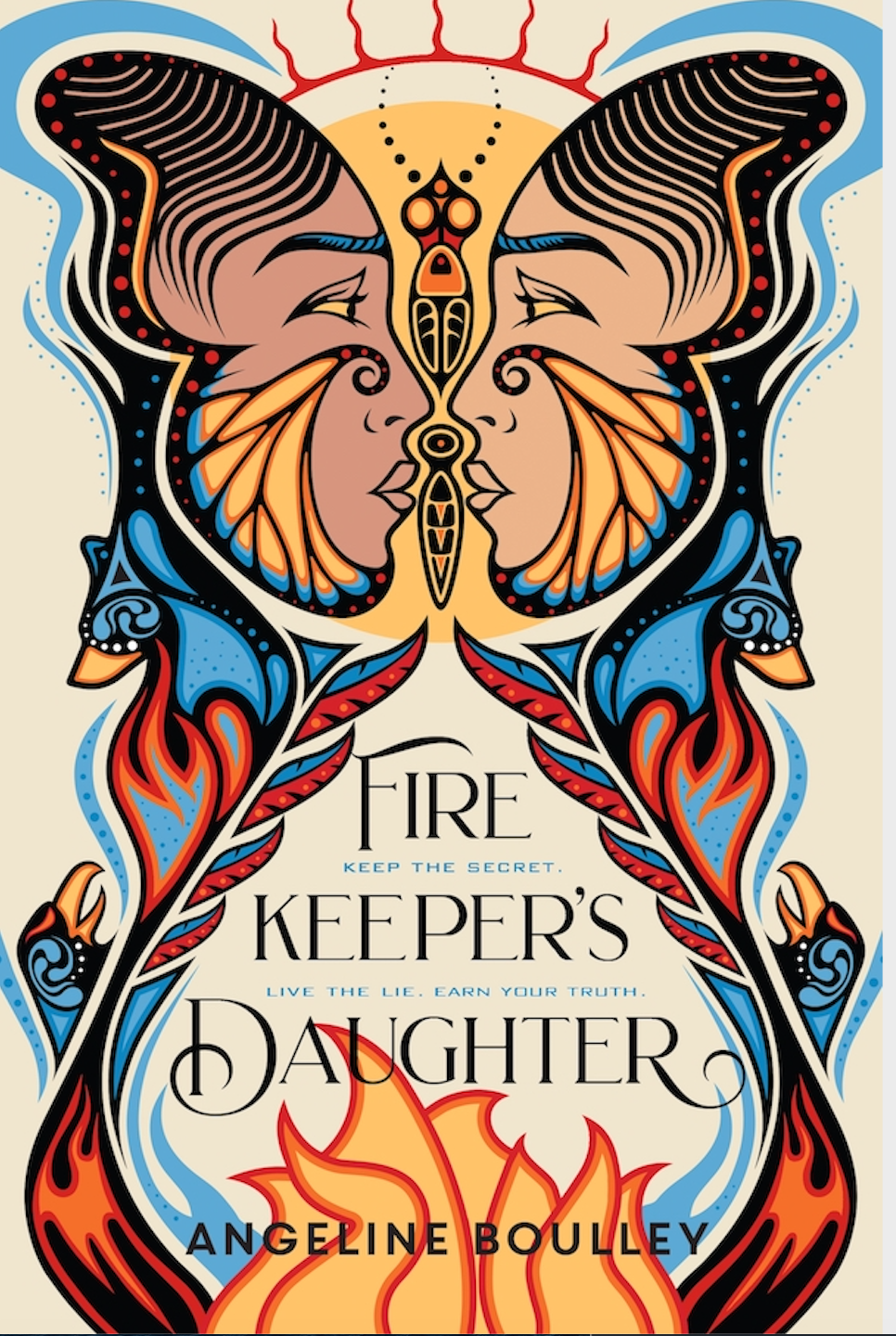
Author Angeline Boulley has been drawn to stories involving mystery and intrigue since she was a little kid.
“I started out with the Nancy Drew and the Hardy Boys books. Then in high school I really liked Shirley Jackson and Lois Duncan, who was one of my favorites,” Boulley told the FBomb. “I loved those dark thrillers that would take a turn.”
But Boulley couldn’t help but notice that none of the books she loved ever featured Native American characters. “Or when I did read Native characters the books — like most in the American curriculum — were all by non-Native people interpreting Native culture,” she recalled.
That’s why when she began writing her own novel, Boulley, an enrolled member of the Sault Ste. Marie tribe of Chippewa Indians, knew that she wanted to feature a teen girl who could be what she calls an “Indigenous Nancy Drew.” Boulley’s debut novel, Firekeeper’s Daughter, tells the story of Daunis Fontaine, a Native teen living in a small town in Michigan’s Upper Peninsula. Daunis often feels split between her life with her mother and the world her cousins, grandparents, and other extended family members inhabit on the nearby Ojibwe reservation. When family responsibilities lead Daunis to postpone leaving town for college, she also finds herself embroiled within an in-depth FBI investigation after witnessing a murder.
Firekeeper’s Daughter is out on shelves on March 16. The FBomb had the chance to talk to Boulley about the importance of Native stories, what it is like to reclaim an ancestral language, and why her main priority is to center Native teens in her writing.
What was it like creating a character who slowly figures out her relationship to her Native identity?
I think that part of her character was very autobiographical — my dad is Native, but my mom is not. So I grew up in Michigan, always going back home to Sault Ste. Marie during summers to see our grandparents and visit with friends, grandparents, and aunties and cousins. I always felt very much that this was my community, but I was also aware, even though I couldn't really put a voice to it, of being an outsider at the same time.
I was struck by the use of language by both Daunis and her Native cousins throughout the book. They seamlessly use bits of Ojibwe, French, and English throughout their conversations. Did you also grow up using a mix of languages while talking with your relatives?
No, I didn’t. But for my dad, Ojibwe was his first language. His mom was really young when she had him, so my dad was raised by his great-grandmother, who only spoke Ojibwe. But he made a conscious decision not to teach us the language.
I know that he later regretted it, but I do understand that it was a loving decision he made because he thought it would protect us. Growing up Ojibwe and speaking your language in the 1940s and ’50s in Sault Ste. Marie was really rough. So I found my way back to the language as an adult. But I really felt like Daunis would be more immersed in the language.
The language is also another thing that ties Daunis to Sault Ste. Marie and the Ojibwe population there. There is also the influence of the French, who were traders and missionaries generations ago. I felt like I wanted Daunis to become the personification of all of these cultures that have shaped Sault Ste. Marie, and language was one way to show that.
As a reader who was unfamiliar with Sault Ste. Marie and its culture, it was just so fascinating to see those influences on Daunis’ life.
I wanted the story to be kind of immersive for the reader. We made a conscious effort not to have the translations at the bottom of the page or even have a glossary because I feel like when you add a glossary, you've automatically centered the white gaze. I wanted the reader to be able to figure out within that context what those words meant.
What has it been like for you personally to learn Ojibwe as an adult?
I am part of the generation that our parents knew the language but only used it in certain circumstances, like when they didn't want the kids to hear what was going on. But with my kids, when they were growing up, we lived in one tribal community that had a Montessori preschool and where language was a big part of the curriculum. And so my kids were getting the language from an early age. I remember when years ago, one of my sons made a joke in the language to the language teacher, and she was just so impressed that this little person could make a joke and understand the language. I told my dad, and he said, ‘Oh you better make sure those kids stay, stay with the language.’
So it is something that the next generation is picking up, but I do feel like I’m starting at a deficit. It feels like maybe my generation had to pay the price for that loss of language. Intellectually, I understand our parents made decisions not to teach us the language. But when we see our parents, who are now grandparents, be so proud of the grandchildren for speaking Ojibwe, it makes me proud for them, but there's something that's sad for me.
Daunis’ in-depth knowledge of the Native traditions and traditional medicine of Sault Ste. Marie was crucial to her solving the mystery at the center of Firekeeper’s Daughter. How did you weave those aspects into your novel?
Daunis has a very analytical mind that is very different than mine, so I was thinking through how she would approach a problem rather than how I would approach a problem. The fact that she also had access to Indigenous knowledge and Indigenous problem solving made me start thinking about how I could incorporate those aspects into the story.
She comes to the realization that what she always thought were obstacles or weaknesses, which are the things that she struggled with in terms of her identity, are actually the source of her power. Her superpower is her ability to be part of these different groups, even if it's on the periphery. It turns out that’s what makes her the ideal person to protect her community and to figure out what's going on.
This interview has been lightly edited for length and clarity.
More articles by Category: Arts and culture
More articles by Tag: Native American, Books


