















This Author Explores the Harms of Purity Culture in Her Latest Novel
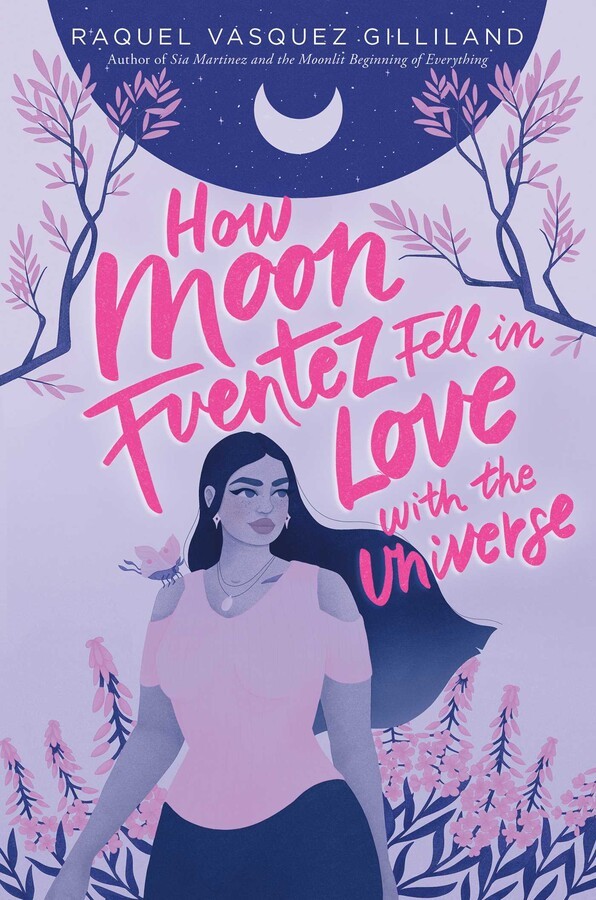
Author Raquel Vasquez Gilliland has always been drawn to stories about coming of age, rebellion, and belonging. Her latest novel, How Moon Fuentez Fell in Love With the Universe, was released in August by Simon and Schuster, and it explores all three of those themes. Titular character Moon Fuentez is a creative and funny recent high school graduate. She is also as different as can be from her fraternal twin sister, Star, a beautiful social media influencer who is rapidly becoming a celebrity in the purity movement.
When Star signs on to do a charity tour for the summer, Moon's mother convinces Moon to accompany her (and to work the merchandise table in the process). Over the course of the tour, Moon comes into her own — while also pushing back against the dangerous messaging she’s been surrounded by her whole life. The FBomb recently had the chance to chat with Vasquez Gilliland over email about how her new novel came to be and her message for teen readers.
How did you first get the idea for How Moon Fuentez Fell in Love With the Universe, particularly when it came to creating a story about the fraternal twin of a social media influencer?
How Moon Fuentez Fell in Love With the Universe, at first draft, was about a cyborg traveling circus set in Mexico. Moon was there, and Santiago, too. When I finished the novel, I immediately realized that it wasn't working. I took a walk, feeling really gloomy about it, and saw two young women taking photos of each other in front of a red brick wall. They reminded me of my sister and me when we were teenagers, and I asked myself, What would it have been like coming of age with social media? I wrote a new outline for the book as soon as I got home, and all of a sudden, Moon had Star.
Moon's sister Star isn't just any influencer; she is an internet celebrity in the purity movement. Throughout the story, we see how purity culture and a focus on virginity harm both girls. Why did you want to explore that in this book?
I wanted to challenge purity culture in Moon Fuentez because I’d grown up deeply entrenched in it. It wasn’t unusual for my siblings and me to hear our elders slut-shaming young women, whether they were relatives or acquaintances or even strangers. I’ve studied the origins of purity culture for a long time now — starting in undergrad. There are theories that once European cultures figured out how men contributed to conception, men decided to control women’s sexual experiences to ensure the children they birthed were their husbands’ and no one else’s. Western religions have latched on since Western religions seem to love controlling women. There’s definitely an inherent fear of women’s sexuality in Western society, and it truly harms everyone.
As an antidote to the purity culture she is surrounded by, Moon finds herself drawn to mysticism and tarot. What was it like researching and writing those parts of this story?
I was raised with folk magic, and I was taught to read tarot by a third-generation reader when I was 18. So I didn’t do much research at all — the mysticism and magic Moon experiences are definitely drawn from my own life! Though, sadly, thousands of butterflies don’t flutter around me randomly from time to time.
Reading how Moon's mother treats her (especially when it comes to her body type and darker skin tone) and sister (when she learns that Moon has been sexually active) is very difficult at times. Was writing those scenes difficult?
These scenes were based on how differently people treated my sister and me from our white-passing cousins. I called my sister to help me remember all we’d gone through, and it really angered me. I’d forgotten a lot, and especially about how adults acted like my cousins were better because their complexion was lighter [and] their hair was blond. We totally internalized and believed it. Some of those scenes were hard because they were sourced from a painful place, but other times, I was able to distance myself while writing, and it was easier.
What is your advice for readers who might be getting similar messaging Moon and Star are when it comes to purity and dating? How can reading Moon’s story help them?
My main message is: Purity culture was made up by men who were scared of women being sexually free. Its source has nothing to do with religion, with God — because seriously, if it did, boys and men would be just as restricted, blamed, and punished. But they aren’t. It's not fair, and it’s not fair because it was purposely designed that way. Reading Moon’s story can help people move past these ideas because the truth of the matter is (and this is what Moon learns): Your value and worth and power have nothing to do with arbitrary labels, and everything to do with who you are, how you treat people, and how you create art.
More articles by Category: Arts and culture
More articles by Tag: Books


