















This Afghan-Born Karate Champion Keeps Hope Alive in her Indonesian Refugee Community
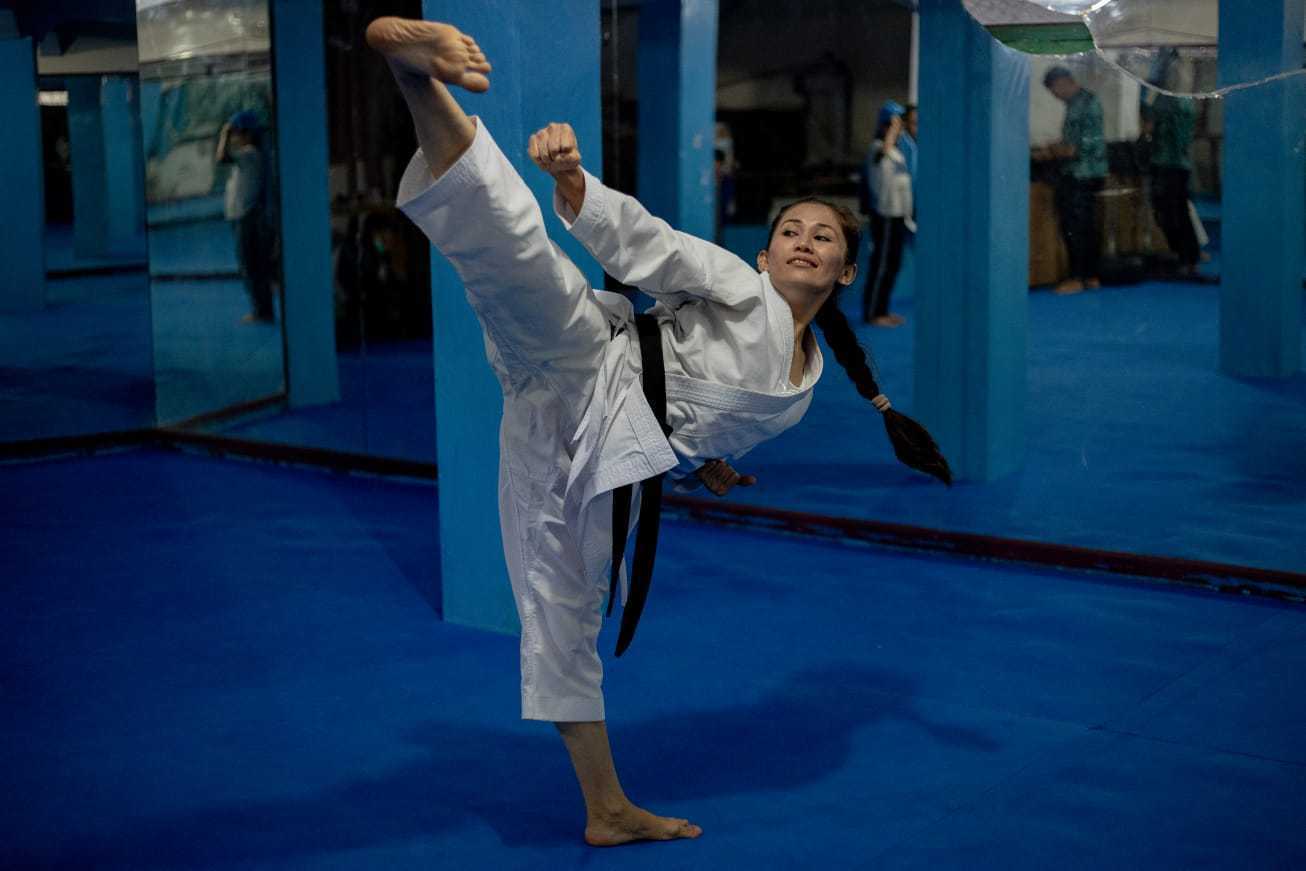
Afghan-born Meena Asadi has had to upend her life several times to survive. Three years after the U.S.-led invasion in 2001, which happened when Asadi was 8, living in Afghanistan proved increasingly dangerous. She was surrounded by bombings, airstrikes, and gunfire every day. In 2004, Asadi’s family fled the violence to Pakistan.
In a club near the Pakistani refugee camp her family lived in, Asadi first learned karate. In 2007, about two years after she started, she got her black belt. The Pakistan Karate Federation noticed Asadi’s talent, and, after training with the group, she competed for Pakistan at the 2010 South Asian Games in Bangladesh. The Federation arranged a special passport for Asadi, and she won three silver medals at the Games.
“Karate is my passion; I love to teach it to others,” Asadi told the FBomb. “Karate has taught me respect, love, discipline, and strength. That’s why this sport is very important for me.”
In 2011, Asadi moved back to Afghanistan, where she quickly set up her own dojo in Kabul. She allowed boys and girls to learn together and faced threats and intimidation for doing so in the conservative Muslim country. Asadi soon became a target for the Taliban — they bombed a nearby sports club in 2015 — and Asadi felt forced to flee with her family. They went to Indonesia in late 2015 to, as Asadi put it, “save my life. I left my country because of violence and war.”
Upon arriving in Indonesia, Asadi realized that refugees there faced a lot of adversity. With no right to work and little access to education, thousands of refugees in Indonesia have been stuck in limbo. The Southeast Asian country is not a signatory to the 1951 U.N. Refugee Convention and mainly serves as a transit country, but many have languished for years, awaiting resettlement in a third country.
According to Asadi, at least 15 refugees across the country have committed suicide, and she has seen stress increase within the community amid deep uncertainties over their futures. In 2016, therefore, Asadi established the Cisarua Refugee Shotokan Karate Club in a town in West Java because, as she put it, “the situation of refugees in Indonesia is so harmful, and I want to help them to reduce their anxiety and become hopeful by learning karate.”
She now teaches karate to about 40 students, who are as young as 7 years old and as old as 50, and more than half of whom are girls. In her classes, the 29-year-old teaches her students how to defend themselves while providing an alternative activity because “they should not waste their time.”
Her efforts for fellow refugees in Indonesia are a testament to her perseverance and strength, but Asadi also knows resettlement is the ultimate answer.
“We want resettlement and a place where we can call it home,” Asadi said. “My wish is for all refugees to get out of this difficult situation.”
More articles by Category: Sports
More articles by Tag: Refugees, Afghanistan


