















The Struggle to Make Misogyny a Hate Crime in the UK
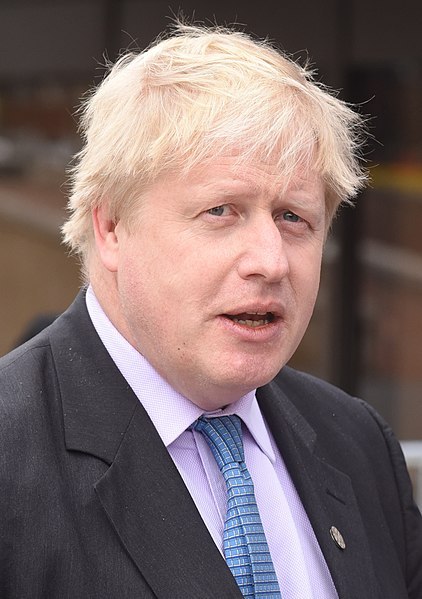
After the recent high-profile murders of Sarah Everard and Sabina Nessa, there is a growing push in the U.K. to make misogyny a hate crime. Prime Minister Boris Johnson, however, came out against the idea. BBC reported that Johnson defended his stance by citing “abundant” existing legislation that tackles violence against women and claiming that widening the scope of the police’s job would only increase the problem.
Johnson’s response was met with criticism from gender equality activists who argue expanding the definition of a hate crime to include misogyny would allow perpetrators to receive harsher sentences and make it clear to law enforcement how serious the issue is. Existing data backs up this claim. Eleven out of 43 local police departments already consider misogyny as a hate crime. Nottinghamshire Police pioneered this practice in 2016 and have since seen “shifting attitudes” toward misogyny. The Law Commission, described by the BBC as an independent body that advises the government, is looking into the issue and has not released its final recommendations. However, one of its preliminary conclusions supports expanding the definition of hate crime to protect sex and gender.
Statistics also show that, despite existing legislation, violence against women remains a major problem in the U.K. The New York Times reported that in Britain one in four women have been sexually assaulted, almost a third face domestic abuse, and one woman is murdered by a man every three days.
Johnson has backed an “experimental” policy requiring British police to start collecting data on crimes motivated by gender. However, some advocates believe it’s equally important for law enforcement to look inward to root out a culture of abuse in its own ranks. Wayne Couzens, a former Metropolitan police officer, raped and murdered Sarah Everard by using his authority to stage a fake arrest. The U.K’s Home Secretary Priti Patel said the public "have a right to know" how Couzens remained on the force given his prior troublesome behavior, including flashing women.
Activists have also taken umbrage with Johnson’s refusal to “widen the scope” of the police department. Ruth Davison, chief executive of Refuge, a charity supporting victims of domestic violence, told The New York Times that Johnson’s argument doesn’t make sense. She asked, “When did we ever take the scale of a problem as a reason not to act on it?”
Some high-ranking politicians stand with Johnson. After stating that he did not support making misogyny a hate crime, justice minister Dominic Raab told the BBC that “misogyny is absolutely wrong whether it’s a man against a woman, or a woman against a man.” The fact that the justice minister didn’t know that misogyny specifically refers to prejudice against women is the cherry on top of a disastrous response that angered multiple political parties.
But some of Johnson’s fellow conservatives have taken action against his policies. The Guardian reported that Conservative lawmaker Helen Newlove was “disappointed and dismayed” by Johnson’s statements and wants to add an amendment to a new crime bill that would make misogyny a hate crime. The amendment is a cross-party effort; a member of the U.K.’s liberal Labour party already supports it as well as two other conservative lawmakers.
Newlove noted the diversity among the amendment's supporters to The Guardian, viewing it as a sign of strength. “This is not just one woman on a mission, we’ve got men also on the amendment who will stand up and say it’s much needed,” she said, emphasizing her steely resolve. “I won’t give up and I’ll keep probing because it’s very important that we recognize this as a building block to make people feel safe.”
More articles by Category: Politics
More articles by Tag: Sexism, UK


