















The Politics of Adornment
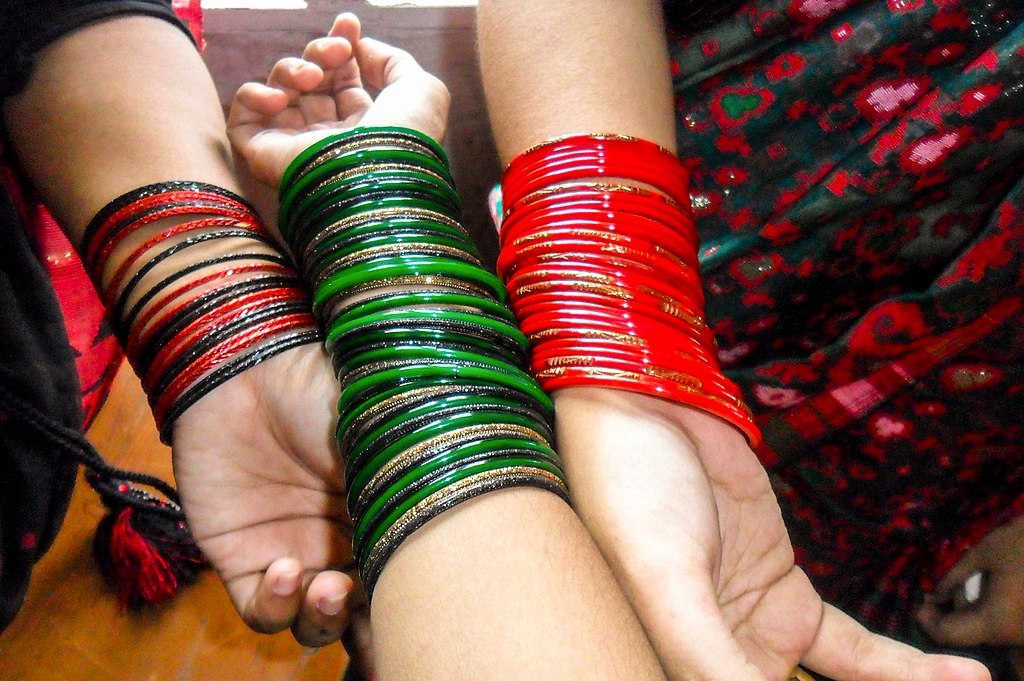
My friends often say that they can hear me coming from a mile away. This is probably true. At any given point in time, every extremity on my body has some form of jewelry; my anklets have bells, my kada and my grandmother’s bangles clank loudly when I move my hands, and my piercings clink when I turn my head.
I, and most of the women in my family, have been covered in jewelry long before it became a trend to stack bangles and load up on rings. Growing up Indian, it’s impossible to avoid maximalism, excess, and grandeur in jewelry; in fact, I would argue these are among the defining characteristics of our jewelry. It’s a commonly cited fact that Indian women own approximately 11% of the world’s gold, more than the combined gold reserves of the top five countries.
Excessive? Maybe. But this data makes much more sense when you contextualize how Indian women have long used jewelry as a form of insurance and personal wealth as protection in the face of a society that has tried to strip them of their independence.
When I was in India last summer, every single woman, regardless of socioeconomic status or ethnicity, was ornamented with numerous forms of jewelry made out of various materials. Items like the nath (nose piercing) and the mangalsutra (wedding necklace) have long been portable, wearable symbols of wealth not easily stripped by male relatives, allowing women to reclaim agency in the face of patriarchal constraints that would bar them from working, earning, and generally exercising autonomy. Daughters would often go to their in-laws with just their wedding jewelry, their only financial lifeline in times of crisis and their only escape in case of domestic violence or widowhood. To control jewelry was to control one’s autonomy, and to wear jewelry was to retain ownership of it.
When the British came to India, they taxed, confiscated, and controlled the gold supply, turning traditional practices into tradable commodities and stripping them of local meaning. The British brought with them Edwardian and Victorian jewelry styles, and indigenous jewelry styles and techniques that incorporated natural elements and forms, particularly those connected to regional identities and rituals, became less visible as British tastes and gold and jewelry designs gained popularity. Traditional goldsmiths were forced to switch tactics to pander to their British and affluent Indian clients, and it slowly became impossible for most communities to access gold or retain ownership of traditional styles. Increasing costs and scarcity forced local artisans and tribal groups to shift toward silver, imitation ornaments, or cheaper, natural materials, eroding the continuity of traditions and wealth-ownership practices.
The Empire also demonetized indigenous currencies and restricted the circulation of local gold, forcing dependence on British coinage and trade systems. They framed Indian gold consumption as wasteful and excessive, despite raiding Indian kingdoms for their jewels and wealth and profiting from the international circulation of Indian gold and gems.
However, jewelry remained a way for women, who generally had little legal autonomy over property or economic opportunity, to safeguard their family’s wealth and negotiate for social standing. It symbolized status; helped women retain their independence in cases of widowhood, divorce, or familial crisis; and enabled them to circumvent restrictions on their ability to own land or other tangible assets. For example, Apatani women in Arunachal Pradesh wore large nostril plugs and facial tattoos, which was said to help protect women from kidnapping, but which also came to symbolize strength and group belonging.
Many other communities practiced multiple ear and nose piercings in childhood as a rite of passage and protection, and generally, these practices signaled cultural identity, belonging, tradition, and pride. Piercings served to protect a child, mark them as part of a community, and signify the transition between stages of life. They served various medical, social, and aesthetic purposes, and underlay the social fabric of many communities.
The intent behind disfavoring and eliminating these practices goes far beyond simply disallowing them; it is a fact of the British’s cruel, purposeful, and intentional efforts to extinguish the pride and culture in our communities. Since jewelry was ubiquitous as a cultural symbol, it quickly became a target for elimination, lest it be used to strengthen a community’s conviction and ties to its identity. In both colonial and patriarchal economies, control of jewelry quickly became a conduit for violence and the policing of bodies.
Exterminating and policing jewelry and expression as a method of control seems to be a pervasive colonial practice, widespread across continents, and evident in the modern sense of disdain for multiple ear piercings, face piercings, and tattoos. This is because of colonial authorities that systematically stigmatized and erased these as tactics to exclude indigenous communities from colonial spaces, strip them of their identities, and enforce assimilation. Considered symbols of “barbarism,” these practices were often outlawed, and people with such markers were banned from important spaces and settings. In North America and the Pacific Islands, such bans were enacted as these body modifications marked aspects of clan history and legacy, land and resources rights, and identity.
In reflecting on the impacts of empire on these practices across civilizations, a common thread emerges: suppression and assimilation. Reclaiming and proudly wearing distinct aspects of our cultural identity allows us to tell these stories, reclaim these ancestral traditions, and actively reject the idea that we cannot take up space. To be visibly tattooed, adorned in jewelry, and heard coming is an active subversion of these normative expectations of assimilation, a modern form of colonialism that erases culture through suppression.
What’s often branded as contemporary maximalism in fashion today is, in many ways, a continuation of practices that have existed in indigenous communities for centuries, and often co-opts styles and traditions with no regard for their origins or context. In a contrasting vein, Western fascinations with minimalism often toe the line of colonial discomfort toward excess, sound, and visibility.
To me, wearing my cultural jewelry is a refusal of that conditioning. I refuse to consume the shameless, watered-down attempts to replicate my culture, and simultaneously refuse to accept the idea that the original cultural practices are excessive or primitive. I choose to wear so much jewelry in order to actively and intentionally take up space, and to reject the history of colonial and patriarchal economies alike, where bodies were sites of regulation that the empire sought to sanitize.
More articles by Category: Race/Ethnicity
More articles by Tag: Colonialism


