
















Prout has been an activist and advocate ever since she was sexually assaulted by a student at the elite prep school St. Paul’s in 2014. She has since launched the hashtag and movement #IHaveTheRightTo. This month, Prout published a memoir: I Have The Right To: A High School Survivor’s Story of Sexual Assault, Justice, and Hope.
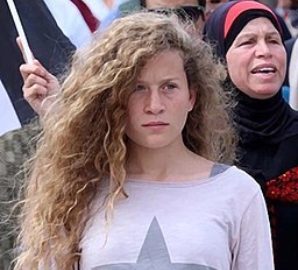
Ahed Tamimi is more than an emblem of Palestinian unity or a symbol of the resistance. She is an inspiring figure for all young feminists to look up to.

By 17 years old, Brazilian swimmer Joanna Maranhão had already broken her country’s record by taking fifth place in the 400 meters at the 2004 Athens Olympic Games. Four years later, memories of the sexual abuse Maranhão suffered at nine years old at the hands of a former swim coach had come back to haunt her.

Mama Tingó, a Black woman revolutionary who fought for working-class farmers, is seldom heard about or celebrated yet was crucial to Dominican history.

With every successful movement inevitably comes backlash, and the #MeToo movement is no exception.

Kunumí MC is a teenage rapper calling attention to the struggles Indigenous people face in Brazil.

I doubt that even years from now our world will be perfect, that all issues of violence will be solved. But I know I will no longer sit idly by when mass shootings kill kids. I will be able to look back and say that I did something.
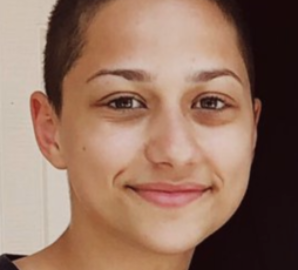
In light of women’s history month, it’s important to recognize and reflect on the successes of powerful young women. Indeed, much can be learned from how young female activists are using their voices to change the world.

17-year-old Najem, who resides in a suburban area in southwestern Syria that surrounds the city of Damascus, has been documenting the Syrian Civil War through his Twitter account since December 7, 2017. The teen posts photos, videos, and messages that capture what it’s like to be one of the many children and teenagers forced to fight to survive in the middle of the war.
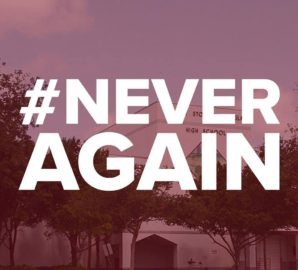
The teen victims of the Stoneman Douglas High School shooting quickly coalesced into a movement: They used the hashtag #NeverAgain to share their experiences on Twitter and made their message clear to mainstream media, too.

The February 14 shooting at Marjory Stoneman Douglas High School may be the tragic event that finally leads to the change this country needs to finally address gun control.

The fight against injustice will always be long and often discouraging. The only way to persist is to choose a cause you feel that your life—and the lives of others—depends on, one you can speak to from (for lack of a better, less cheesy phrase) the heart.
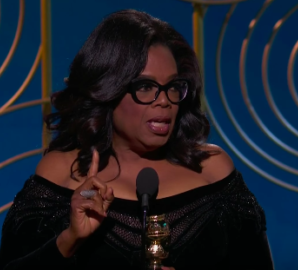
Winfrey, who is the first black woman to receive the Cecil B. DeMille award for lifetime achievement, used this platform to highlight important issues related to both the #MeToo movement and her own experiences as a black woman.
Men have only been surprised by #MeToo because they haven't been forced to confront the ways in which women’s lives are so frequently tinged with the feeling that they must defend themselves against men’s tendencies to sexualize them.

Winfrey recently made headlines for her incredible acceptance speech at the Golden Globes. In fact, many seemed to think the speech set the stage for the media mogul’s future presidential run.

On December 12, Merriam-Webster declared that the word of 2017 was “feminism.” Their choice highlights not only our culture’s struggle to define the word “feminism” itself, but the way in which the movement the word represents played out in the spheres of politics and entertainment last year.

Since her release earlier this year, Manning has been speaking about issues like gender identity and surveillance in the press and at colleges and universities. On November 15, I had the chance to see her speak at Wesleyan University.
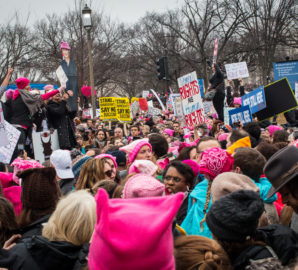
Now that we’ve made it through 2017, it’s important to remember how much the feminist movement accomplished this past year even in the face of political adversity.

United Women Firefighters is an affinity group of women firefighters working in the Fire Department of New York (FDNY).

Colin Kaepernick is unemployed because he decided to kneel while the national anthem played before games in protest of racial injustice, namely the string of police killings of unarmed black men, in the United States.
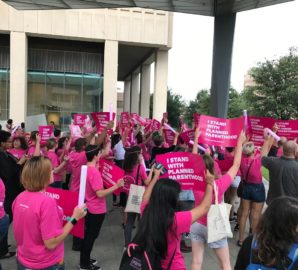
Young activists are on the ground every day, fighting for and within their own communities in ways both big and small.
Saudi women are unable to exercise freedom in clothing, travel, work, or family. This reality led the World Economic Forum to rank Saudi Arabia 141 out of 144 countries in its 2016 report on the global gender gap.

After immigrant youth spent years relentlessly organizing and protesting against U.S. deportation laws, President Obama signed an executive order called Deferred Action for Children Act (DACA) in 2012. DACA was created to provide temporary deportation relief to eligible undocumented youth who had migrated to the United States as children.
Our government has a way of minimizing its destructive influence on the minorities of this nation by convincing us that we’re the problem—that we’re all out to get each other and everyone else—so we lose focus on the systemic oppression inflicted upon us by our highest-ranking officials and start to point fingers at each other, until we reach mutually assured destruction.

The Seneca Falls Convention, which is perhaps best remembered for its demand for women’s suffrage, was held on July 19, 1848. And yet 169 years later, American women continue to struggle within the confines of a patriarchal and misogynistic society—and to honor the legacy of the Seneca Falls Convention nonetheless by continuing to fight for their rights.