
















As I watched the mainstream media cover this day this year, I noticed that hardly any mentioned the female leaders of a famous 1990 protest.

Lockey is part of Open Bionics’ arms project, which employs cutting-edge 3D printing technology to make bionic arms.

I found that story after story included images of survivors of sexual violence that were gory and denigrating. They often depicted survivors in shredded clothes, fear-stricken eyes, and arms outstretched in appeal.

Nigerian teenage activists Kudirat Abiola, 15, Temitayo Asuni, 15, and Susan Ubogu, 16, created It’s Never Your Fault, a nonprofit organization that takes a stand against child marriage, which is legally allowed to continue due to a loophole in the country’s constitution.

On June 4, the House Committee on the Judiciary held a hearing on “Threats to Reproductive Rights in America.” 18-year-old Youth Testify leader HK Gray testified at the hearing about the barriers she faced when seeking an abortion in Texas as a minor, including needing a judicial bypass to obtain an abortion.

On April 27, thousands of people gathered in central Jakarta for the 2019 Women's March, parading in solidarity to support women's right in the archipelago and across the globe.

Referred to as the “mother” or “grandmother” of French New Wave cinema, Varda was a pioneering director who influenced a new generation of filmmakers by making movies with feminist themes.

I recently launched the Instagram project @BeingDressCoded to create a space in which we don’t just observe individual stories about dress codes but can look for patterns and learn from a larger, collective story about sexism and sexual objectification.
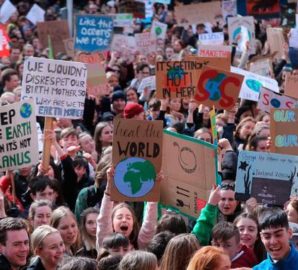
The culmination of over 70 scientists’ research, provides peer-reviewed evidence that feminist policies are extremely effective solutions to the mega-issue of climate change.
Teens around the world are protesting for action on climate change. Some of the most prominent young activists doing this work are those involved in the group Zero Hour, which was founded by 17-year-old Jamie Margolin in 2017.

Thousands of Albanian students are protesting on the streets right now. But even though the media has started to cover these protests generally, it has failed to note the feminist principles at the heart of them and how women in particular have contributed to the movement.
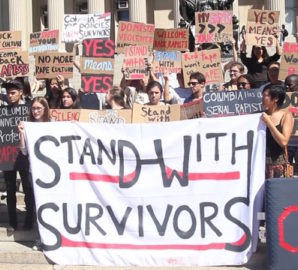
In November, Education Secretary Betsy DeVos released a proposal for new rules regulating how schools respond to issues like sexual harassment and assault. We are still in the midst of a comment period which could help stop these damaging changes.
The high rate of violence against women in Albania, and the perception that neither the police nor the Albanian government are doing enough to guarantee a minimum level of security for women and girls, inspired dozens of people to gather to ask a seemingly simple question: What role do our government and police force serve, if not to protect us from, and ideally prevent, violence and crime?
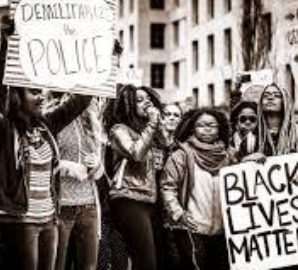
The Black Lives Matter movement in Brazil has largely focused on the basics: human rights and affirmative action. This is because talking explicitly about racism here is like trying to teach math to a three-year-old — pointless.

Abrams’ reluctance to concede was not only about her determination to win, but also about preserving Georgia’s electoral integrity.

In October, disabilities activist Mara Gabrilli was elected to the Brazilian Senate at the age of 51. Many saw her victory as a sign that although a lot of extremism and hatred has been expressed in Brazilian politics over the past few years, it’s possible for this nation to elect figures aligned with a progressive agenda.
As a peer educator at Sex Education by Theatre (SExT), a youth-led, theater-based sex education program, I have a place to express my thoughts and frustrations about the precautions my friends and I take when we go out.

Jair Bolsonaro’s election as Brazil’s president at the end of October, and the threat of far right extremism it represents, comes on the heels of a reinvigorated fight for abortion rights all across Latin America.

We often think of girls at these ages as the “future,” but doing so denies girls the opportunity to meaningfully discuss their current experiences. Girls are very much a part of the present; they are changing the world right now.

Beyond not feeling represented or seen by my doctors, the persistence of a binary understanding of sex and gender in the medical field has failed to account for the way I, and patients like me, deserve and need to be treated.

In light of the Women's Media Center's brand new report evaluating the impact of #MeToo, Ashley Judd — Chair of the WMC Speech Project and one of the instigators of the #MeToo movement — spoke to Women Under Siege's Lauren Wolfe about her role in the movement, what #MeToo has accomplished, and what it will still accomplish in the future.
From Brazil to México, from Chile to Venezuela, from Peru to Costa Rica, from Bolivia to Ecuador, the green wave protesters’ call for legal, safe, and free abortion has intensified. The right to choose is influencing and energizing the activists in these countries, and these countries’ political institutions are paying more attention to their activism.

Higginbotham has covered topics including death, sex, and divorce. Recently, she told the FBomb about her newest book, Not My Idea, which tackles racism and white privilege, and is available now.

While there are no laws that blatantly incriminate homosexuality, same-sex marriage is not legally recognized in Kenya, a country that is also generally quite socially hostile to members of the LGBTQ+ community.

Marielle Franco’s murder was not an ordinary crime but one with a triple meaning: It was an act of femicide, black genocide, and an act of silencing the downtrodden.