















Poet Elena Medel Became a Literary Star While Still in High School. She's About to Release Her Debut Novel.
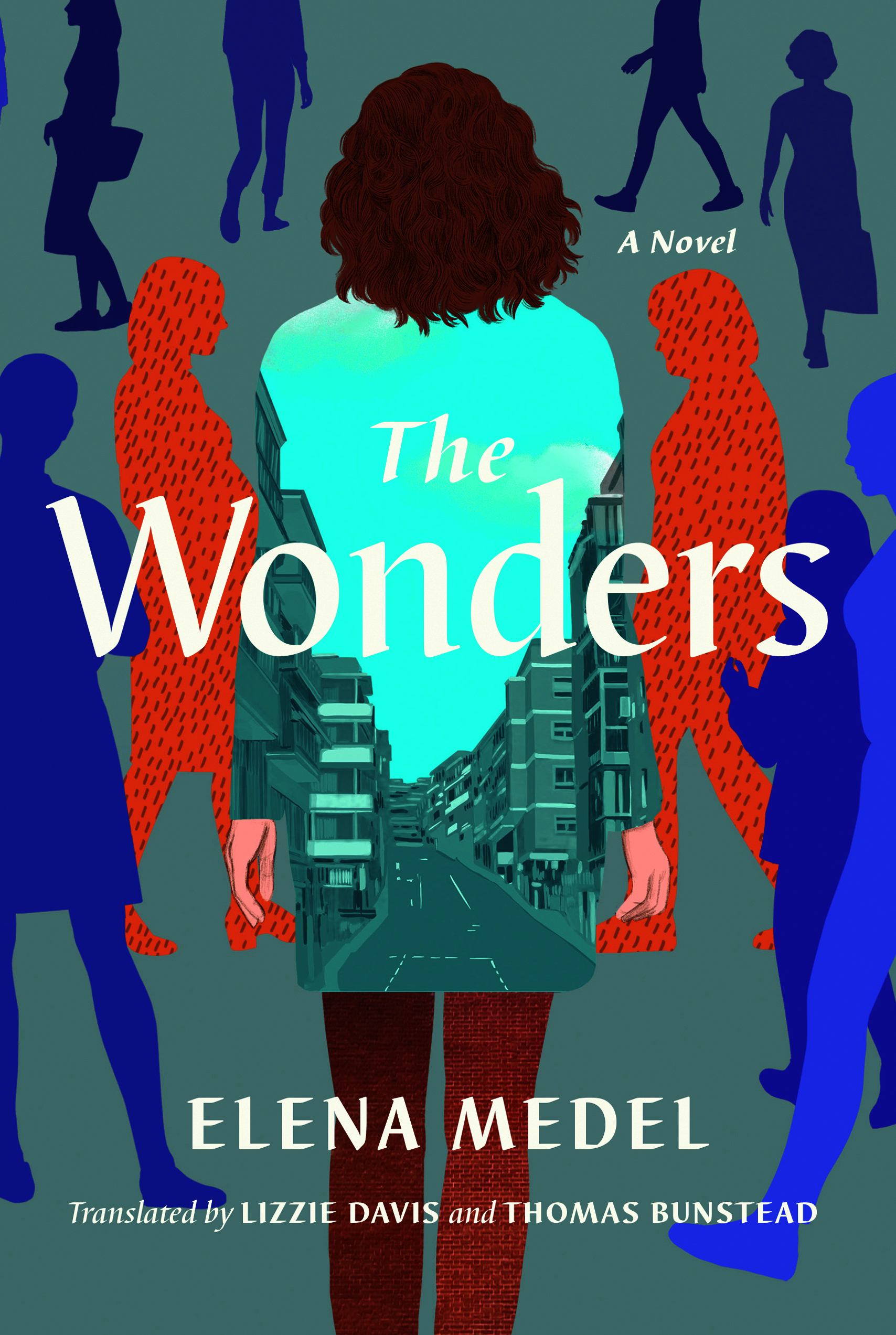
Elena Medel first wrote many of the poems included in her debut poetry collection, My First Bikini, while she was still a high school student in the early 2000s. My First Bikini instantly struck a chord with Spanish readers, and Medel was quickly dubbed a rising literary star. Now 36, Medel is ready to be introduced to English-speaking readers with the release of her debut novel, The Wonders, on March 1 by Algonquin Books. The novel follows three generations of women as they experience the tremendous changes in Spanish life since the 1960s. We recently had the chance to ask Medel and her novel’s translator, Lizzie Davis, about feminism, fame, and what has and hasn’t changed since Spain’s 2018 Women’s Strike.
Elena, you published your first collection of poetry, My First Bikini, when you were 16, and those poems often described both the turbulence and beauty of adolescence. Why do you think you’ve always been drawn to writing as an art form?
In a naive way, I would say that writing is the most natural way for me to communicate with the world. The process of writing allows me to think about what I want to say, how I want to say it, what repercussions my ideas will have (no matter how insignificant they may be) on the people I am talking to … That is why I prefer an email to a phone call, many times, that is why I often find it difficult to speak in public, and that is why everything I think or what I have to say regarding many topics is mainly found in my books and in my texts. Since my childhood, this has happened to me: I was already 4, 5, or 6 years old when I preferred reading and inventing stories to any other activity. When I have something to say, my impulse is to say it in writing. I suppose this has to do with my books’ artistic ambition, linked to the beauty of language. But also a political ambition, in that when I write, I care about thinking.
My First Bikini also vaulted you to nationwide attention in Spain. What was it like gaining such renown at such an early age (and for such a personal collection of poems)?
It was a very difficult experience. If I could go back in time, I would look for the teenage Elena and advise her not to publish those poems yet. Not because of the book itself, which I think has some interesting poems and is irregular as so many other books, but because of everything surrounding it. As adult as my literature could be, I was not: With a few more years, maybe being 20 or 21 years old, perhaps I would have known how to deal better with the pressure, the negative comments ... in many cases also the insults or harassment, which were very violent and affected me in a personal way. This experience, of course, redefined my relationship with what I write and with the world.
The Wonders is your debut novel and was released in Spain last year. The intensity and tensions of the mother-daughter relationship have been the source of so many great novels. How did you get the idea for the characters of María, Carmen, and Carmen’s daughter Alicia?
The origin of the novel was the character of Alicia, who had already appeared in other of my texts. Alicia raised many questions for me, and with the draft of one of the chapters (“The Kingdom”), I allowed myself not so much to answer them as to ask myself many more. Who is Alicia? Who is her mother? Who is her mother’s mother? What happens to all of them? Family genealogy has always interested me (since my second book of poems, Tara, which I published in 2006) and allowed me to develop a series of topics I wanted to think and write about: the link between the private and the political; how money and social class define a life; how inequalities affect women the hardest; the public repercussions of motherhood and care ... all fundamental pieces in The Wonders.
Money and class also define the central relationships in this novel, which is set against the backdrop of the 2018 Women’s Strike, during which women from across Spain marched against sexism, gender-based violence, and the wage gap. What do you think the legacy of the 2018 Women’s Strike was? Do you think the women who marched that day are still galvanized by the energy of that day?
I am not optimistic. The strike and the protest had an enormous social impact, but I don’t know to what extent the repercussions have been real and effective. As has always been the case, and as I wanted to explain in The Wonders, feminist militancy is sustained by voluntary and collective work in close environments such as neighborhoods. This has continued, of course, and these support networks have been maintained even in the worst moments of the pandemic. But this work cannot depend on women sacrificing their leisure and rest time but must be supported by institutions with laws and other measures. Many politicians attend the protests, are photographed holding the banner, and forget feminism until the next March 8. It is important to govern and legislate from the awareness of feminism, something that I think is not happening nowadays, and of feminism as a transversal claim for equality: gender, social class, races. If I refer only to Spain, gender-based violence is still a very serious problem (I am answering you when a few days ago a 17-year-old girl was murdered by her 19-year-old ex-boyfriend), the labor reform that the government has just approved abandons again the care occupations (cleaners, caregivers, etc.), which women almost always occupy.
And for Lizzie, I thought it was so interesting that you also translated My First Bikini. What was it like translating the work Elena created as a teen and then working on her debut novel?
It’s always a pleasure to work with authors across multiple projects, to observe the evolution of their writing and thinking. That experience was certainly heightened with My First Bikini and The Wonders, given that they were written nearly a decade apart and that one is poetry, and the other is prose. My First Bikini was my first published translation, and the fact that it was Elena’s first published collection felt special, as if we were, in some way, years apart, having a shared experience. While her poems stand alongside the poems of writers many times the age Elena was when she wrote them, there’s a vulnerability and honesty to them that I associate with youth because of all the untempered bravery there. I was delighted, but not surprised, to find that The Wonders is just as brave and poetic. It is undoubtedly a poet’s novel: The choices Elena makes in terms of language and sentence structure are striking, and the vignettes that form the narrative are complete on their own, almost like individual works. It also marks a move toward more overtly political writing, further developing themes that were evident in Elena’s early poems but that now have even greater depth and nuance.
More articles by Category: Arts and culture
More articles by Tag: Books, Latinx


