















Osaka, Biles, and Choosing to Withdraw
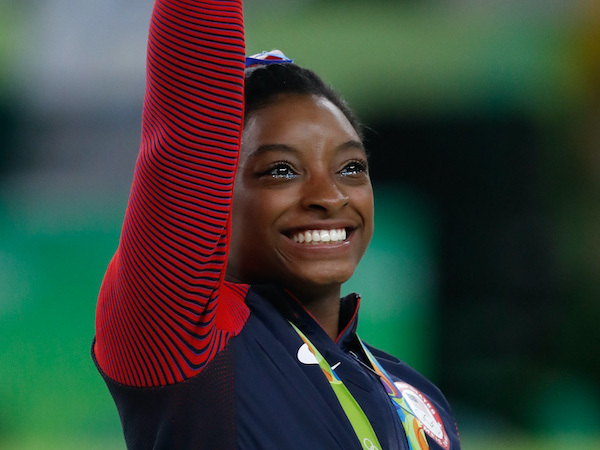
On July 28, the greatest gymnast in history, Simone Biles, withdrew from the Tokyo Olympics. It’s a decision that, though at first shocking, makes complete sense when one realizes that Biles is not only a global icon and national treasure, but, above all else, a person. Her masterful command of her body doesn’t necessarily translate to command over her own mind and well-being, and therefore Biles’ decision to withdraw over mental health concerns says far more about her relatability as a human being than it does about her shortcomings as an athlete.
A big reason why we as a collective people love to watch the Olympics is to witness the most exceptional feats the human body can perform. There’s an old joke about how Olympic events should also include one regular person to exemplify just how much better an Olympian is than a spectator. And while, yes, an Olympian may be able to clear 100 meters in the blink of an eye, or hurdle themself across uneven bars like a superhero, they are not so exceptional as to exist without the same ills that plague all of us. When we watch Simone Biles compete, we’re watching the person just as much as we’re watching the athlete, but that’s not always the perception. We love to acknowledge the majesty and pressure of the moments that immortalize our athletes without giving equal consideration to just how heavy that pressure is and how it affects our athletes.
Biles decided to withdraw from the Olympics after the team final. When speaking to reporters about the decision, she stated, “Once I came out here [to compete], I was like, 'No, mental is not there, so I just need to let the girls do it and focus on myself.’” Biles cited “the twisties” — a colloquialism for mental blocks some gymnasts experience — as preventing her from performing. She further defended her decision on her Instagram, writing, “I truly do feel like I have the weight of the world on my shoulders at times. I know I brush it off and make it seem like pressure doesn’t affect me but damn sometimes it’s hard hahaha!”
Following her decision to withdraw, USA Gymnastics released a statement in support of Biles that read, “We wholeheartedly support Simone’s decision and applaud her bravery in prioritizing her well-being. Her courage shows, yet again, why she is a role model for so many.” Biles’ decision follows fellow Olympian, Japanese-American tennis player, Naomi Osaka’s decision to withdraw from the French Open in June, to prioritize her mental health. French Open officials took umbrage with Osaka’s decision to skip media sessions, fining her $15,000. Heading into the tournament, Osaka had cited long bouts of depression, stating that her decision to skip post-match press conferences was a form of self-care. Ultimately, Osaka decided to bow out of the tournament so as to not have to deal with further criticisms, fines, and even sanctions that might’ve been levied by the Open officials.
Osaka and Biles are both immensely famous and at the top of their respective sports. They are young Black women who chose to prioritize their rest and well-being over the expectations others have placed on them. It’s a choice that we seldom see from athletes or Black women. We expect Olympians to be fierce, tightly coiled vessels of talent, so when two of the greatest living athletes opt to shy away from that expectation, it’s revolutionary. We also rarely give Black women the opportunity to recuperate; the public misunderstands them as inherently superhuman, not recognizing that it’s their continued humanity in the face of immense expectation that makes them so remarkable in the first place.
We can’t pretend that just because these women have reached the apex of their fields that they therefore also have control over the rest of their lives. They suffer the same forms of anguish that anyone else does, the major difference being that their pain and discontent is magnified across the globe for days and weeks at a time. If we’re going to hoist them up as heroes, we should protect them too, but historically we haven’t. We feel a connection to our athletes, a sense of pride, and in some cases, even a sense of ownership. We will happily root for them as long as they’re running fast enough and jumping high enough, dismantling their bodies and minds for glory, while we sit and watch, never taking the appropriate time to separate the athlete from the human.
If we are going to celebrate athletes for being their best, we must also celebrate them when they are their most authentic. An athlete who is willing to compete on their darkest day is no more impressive than one who, on the world’s largest stage, in an era of constant, voracious commentary about them, chooses to do what’s best for themself. If that choice is to walk away or to withdraw, what we’re witnessing isn’t failure or cowardice, it’s yet another triumph. As for Biles, and Osaka before her, their decisions indicate a sense of perseverance and preservation worthy of any podium. There is no amount of medals that could possibly speak to the resolve and fortitude of either young woman as effectively as the way their prioritization of self has.
More articles by Category: Sports
More articles by Tag: Mental Health, Black


