















Ohio’s Fetal Burial Law is about Surveilling and Criminalizing Pregnant People
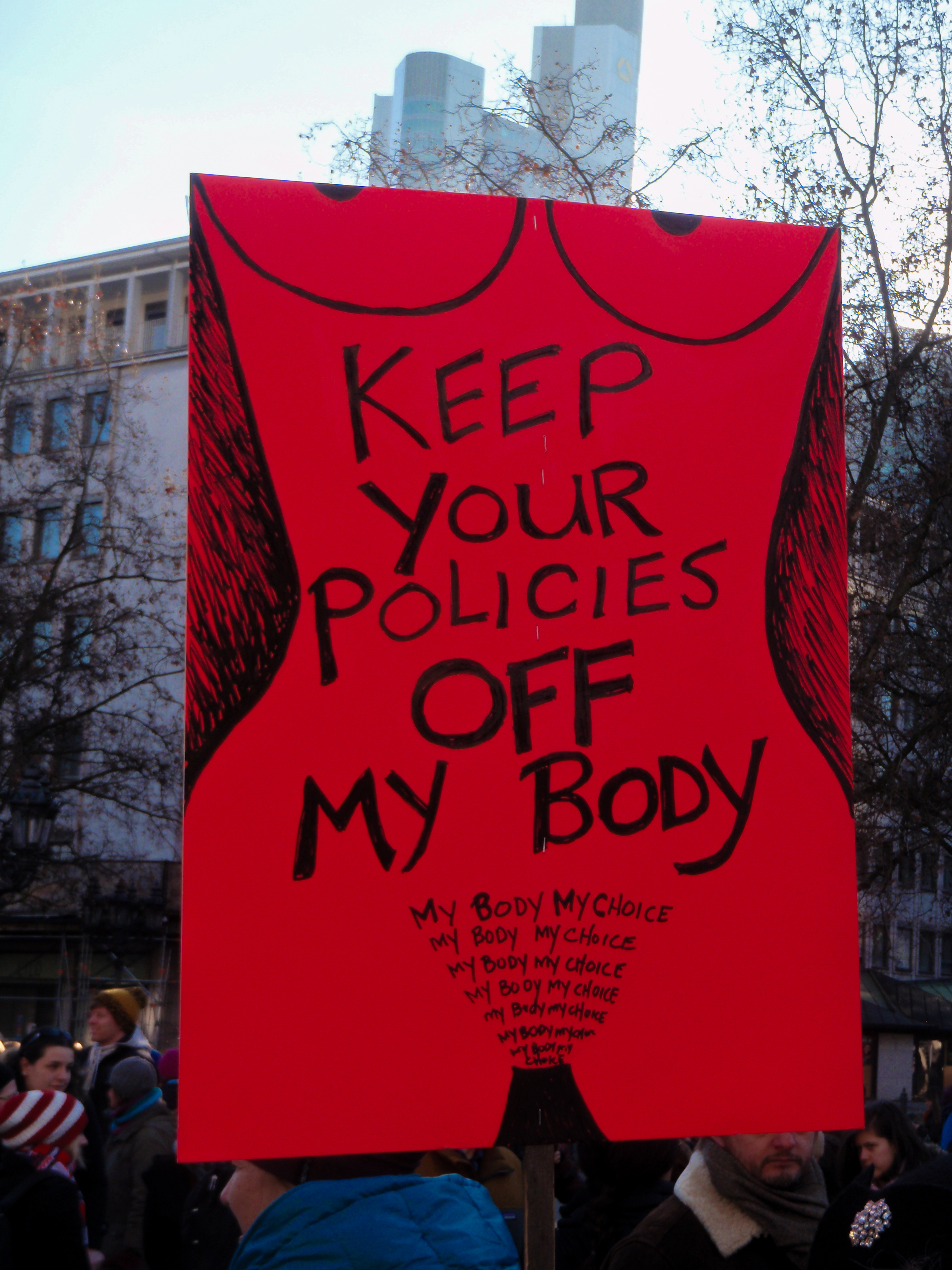
Ohio has long been one of the most extreme states in the nation when it comes to laws that make abortion difficult, if not effectively impossible, to access. In 2016, the state passed one of the first six-week abortion bans, and that same year, former Gov. Kasich signed into law a bill banning abortion at 20 weeks. State lawmakers have already built on their record of extremism this year: Ohio Gov. Mike DeWine signed a bill on December 31, 2020, that would require people who have abortions in the state to have their aborted fetus buried or cremated.
On top of being rooted in punishment and stigma, and being highly costly — fetal burials can cost between $500 to $1,000 — this new law continues an alarming, growing trend of anti-abortion politicians’ surveillance and violation of the privacy of pregnant people. Ohio’s fetal burial law would effectively require those who have abortions to obtain a death certificate, which is public record — meaning nearly all abortions in the state would be made public. The law is similar to laws in several states that require abortion providers to report abortions and patients to the state government.
The surveillance of pregnant people and abortion patients is directly tied to efforts to criminalize pregnancy outcomes and self-managed abortions. In a state where abortion is banned — an increasingly possible outcome with a 6-3 anti-abortion majority on the Supreme Court, a body that could rule on state abortion bans in the future — all pregnancies and pregnancy losses could potentially be treated with suspicion. If abortion is banned or criminalized, this could further open the door for the government to investigate pregnancy losses for possibly being abortions — a phenomenon that’s already happening.
State legislatures’ efforts to ban, restrict, or make abortions public could easily lead to surveillance of all pregnancies. For example, because medication abortions happen through inducing a miscarriage, even miscarriages and natural loss of pregnancy could draw government investigation and even criminalization. The latest research shows nearly a third of abortions today are performed through medication abortion pills.
According to the Guttmacher Institute, 46 states currently require some form of reporting of abortion care to the state government. In more extreme cases, states like Arizona, Oklahoma, Utah, and several others require abortion providers to report the reason someone seeks care, further stigmatizing the procedure by framing it as something to be justified. In 2019, it was revealed Missouri’s state health director oversaw a program to track people’s menstrual cycles.
In recent years, there have been several cases of pregnant people being criminally charged, and even jailed, for miscarriages, stillbirths, and the use of abortion pills. Indiana is one of 38 states with strong feticide laws, and in 2012 and 2016 respectively, Bei Bei Shuai and Purvi Patel, both Asian-American women, were prosecuted for induced miscarriages. In 2007, a Latina teenager named Amber Abreu faced felony charges for “procuring a miscarriage” when she used medication abortion. And in 2011, Jennie Linn McCormack, of Idaho, a mother of three who had her first child at age 14, was arrested for terminating her pregnancy with abortion pills she purchased online.
Women of color, and especially Black and brown women, are generally more likely to be treated as criminally suspect than are white women. But there’s also a long history of women of colors’ pregnancies being policed via laws that punish and criminalize people for substance use and other risky behaviors during pregnancy. Throughout the 1980s, the racist “crack epidemic” weaponized against Black communities also extended to policing the pregnancies of Black women suspected of substance use.
What’s more, laws that were created with the intention of protecting pregnant people from violence (homicide is the second leading cause of death for pregnant people) have more recently been weaponized to punish and prosecute people who have abortions. In 2019, Marshae Jones was jailed and faced charges for manslaughter in Alabama after being shot in the stomach and experiencing a miscarriage. Later that year, Brooke Skylar Richardson was charged with aggravated murder, involuntary manslaughter, child endangering, and gross abuse of a corpse after giving birth to a baby she says was stillborn and burying it in her yard in 2017, when she was a high school student in Ohio. Before that, in 2018, Keysheonna Reed faced charges for two counts of abuse of a corpse after she buried the fetuses of her stillborn twins. And in 2017, Katherine Dellis was convicted and jailed for concealing a dead body after she, too, experienced a stillbirth.
Stigma, restrictions, and a culture of suspicion and surveillance surrounding abortion care create a dangerous legal environment for women and pregnant people. Ohio’s new law is especially harmful because the inherent morbidity of its mandate for death certificates and burials equates abortion with murder. By asserting the false “personhood” of an aborted fetus at the expense of the personhood of the pregnant person, the law implicitly welcomes retaliatory violence aimed at the pregnant person, as well as criminalization. The equation of abortion with murder has led to several states’ legislatures, including in Oklahoma, Georgia, Texas, Alabama, and others, recently trying to make abortion punishable by the death penalty.
As we mark the 48th anniversary of Roe v. Wade this month, it’s crucial to recognize the landmark Supreme Court case was about more than abortion and bodily autonomy — it was also broadly about privacy and pregnancy. Attacks on this precedent via the constant barrage of legal challenges to Roe threaten broad surveillance and criminalization of not just abortion but pregnancy loss. Ohio’s recently signed fetal burial law offers a harrowing preview of this future.
More articles by Category: Politics
More articles by Tag: Abortion, Reproductive rights


