















Nicki Minaj's Shift to MAGA
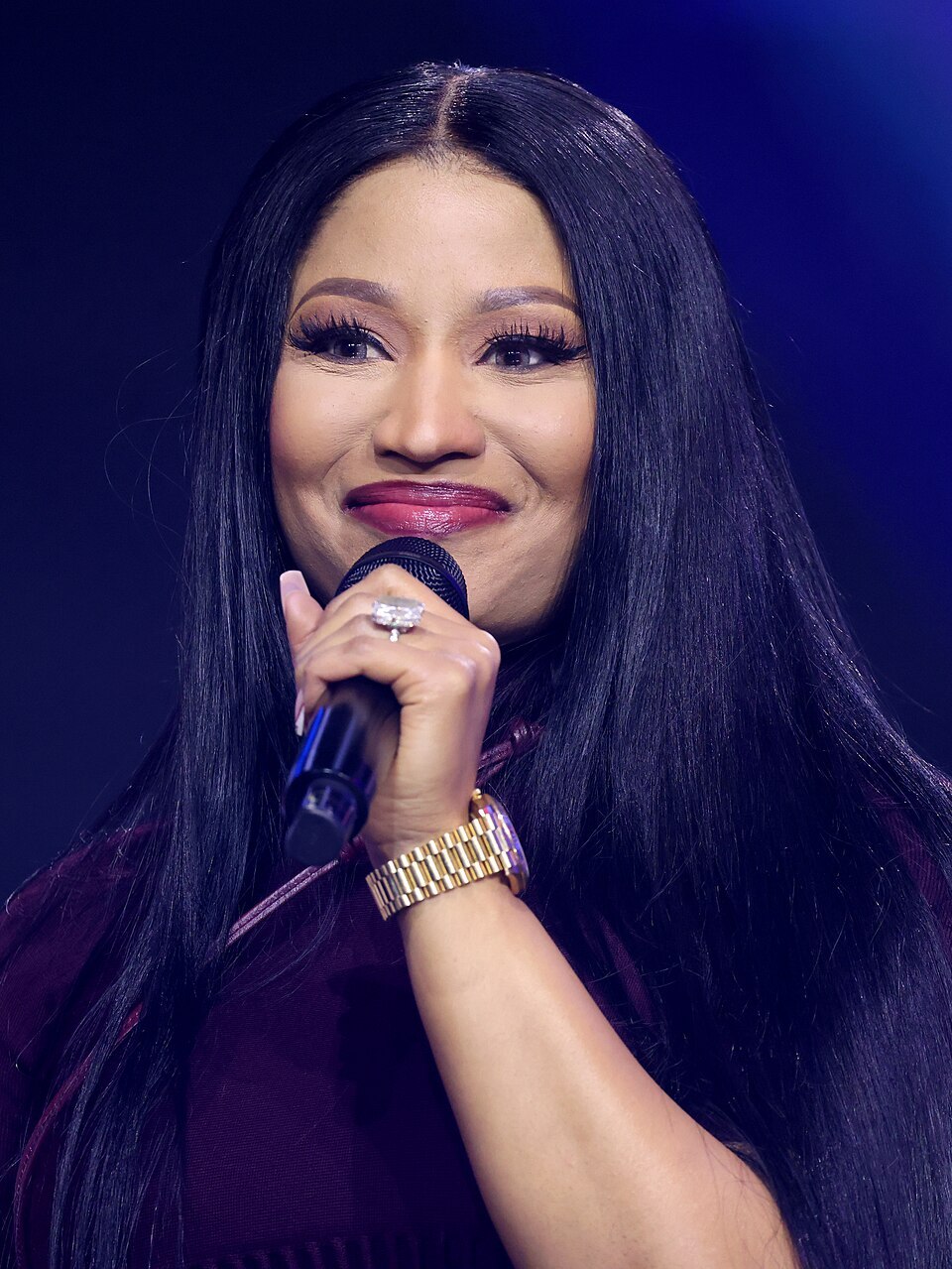
I grew up listening to Nicki Minaj’s music, and have always associated her with breaking societal norms. Minaj is known for her confident, bold lyrics — in her iconic verse on Kanye West’s “Monster,” featuring Jay-Z, she raps, “You could be the king, but watch the queen conquer” — and vast array of alter egos. She challenged the male-dominated music industry in a dynamic and unapologetic way, and attracted a large fandom consisting of many fans from marginalized communities, such as Black women and LGBTQIA+ members.
In the early 2010s, when her music first started coming out, therefore, I never imagined that in the future, she would align herself with the MAGA movement.
In fact, Minaj once criticized the media’s treatment of Donald Trump. In November of 2010, in her docuseries, “Bossing Up,” she criticized the double standard in which tough men are uplifted, but tough women are looked down on. Minaj said, “Let Martha Stewart run her company the same way and be the same way ... But Donald Trump, he gets to hang out with young [expletive] and have 50 different wives and just be cool. Oh, Donald we love ya!”
In November of 2015, Minaj started to show slight signs of support for Trump. She told Billboard Magazine that “there are points he has made that may not have been so horrible if his approach wasn’t so childish,” before continuing, “But in terms of entertainment — I think he’s hilarious. I wish they could just film him running for president.”
Yet, in 2018, Minaj condemned Trump’s family-separation policy, sharing her background of being an undocumented immigrant in a Facebook post. However, Minaj simply said, “Please stop this,” not calling out the Trump administration or president by name.
Then, things really took a turn in November of 2025. Minaj reposted a TikTok video from the official White House TikTok highlighting Trump’s long list of achievements since he took office. She then sided with Trump regarding the persecution of Christians in Nigeria and spoke to the United Nations on behalf of the Trump Administration. In response to her largely queer fandom in regards to her support for Trump, she responded, “Imagine hearing that Christians are being MURDERED & making it about you being gay.”
In December of 2025, Minaj joined Erika Kirk at a Turning Point USA event and reaffirmed her anti-trans statements. She joined this event even though Erika Kirk’s late husband and founder of Turning Point USA, Charlie Kirk, once said that Nicki Minaj is not a good role model for young Black girls. On top of that, Kirk made multiple misogynist, racist, and sexist comments, including, “If I’m dealing with somebody in customer service who’s a moronic Black woman, I wonder is she there because of her excellence, or is she there because of affirmative action?” It is rather ironic that Minaj is now siding with Turning Point USA when she seems to exemplify what Kirk would have criticized and hated.
And she didn’t stop there. In January, Minaj called herself President Trump’s “number one fan.” Minaj once encouraged her gay fans to “be brave,” but has now gone full MAGA, aligning herself with a party that actively tried to erase DEI programs and push legislation that undermines the rights of LGBTQIA+ students. What’s more, Minaj, who is of Trinidadian and Tobagonian descent, initially came to this country as an undocumented immigrant, yet supports an administration that is employing brutal anti-immigrant policies and actions.
To many fans, including myself, Minaj represented anti-conformity. She was never afraid to be loud, extravagant, and defiant. In a society where women are often viewed as docile, quiet, and obedient, Minaj completely obliterated those expectations. Her music inspired fans, especially those of marginalized communities, to be unapologetically themselves and embrace their unique individuality despite societal constraints. But now, that inspiration has faded away for many, and her music sends messages that now feel hollow to the communities she once empowered.
I’ve heard people argue that, as an artist, Minaj does not owe anything to anyone. However, Minaj’s career was built on and profited from marginalized communities. When you profit off a community, shape pop culture, and influence the greater society, accountability and responsibility become inevitable. With that comes the duty to acknowledge and act for the communities that supported you.
More articles by Category: Media
More articles by Tag: LGBTQAI, Immigration


