















Loan Le Celebrates Family, Food and First Love in ‘A Phở Love Story’
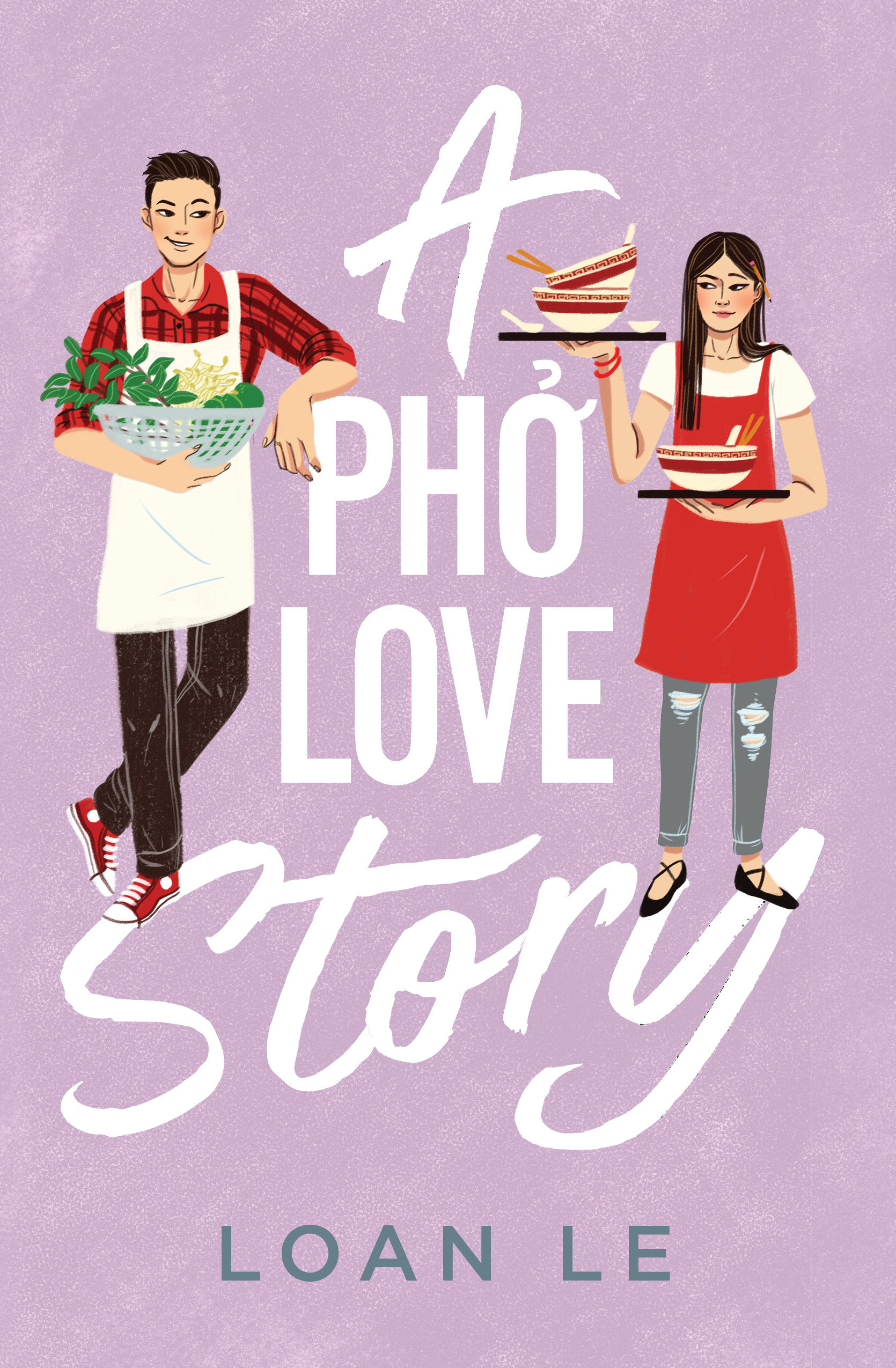
Loan Le always knew that she would one day write a story centered on the amazing Vietnamese food that surrounded her while growing up. “I’ve always been interested in how food is connected to family and how closely intertwined food and family are,” Le told the FBomb. “I knew I had to include that.”
Released in early February, Le’s debut novel, A Phở Love Story, does just that; the story centers on two teens whose families own rival phở restaurants in the Little Saigon section of their hometown. Bảo Nguyễn and Linh Mai were warned never to talk to each other, let alone become friends, so they studiously avoid each other. But when they are unexpectedly thrown together by chance, the pair click immediately and begin to fear what their relationship would mean to their families. They also start wondering what exactly was behind the longstanding feud between their two families and if they could ever overcome it.
The FBomb had the chance to talk to Le about her new novel, the joys of Vietnamese cuisine, and what it was like growing up in a refugee family in the United States.
Did you grow up in a restaurant family the way Bảo and Linh did?
No, but I almost felt as if I did because of my experiences in my parents’ kitchen with my mom and in my aunt’s kitchen and the kitchens of all of my relatives. I feel like each had their own way of running the kitchen, so whenever we go to family gatherings, all the women would swarm into the kitchen and their separate roles. Of course, whoever’s kitchen we were in would be the head chef, and then everyone else would be the line cooks helping out.
So while I didn’t grow up in the restaurant business, I’ve always been surrounded by food. And like in the book, I saw my family work so hard. In the book, they put everything they have into the restaurant business, and I felt that I was kind of translating all of my family’s hard work into what those characters ended up doing. I was trying to show how hard they really worked and how much of their time they had sacrificed as they tried to make a living for their families and themselves.
Like you, both Bảo and Linh grew up in families who first came to the United States as refugees after the Vietnam War. Did your parents talk about their experiences during the war at all?
I think they told me basically the broad story about what it was like for them. It was very much an overview; they’d say things like, ‘Oh yeah, we escaped in the middle of the night.’ I know that my family — my mom, my aunt, my uncle, and my two young cousins — escaped in 1982. They spent maybe seven days at sea in a small boat like with 39 other people before they eventually were rescued near the Philippines. They were then in a refugee camp for two years before they were able to get visa sponsorship through my mom’s uncle, who was living in California.
So I did know the story of that treacherous journey, but then there are also things, maybe things that were small or seemingly trivial, that were brushed over. I think all immigrants maybe do this to some degree because they’re just so focused on the present and so focused on survival. So in some ways, I don’t think my family has had enough time to kind of sit with the trauma of escaping. They had to make the decision to just not think about it. But I’m fascinated by those stories.
You also go out of your way not to stereotype the parents in this book. Linh is a fantastic artist and wants to pursue art, but the reasons her parents aren’t supportive are clearly laid out and tied to their circumstances as immigrants without generational wealth. Was that a deliberate decision?
Yes, it was. There is this stereotype that all parents say, ‘Oh, be a lawyer.’ ‘Be a doctor.’ But there is a reason why Asian parents want those kinds of careers. In my experience, it wasn’t really because of prestige; it was more because of stability and so that you’d be able to support yourself. That was what my parents were concerned with.
I also tried to make the two sets of parents different in that Linh’s parents wanted their daughter, who is an artist, to have a more stable career. That’s why they push her in the beginning towards engineering. Bảo’s parents also wanted something stable for him, but I think that whatever the career was, they would have been happy with it.
Both characters also eventually discover the secret that is at the heart of the rivalry between the two families. What were the fun parts about writing a novel that centered on a secret like this?
I definitely thought it would be a fun idea to have these two rival restaurants that are right across from each other. It’s true that in Little Saigon, or any concentrated area, that it isn’t unusual to have restaurants like this neighboring each other. But I thought it would be funny to have the two families occasionally spy on each other. That proximity adds a lot of tension.
As for the family secret aspect, that wasn’t based on my family’s story at all. But with the big reveal, I was just really interested in exploring what it meant to have something happen in the past in Vietnam that the children don’t know about. There’s also the idea that when they escaped Vietnam, they also lost something. I think that’s what has inspired the family secret here.
What has it been like hearing from Vietnamese and other Southeast Asian American readers who have read the book?
It’s been so wonderful. I’ve heard from so many readers who have said they felt seen, which made my heart really warm. In particular, they said they felt like they saw parts of themselves and their parents in the dialogue and that they never really saw themselves like that before. Even though because of the pandemic all of the book events have been virtual and meeting readers has been over email or social media, I still really treasure it.
More articles by Category: Arts and culture
More articles by Tag: Books, Asian, High school


