















Judy I. Lin Created the Taiwanese-Inspired Story of her Dreams
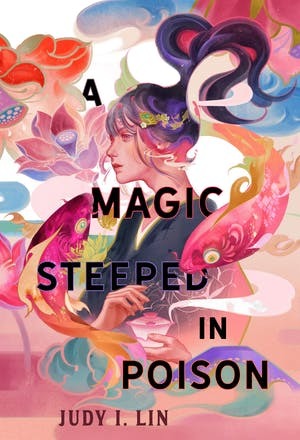
Author Judy I. Lin had known for years that she wanted to one day create a fantasy story that drew from Chinese and Taiwanese mythology. Lin never felt like it was the right time, however, and for years stuck to writing contemporary, modern stories. Her dream has finally been realized in A Magic Steeped in Poison, which became a New York Times bestseller shortly after its release in March, and will be followed by its sequel, A Venom Dark And Sweet, on August 23.
A Magic Steeped in Poison introduces readers to Ning, an ambitious tea maker who leaves her village to participate in a tea competition in the imperial city. The winner of the competition will be granted a favor by the princess — a chance Ning sees as her only shot to save her sister.
We had the chance to chat with Lin about her debut novel, the mythological stories that inspired it, and the importance of seeing yourself in the stories you read.
Can you tell us a little bit about why you wished to write a book that incorporated Taiwanese and Chinese influences? Did you grow up hearing or reading these stories?
All of my writing has been influenced by my background. I’ve always wanted to write a Chinese culture-inspired fantasy, but it really wasn’t until I started this book in 2018 that I felt comfortable and confident about writing it.
I was born in Taiwan and Taiwanese culture has a folklore and myths that we just learn from day to day. When I moved to Canada at 8, we were able to bring this Chinese Taiwanese folklore encyclopedia set that was filled with a lot of stories with us. That’s what I grew up reading, and it was a really big reminder of my home and my culture. I still have that encyclopedia set many years later. It was definitely a major influence.
Going from Taiwan to Canada at such a young age must have been a very dramatic change. What do you remember about that time?
I did learn English while I was in Taiwan because I went to a bilingual kindergarten. But I wasn’t very confident in my speaking because it’s just hard to learn English when you’re in a place where everyone primarily speaks Mandarin. That’s also why I always felt more comfortable writing, because I’d had time to process and consider what I was saying rather than through speaking, which I was very hesitant about for a very long time. Writing was always my preferred way of communicating.
Did you remember reading any stories about the Asian Canadian experience or other Asian diasporas growing up?
There were not that many Chinese-inspired or even Asian-inspired books then. It wasn’t until years later, after I had even finished university, that I read Silver Phoenix by Cindy Pon after seeing it on a shelf. I remember there was a Chinese girl on the cover and she was doing martial arts, which seemed very similar to the martial arts movies that I enjoyed while growing up. But I didn’t read that book until I was an adult, and when you grow up not seeing that type of story represented from your culture, you think that nobody would be interested in those types of stories. But seeing that book on shelves, and then seeing other, similar stories coming out after that really laid the foundation for writing my own fantasy novels.
You just mentioned the martial arts movies you grew up watching. This book has a lot of action in it. Did those movies influence how you developed A Magic Steeped in Poison at all?
Chinese martial arts movies were much easier to access in Canada than Chinese books, so I would watch them a lot. I was also able to watch a lot of Chinese dramas, historical dramas in particular, and they really influenced the writing of A Magic Steeped in Poison.
The heart of this book is Ning’s relationship with her sister and Ning’s guilt over not being able to help her sister by rescuing her. Do you have siblings, and did your experiences affect the way you wrote the sisters in this book?
I do have a younger sister, so a lot of [the characters’] interactions are drawn from my own personal relationship with my sister. I also was thinking about the cultural background of how important family is in Taiwanese culture. Growing up with that naturally influenced the themes in this book. A theme that runs through all my writing is the importance of family and those familial connections, whether those connections are good or bad.
Then, of course, one of the things that I wanted to write about was actually stepping away and leaving your family as you grow up. I mean, when you’re growing up with your parents and your siblings, that’s all you know, but I think you develop a richer understanding and deeper relationships after you leave, and you kind of see what it’s like living out in the world and being independent.


