















Interview with Tunisian feminist leader Radhia Jerbi
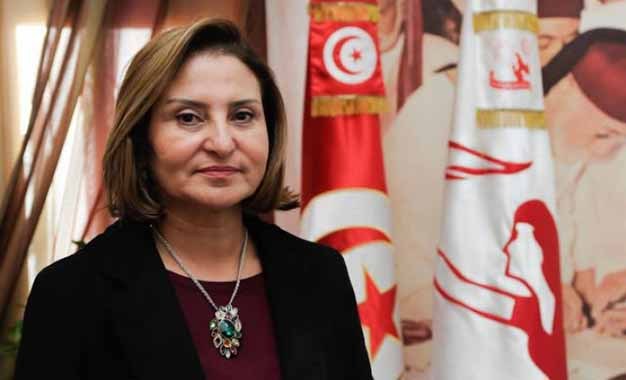
Radhia Jerbi is a prominent Tunisian feminist and lawyer who has served as the president of the National Union of the Tunisian Woman (NUTW) since 2013. Jerbi is also a member of the Human Rights League, the Maghrebian Women’s Union for Peace and Development, and the women’s section of the Lawyers’ General Council.
Jerbi recently talked to the FBomb about everything the NUTW has been doing to guarantee gender equality and a secure future for Tunisian girls and women.
The FBomb: Can you tell us about what the NUTW is doing to ensure a prosperous future for girls in Tunisia?
Radhia Jerbi: Well, we have accomplished many actions throughout the years. Our organization was founded in 1956 (the year of Tunisian independence). Since then, we have worked hard to give girls the necessary knowledge to defend themselves against inequality. In 1996, we launched an action to give women financial independence by increasing girls’ literacy through the different centers established in all Tunisian states; we have between 120 and 140 vocational training centers. We have also contributed to many national economic programs, from programs that focus on the family economy, to microcredit programs for young, unemployed women to start their own projects or to grow their businesses. This project has been going on since the early 1990s, mainly in rural areas.
Many adult feminists work for your organization, but are any teen activists involved?
Certainly. Remarkable Tunisian female politicians like Radhia Nasroui, Feyza Elkefi, and many others were under the age of 20 when they enrolled in our organization. They grew up within the NUTW and are still working with the NUTW as adults. There are also many female ministers who were activists within our association, and many male politicians also have mothers or grandmothers who were involved. For example, our prime minister, Youssef Chahed, is the grandson of Radhia Haddad, one of the NUTW founders and a prominent feminist. The mother of Mehdi Ben Jemaa,who was Tunisia’s head of government in 2014, is a feminist activist as well. That these men who lead today were raised by feminist mothers shows the NUTW’s huge [impact on] the Tunisian population.
Has NUTW changed in any way since the Tunisian revolution in 2011?
Before the revolution, we worked on economic and social levels, so that women could become financially independent. Now, we also organize on the juridical level. We have worked on the Tunisian constitution — in particular on the role of Tunisian women in politics. The NUTW collaborated with the Search For Common Grounds Association to edit some laws in the Code of Public Status to give women in Tunisia access to the highest political roles. We have also worked on changing the Code of Personal Status, a series of laws that aim to establish equality between women and men in various fields. Some articles in this code must be edited because they don’t go hand in hand with our constitution. The inequality of inheritance — in Tunisia, men inherit twice as much as women do — is also our major concern.
What is the most effective thing an organization can do to help Tunisian girls and women lead satisfied and self-directed lives — and what are the biggest things impeding girls today?
Firstly we must eliminate violence against women, poverty, women’s financial dependence on men, unemployment, and the Tunisian state’s deterioration. From my point of view, it’s also the lack of hope among young people in Tunisia. We have a high rate of immigration to Europe, a high suicide rate, and an increasing number of Tunisian youth sinking into juvenile delinquency.
The other part is being recruited by ISIS. These “Islamists” represent a threat and danger not only to our young democracy, but to our rights as women.
The NUTW has also set up new actions to promote cultural tourism and other opportunities to help women, especially those who do crafts, promote and sell their products. This also helps protect them from being abused by their fathers, brothers, or husbands, since we all know that violence against women is highly linked to women’s financial dependence on men in their family.
In order to achieve these goals, we mustn’t work on our own, but be united in our efforts to preserve our rights as women. We can’t have a democracy in a country in which half of the population is oppressed.
We also need governmental stability and efficient political programs — not just some campaign speeches. Since the revolution of 2011, we have had five socialist governments, but almost every public service has been privatized. We’re really concerned about this as we consider it a threat to girls and women. If a woman has enough money, she’ll survive. If she doesn’t, she’ll suffer.
Despite the obstacles that remain, do you think that Tunisian society’s attitude toward women has evolved over the years?
Absolutely. For example, women used to have to come out in public wearing “sefsari” (a traditional veil worn by Tunisian women). If a woman came out without covering her hair, she would generate unwanted attention from men. Now, many women and girls come out with bare hair, and don’t spark men’s attention as much as before.
More articles by Category: Feminism, Politics
More articles by Tag: Activism and advocacy, Equality, Discrimination


