















How This Memphis Activist Disrupted the City’s Political Sphere
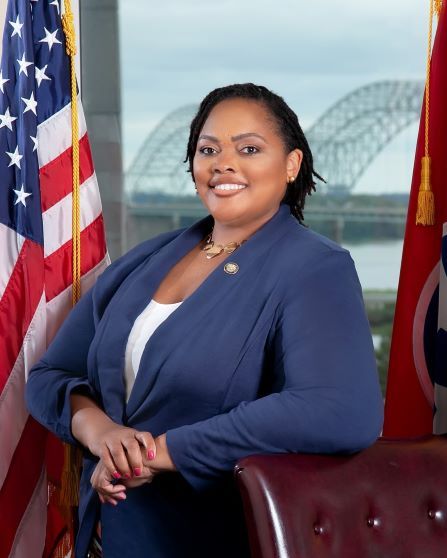
In 2003, Tami Sawyer moved to Washington, D.C., to immerse herself in a city known for being progressive and open-minded. But following the murder of Trayvon Martin, and having witnessed gentrification in D.C., Sawyer realized she needed to make more of a change at home and for her Memphis community.
In 2013, Sawyer moved back to Memphis and threw herself into local activist organizations, including Black Votes Matter. In 2017, she founded #TakeEmDown901 to remove Confederate statues plaguing the city, and in 2018 she ran for Shelby County Board of Commissioners District 7 and won.
County commissioners are elected to represent specific districts within a city, and their terms last four years. They perform a variety of functions, including recognizing problems within a district and creating long-term goals to address these issues, approving the county’s fiscal budget, and ultimately serving as a voice for the community they serve.
A year later, Sawyer ran for mayor of Memphis and would have been the first woman in history to hold that position in the city if she had won. Despite not clinching that victory, Sawyer is still on the front lines of keeping Memphis safe and is still fighting for lasting change in the city. The FBomb recently talked to Commissioner Sawyer about her activist work, the landscape of political power in Memphis, and what it’ll take for a woman to be mayor of Memphis.
You really started to make your mark in Memphis through activism. It seems that activists in the city don’t get much recognition for their work the way that those in larger cities do. Do you think that’s true?
It's interesting to me how lightly [activism in Memphis] gets covered. I think almost every time there's been major protests across the country, we've been a part of it, and we've had our own stuff too that has nothing to do with what's happening across the country that rarely gets picked up nationally — like the Valero protests. We are a center of civil rights, always have been, from before Dr. King came here. Memphis has always, just like now, had its own civil rights work going on.
How is being involved in activism different as a commissioner? What has your personal experience been this year alone?
The first night of the George Floyd protest, folks were texting me, ‘What are we going to do?’ I was like, ‘I don't know, hopefully somebody is doing something.’ I told them I wasn't coming. I support people, but I'm just gonna kind of sit at home and reflect, and I'm here if you need me.
Then shit went left. I'm getting texts saying the police just advanced on us. As soon as I got the first set of texts, before I knew it, I was in my car. I was for the movement more than anything, but it was hard. People were really upset with me [that I wasn’t out there]. So I started to embrace a lot of the organizations here. Instead of being like, ‘I'm going to be out there,’ what do y'all need? If it's money. If it's sitting at my dining room table. If it's a shoulder to cry on. If it's needing to be able to text me at 2:00 a.m. for legal advice. I've found much more serenity in that role.
You ran a historic campaign for mayor in Memphis. What will it take for a woman to finally win that position?
I don't see it happening in the near future. Maybe in 15 or 20 years. I'm not running for mayor again, [although I’m] not saying that I’m the only woman who can do it. Memphis is a big little town and has all the isms, and misogyny has its place. It thrives here.
What were some examples of misogyny that you experienced during the campaign?
I was in this place where I needed the support of the Black male pastors, but one pastor told me that because I was a woman and because I wasn't married and didn't have children, people had questions about my sexuality. They had questions about my femininity. By then, I lost my identity in the race, trying to please so many different groups of people.
Memphis’ population is predominantly Black, but there are nearly no Black women in high positions of political power within the city. What’s your response to this?
People will look at city council and be like, ‘Oh, what are Black women talking about [when they point out there are no Black women in positions of political power]? Half of the state reps from Memphis are Black women.’ But then we get to [positions of] power. County commission has more power. The city council, there's one Black woman: me. There's never been a Black woman as the county mayor or city mayor. We knew it was an uphill battle. It's a tough place to be in. Memphis will chew Black women up and spit them out.
This year has been extremely hard for all of us. Going into 2021, how are you prioritizing mental health and self-care?
I'm in a moment of reflection right now; I think what I'm reflecting on right now is survival. I'm actually trying to focus on me a little bit more, and that's hard. I don't naturally put myself first. But I’m keeping it going, just like trying to make little changes for myself.
More articles by Category: Politics
More articles by Tag: Black, Women of color, Women's leadership


