















How The Pandemic Gave Me A Newfound Appreciation for Women Artists
Since March 2020, when the pandemic reached Uruguay, where I live, I’ve realized just how important music is. While quarantining and practicing social distancing, watching artists perform online and through social channels has helped me — and so many others — feel not only entertained, but also less alone. What’s more, I have used this time to find interesting projects that specifically showcase female singers and provide them with a safe space to share their music with a broader audience.
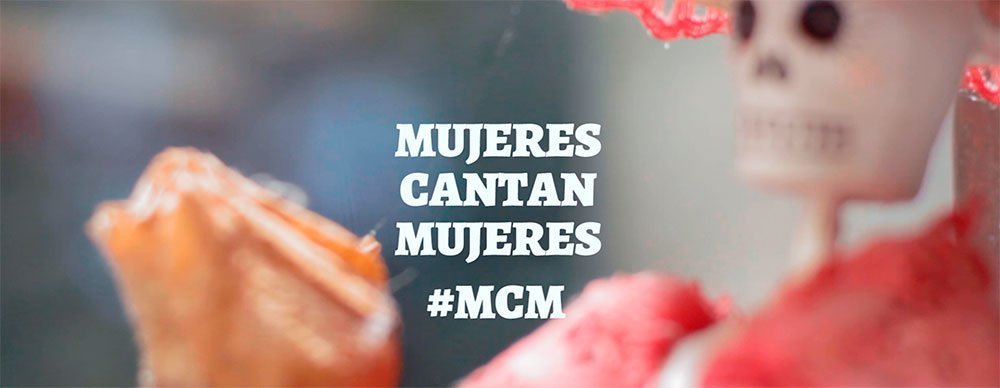
One of these projects is “Mujeres Cantan Mujeres” (“Women Sing Women”), a video series available on YouTube in which female Uruguayan singers choose other singers they admire and perform their songs. These artists give viewers the opportunity to learn about two female artists in a single video: These singers showcase their incredible talent while paying tribute to their muses.
“Mujeres Cantan Mujeres” is produced by La Plataforma, a group created in 2019 to create and produce content with the goal of creating a more egalitarian, feminist Uruguayan society and to raise awareness about the realities women in Uruguay and in all of Latin America.
Tania de Tomas, Federika Odriozola, and María Laura Rocha, the three women who created La Plataforma, are friends and communication professionals with experience in journalism, design, and cinema. They told the FBomb that their organization offers a creative space that female artists don’t easily find and aims to make those artists’ work better known. ”The voice is a change agent, and that’s why we thought that creating a cycle of women who sing other women was a good idea,” they explained.
On March 8, 2020 (International Women’s Day), La Plataforma published their first video, in which the singer Maia Castro performs a song from another artist, Laura Canoura. In the video, Castro explains why she admires Canoura, who was the first Uruguayan singer and composer that she listened to when she was a teenager. It was easy to convince the artists to join the initiative, the founders told the FBomb, but all the videos in the series were recorded during a two-day shoot, which was challenging to arrange just ahead of the pandemic. At some point, a woman working on the production crew tested positive for COVID-19, so parts of the shooting were delayed so the entire team could take necessary safety measures. Fortunately, the crew was soon able to reconvene and finish the video production.
“Mulheres na Música” (“Women in Music”) is a project that similarly promotes women musicians, but takes a different approach: The Brazilian website focuses exclusively on female artists and shares inspiring stories about musicians. Sêla, the Brazilian agency that created and manages the website, was born four years ago from artist, composer, and singer Gali Garófalo’s desire to create a way for women to support other women’s growth. A number of contributors — including journalists, press experts, and other communicators — share the stories of different artists on the site.
In addition to the website, Sêla offers consultancy and production services, and also organizes events. Garófalo’s 10 years of experience in the music industry has been key to her ability to find up-and-coming artists and promote them. “Women in the music sector need promotion in order to reach equality in terms of work opportunities and revenue generation,” Garófalo told the FBomb. “That's why Sêla exists.”
The women behind both of these projects, however, told the FBomb that their initiatives often suffer from lack of funding. “There are no programs, funds, or patrons to finance our project. It makes the content generation hard, since everyone that integrates our platform nowadays has other works, which are paid jobs,” La Plataforma’s team said. Garófalo shares the same frustration. “We need sponsorship in order to be able to shake the music industry and employ more women,” Garófalo said. “Usually, this is the worst challenge, to get brands and people on board to fund these initiatives.”
“I’ve lived in a sexist, homophobic environment,” Garófalo, who identifies as nonbinary, said. “My music is what saved me.” Now, organizations such as Sêla and La Plataforma are saving other women.
More articles by Category: Arts and culture
More articles by Tag: Music, Latin America, Latinx, Latinas


