















How Afghan Women Are Faring After the Taliban Struck Down Their Education Rights
Since the Taliban seized control of Kabul in August 2021, the rights and freedoms of Afghans have been violated. Facing widespread famine, poverty, and employment restrictions, Afghan women and girls experience the most devastating of impacts.
The Taliban, an Islamic fundamentalist group, was formed in the 1990s by Afghan mujahideen and Pashtun (a predominant ethnic group in Afghanistan as well as in Pakistan) tribesmen against Soviet occupation of their country. The Taliban promised stability, but imposed a tyrannical form of control in the late 1990s until the beginning of the war in Afghanistan following 9/11. Although they were driven from power, the Taliban survived and eventually surged back into power in 2021 after the U.S. withdrew from Afghanistan.
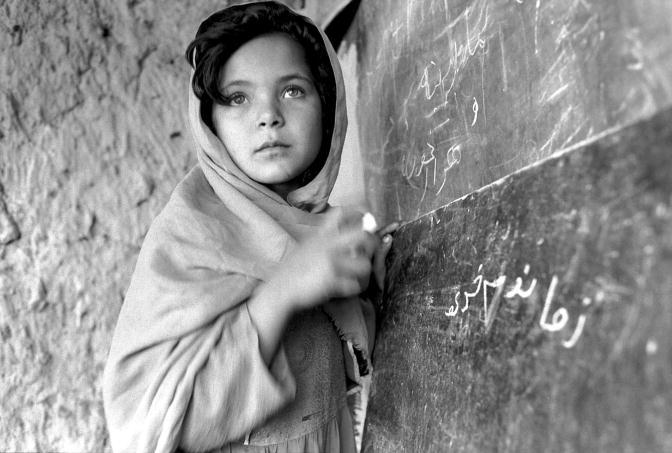
One of the Taliban’s first attacks on women’s rights came as soon as September 2021, when coeducation was banned and women were banned from attending and teaching at Kabul University. They went on to ban girls from attending secondary school and, most recently, barred women from attending universities, making Afghanistan the only country in the world to do so.
“Before the Taliban took control, a lot of work was done in [the past] 20 years towards developing the education systems, for women and girls to have access to primary, secondary, and higher education in Afghanistan,” Najla Ayoubi, co-founder of Every Woman Treaty, told the FBomb.
Zarqa Yaftali, executive director of the NGO Women and Children Legal Research Foundation (WCLRF), was one woman leading this work. Yaftali told the FBomb that her organization had helped provide research and funding to ensure an equal number of boys and girls attended school in Afghanistan. She was also a member of the High Council for Reconciliation, an important decision-making body in Afghanistan regarding the peace and security in the country, and noted that in the past two decades, the organizations together “have made lots of efforts to provide equal space for boys and girls in schools.”
In fact, according to Ayuobi, “data showed that the number of female students in higher education increased from 5,000 to 100,000 in just 2021,” due at least in part to a rapidly improving social mindset about women’s education.
The Taliban’s ban on women and girls going to school is connected to the Taliban’s efforts to keep women from leaving their homes altogether, Ayuobi explained. “The Taliban are saying that because they cannot control soldiers from harming women and girls, their logic is to ban them from schools, universities, religious madrasas, and general public life,” Ayuobi said. “They have committed gender apartheid. All of the 20 years of hard work have been reversed and also has cost us billions of dollars.”
A United Nations Development Program (UNDP) analysis estimates 5% of the country’s GDP will be lost from diminishing women’s employment, and Yaftali said the Taliban suppresses their rights more and more every day.
“Women cannot go out without their mahram, the male member of their family,” Yaftali said. “Even if they are sick, they cannot leave their home or use local transport unless they have their mahram with them. Women cannot go to restaurants, women cannot go to the park, women cannot go to the gym. All of their rights and necessities, the Taliban has banned women from all of them.”
When U.S. forces left the country in 2021, they made a “peace deal” with the Taliban that included the protection of human rights and access to basic services. These commitments were never kept. Ayuobi has always believed the Taliban would do anything in their power to keep women and girls at home.
“I have been warning people that the Taliban’s position and policy towards women would always be discriminatory,” Ayuobi said. “They will always keep Afghan women as hostages to gain what they want from the international community.”.
Incredibly, an estimated 200,000 girls are still attending secondary school and female teachers have been receiving salaries from “the de facto authority,” according to a U.N. press conference held by Omar Abdi, deputy executive director at UNICEF, on Jan. 30. Additionally, “Community-Based Education” classes, created for those who have never had access to public schooling, continue to take place in homes. In the last year, these classes have doubled and serve about 600,000 children, 55% of whom are girls.
“As long as communities continue to demand education, we must continue to support both public and other forms of education,” Abdi said. “These positive signs result from both commitment from the de facto authorities and pressure from local communities to keep schools and community-based classes open.”
Ayuobi and Yaftali call on the international community to support the education and rights of women and girls in Afghanistan, although solidarity on social media will not be enough.
“How long will Afghan girls and women have to sacrifice [themselves] by being victims of all of the Taliban’s actions?” Ayuobi said. “As a result of all of these atrocities my country has committed, women and girls are more exposed to domestic violence and public violence.”
More articles by Category: Feminism, International
More articles by Tag: Education, Afghanistan


