















A Young Muay Thai Fighter Longs to Break the Cycle of Violence in Her Family in This New Novel
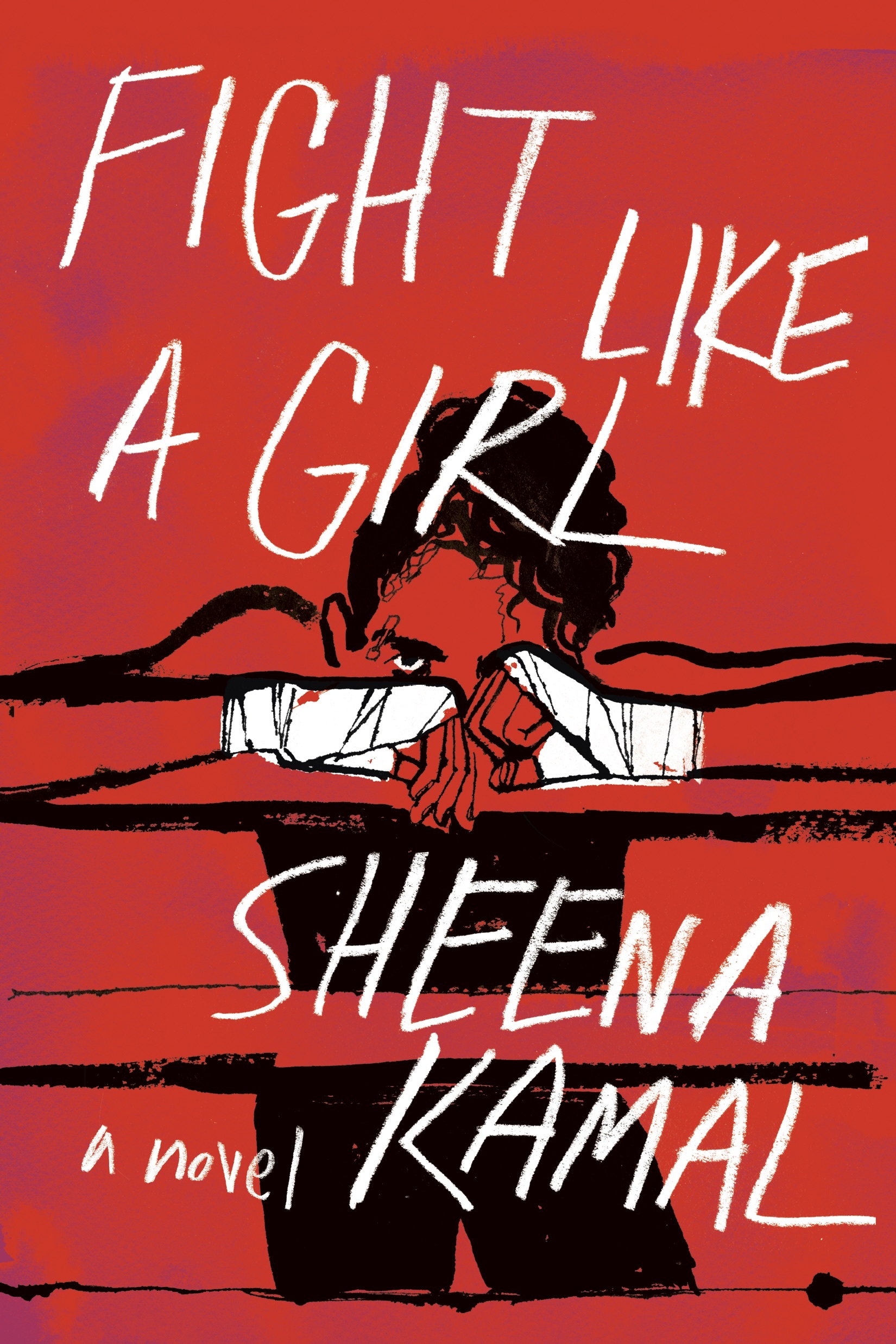
Sheena Kamal has always been drawn to stories about complicated characters trying to make sense of their worlds. An acclaimed mystery writer, Kamal makes her young adult debut in the United States on January 11 with her latest novel, Fight Like a Girl. The main character, Trisha, has found an unofficial home for herself at a Muay Thai gym in an industrial neighborhood in Toronto. While she’s one only of a handful of girls at the gym (and is constantly told that fighting is not something nice Trinidadian girls do), the sport provides her with a much-needed outlet away from her parents’ violent and volatile relationship. But when her father suddenly dies after an accident, Trisha begins to wonder what really happened and if she can ever break away from the violence that has shaped her family for generations.
The FBomb had the chance to chat with Kamal over email about Fight Like a Girl, the power of sports, and why the character of Trisha fascinated her from the start.
You’ve said in other interviews that your character Trisha captivated you from the moment she popped into your head and that you paused some other projects to work on this story. Why do you think you connected to her so much?
She had a very insistent voice and a story that needed to be told. There’s an instinct that writers sometimes get when a particular voice bursts into their imagination. Hers was so raw and fierce that I knew I had to see where this story went. I was very lucky this book came together quickly because I eventually had to get back to those other projects!
Trisha has a very tumultuous home life, and she finds a lot of peace at the Muay Thai gym she trains in. You practice Muay Thai yourself — what drew you to the sport, and how do you think it’s impacted your writing?
About 15 years ago, my friend from high school opened up a Muay Thai gym. I started to train there to support his business, but it quickly became my community. I spent (and still spend) hours at the gym, watching and absorbing what’s going on. It gives me a place to go when I’m stressed and an intense physical activity to lose myself in when I’m feeling anxious. I’m often curious about fighters: Why do they fight? What can I learn from them? Why they fight is always personal, and Fight Like a Girl is an exploration of why this particular character fights. What I’ve learned from them is discipline. The incredible discipline and drive fighters have is something that I try to tap into when it comes to my writing process. Not always successfully.
In addition to her experiences at her gym, Trisha also finds a mentor in her high school English teacher Mr. Abdi. It’s Mr. Abdi who encourages Trisha to read books by Trinidadian authors and gives her a copy of David Chariandy’s Soucouyant, which she connects to in a way that she never did with The Great Gatsby. As you probably know, there is a big discussion going on in both the United States and Canada right now about the importance of giving children of color books in school that reflect their experiences. Did you ever read about Trinidadian or Indo-Caribbean topics when you were in school?
No Indo-Caribbean topics, or any Caribbean topics, were covered at my school. To be honest, I don’t even think we did a good job of educating kids of my generation about important North American issues such as the history of the Indigenous peoples. I wish there was more representation in the kind of reading and teaching material available in schools. I know I would have welcomed it. When we were assigned The Great Gatsby, I remember thinking, why am I reading this? It would have been great to have other options.
Trisha’s father is a very violent, scary man, and she sees firsthand how that violence has been inflicted on her mother and how those experiences, in turn, impact the way her mother treats her. Trisha’s trauma expresses itself in her life in a lot of complex ways. This is your first novel specifically for a young adult audience. What was it like looking at these issues through the eyes of a teen girl?
I didn’t write the book specifically as YA. My agent at the time said it was YA, and I went with it. Seeing domestic violence issues through a teen perspective felt very raw because she’s internalized this trauma, and you can see the way it comes out through her obsession with combat sports. With her dad’s death, these complex emotions bubble to the surface, and everything for her feels immediate and urgent. I think it gives a jolt of energy to the story.
As Trisha notes early on in the book, Trinidadian women are “hella fierce,” and many parts of this book feel like an ode to the strong community of Trinidadian women Trisha was surrounded by growing up. Like Trisha, you were once a Trinidadian teen girl in Toronto. What was it like creating a character who grew up in your community?
I’m not sure I created her as much as channeled her because so much of her personality and experiences were already floating around inside me. Being able to write her was absolutely freeing. I didn’t have representation like this growing up, so to be able to write from a place of experience, of community, felt like a dream.
More articles by Category: Arts and culture
More articles by Tag: Books


