















A Bangladeshi American Girl Discovers Her Sense of Self in Priya Huq’s “Piece by Piece”
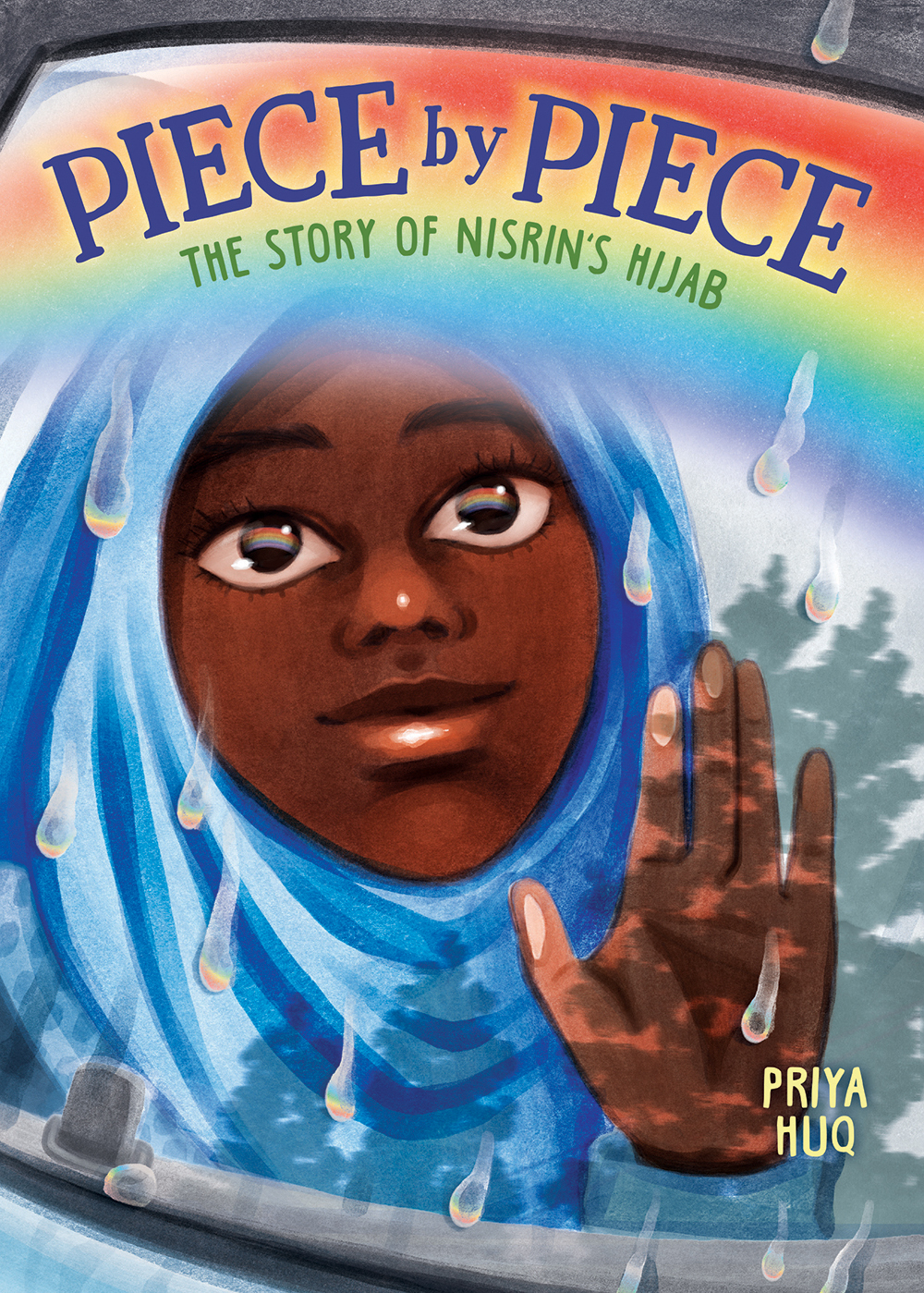
It wasn’t until recently that Priya Huq began to seriously reflect on her experience as a Bangladeshi American middle schooler in a post-Sept 11 world. “I was thinking a lot about my teenagehood during the Bush administration and the Islamophobia that was going on then,” Huq told the FBomb. “I had a lot of thoughts and feelings that sort of nebulized into a story.”
Huq’s new graphic novel — Piece By Piece: The Story of Nisrin’s Hijab, which will be released on November 16 by Amulet Books — tells the story of a 13-year-old girl in Oregon whose world is upended when she becomes a victim of a hate crime while wearing a traditional Bangladeshi outfit and headscarf. As she heals from the experience, Nisrin begins to think about how she wants to present herself to the world. She discovers how her family’s experiences during the Bangladesh Liberation War in 1971 have deeply affected how they think about identity and belonging.
The FBomb recently had the chance to talk with Huq about her new book and how Nisrin’s story often reflects her own.
While you were writing this story, did you see yourself in Nisrin?
Back in 2017 and 2018, with everything that was going on in the world, I began thinking, ‘You know what, I’d be a hijabi if my family had been supportive.’ Although Nisrin’s family isn’t supportive at first, I would say that they’re very emotionally supportive of her generally, even when they don’t comprehend why she makes the choices she does. They want to be there for her. That was the seed, and then Nisrin sort of told me the story from there.
Some readers may be surprised when they get to the sections of the book in which Nisrin’s parents and grandparents so adamantly oppose her decision to wear the hijab. One of the persistent stereotypes out there is that parents are the ones who want their daughters to wear it and not vice versa.
I’ve always been interested in unflattening stereotypes not just about Bangladeshis but of all people of color. It’s strange being Bengali and existing in the world, and then there’s the stereotypes and assumptions that people make about you and your culture — and it’s always baffling. The story sort of happened naturally that way, and then when I wrote down the outline, I thought, ‘Oh, this is going to be sort of subversive because of that assumption.’ I also wanted to make sure I included a scene where a kid at school is bullying her and saying, ‘Did your dad make you wear that?’ Because I remember hearing that when I was a kid.
Another startling thing about this book is that Nisrin happens to be wearing traditional clothes on the day of the attack because she had just done a school project about Bangladesh that day. It was interesting to see Nisrim’s experience made her more devout when it just as easily could have moved her more toward Western culture. Why did you want to explore that?
When I was Nisrin’s age, I did go in that other direction. That was really painful, and it made me question myself and my authenticity, and my humanity. It was successful in that I really beat myself up. But it’s not actually right for me to have blamed myself for not wanting to wear a shalwar kameez because of the harassment I got. Because that’s a normal product of just trying to live in a white supremacist world, we’re all just trying to be safe and live and exist. But there was always this small voice inside me that really rebelled and was furious about it and thought, ‘No, these are my clothes, and this is my culture. And it’s not fair.’
Nisrin also discovers throughout this story that her own mother had gone through a traumatic experience when she was around the same age as Nisrin, when she survived the war in Bangladesh. What was it like to explore the parallels between those two experiences?
I think that because I was writing about a family that was so much like my own family, that I couldn’t not write about the Bangladeshi genocide because that’s my mom’s story — or what I know of her story, that I picked up from eavesdropping. But I know she was 7 and my grandfather was targeted. It’s so weird — I wasn’t there, but I get this cold sweat and feeling of dread when I talk about it. It’s so scary. So I can’t even imagine how scary it must be for my mom and my grandparents, who were alive then.
But I knew that I couldn’t write about Nisrin’s family without talking about that. I also think I was trying to give my mom the benefit of the doubt while creating Rani, who is Nisrin’s mother. My mom didn’t want to speak Bengali with me when I was little. She didn’t want me to be an artist. She was so afraid all the time. But I wanted to give the best parts of my mom the opportunity to speak on the page.
There’s a long history of Bangladeshi and Bengali art and poetry that spans generations. Do you see your book as part of that tradition?
I hope so. That’s been kind of a realization for me, especially coming from a family that was really concerned about my monetary security. They were coming at it from this angle of, ‘You can’t be an artist because you won’t make money.’ While I was coming at it from the angle of ‘I am an artist, and I don’t care if I make money.’ So I learned kind of late about that artistic history in Bangladesh. I always knew that my mom was a poet, but I didn’t really think about how that fits into our culture. But it totally does. I also don’t think we talk enough about how much Bangladeshi and Bengali culture is folk art from women. I’m really proud to be Bengali, and I hope that I can play a small part in the bigger culture. It sounds grandiose, but I am really proud that tradition is such a deep part of our culture.
This interview has been lightly edited for length and clarity.
More articles by Category: Arts and culture
More articles by Tag: Books


