















Recommended Read: ‘We Relied on the Lake. Now It’s Killing Us’
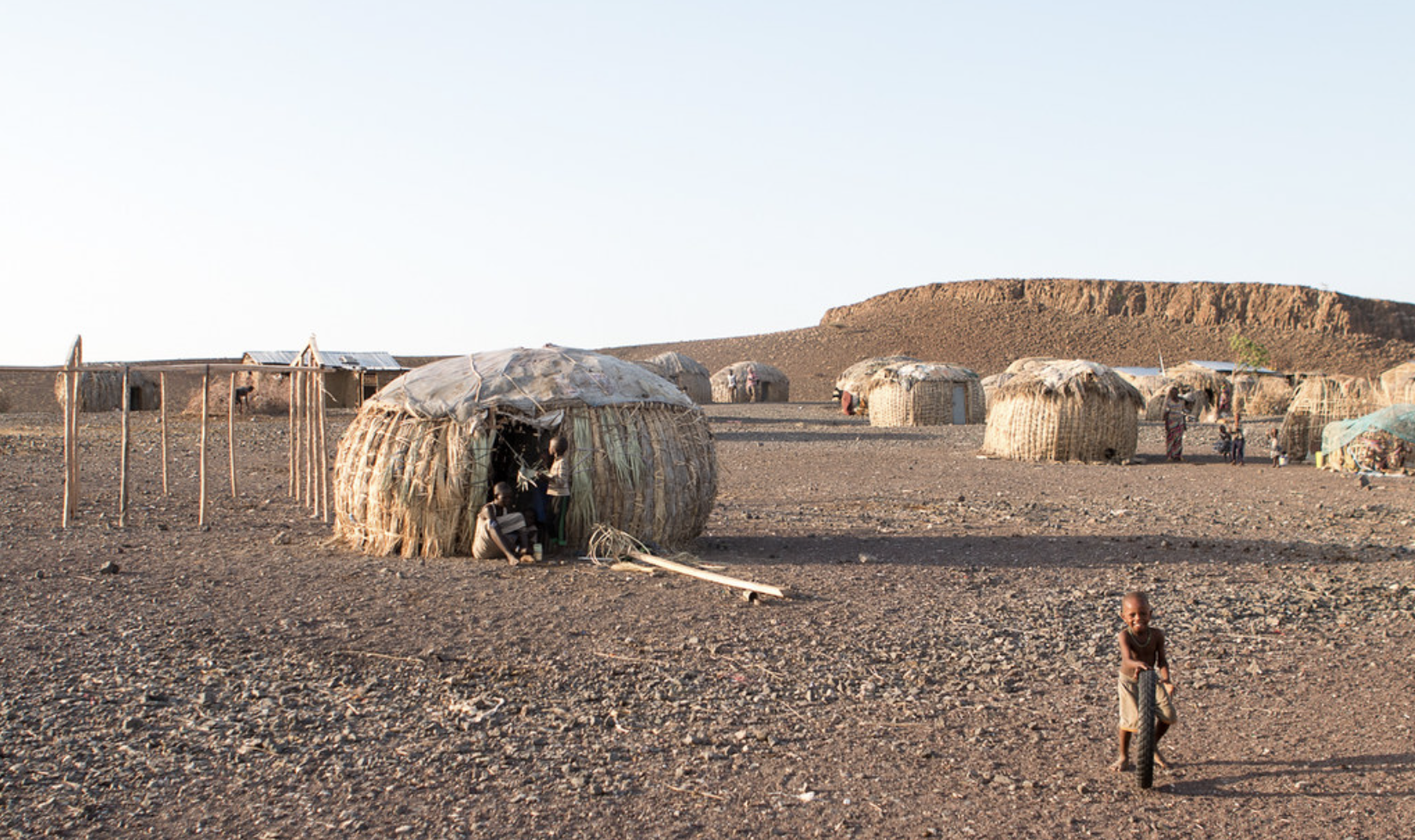
What do you do when your once-dry village suddenly turns into an island? When your only source of fresh drinking water disappears, and dangerous snakes, alligators, and hippos unexpectedly live too close for comfort? This is what has happened recently to the El Molo people, who have lived on the shores of Lake Turkana in northwestern Kenya since 1,000 B.C.
The area itself around the lake is known to have been inhabited for 2 million years, before it desertified from grassland. It is where, in 1984, Richard and Meave Leakey discovered an almost-complete, fossilized skeleton of a boy that dates to about 1.6 million years ago, known as the “Turkana boy.” With nearly 40 percent of the bones, the skeleton is the most complete early human ever discovered. But today, this place — so full of important history as well as a small residential population — is transforming into a swamped, nearly uninhabitable area because of climate change.
Heavy rains have swollen Lake Turkana by 10 percent in the last 10 years. The Guardian explains that this has been “due to increased rainfall in the lakes’ catchment areas over the last few years, unsustainable land-use practices leading to soil in runoff water, and geological activities within the Rift valley system.” The lake — one of the saltiest in Africa — has now become the area’s only water source after flooding subsumed a freshwater pump station, exposing the community to diseases like cholera and typhoid as they drink from the lake. Also, climate change has put the very livelihood of the El Molo, who rely on fishing, under threat.
“Rising waters mean more fish are now found deeper into the lake,” Julius Loyok, a local tour guide, told the newspaper. “It is too windy to venture further offshore since our boats can capsize easily. We have lost a few of our members through such incidents. Without a good daily supply of fish, our lives are in danger since we cannot farm as the whole place is rocky.”
Now that the lake is taking over the land, the community fears that its important shrines — and family members’ graves — will drown soon as well.
Kenya’s 2019 census counted just 1,104 El Molo residents. The last fluent speaker of the El Molo language died in 1994.
Read the whole Guardian story here.
More articles by Category: Environment
More articles by Tag: Climate change


