















Himalayan Women Struggle for Survival in a Changing Climate
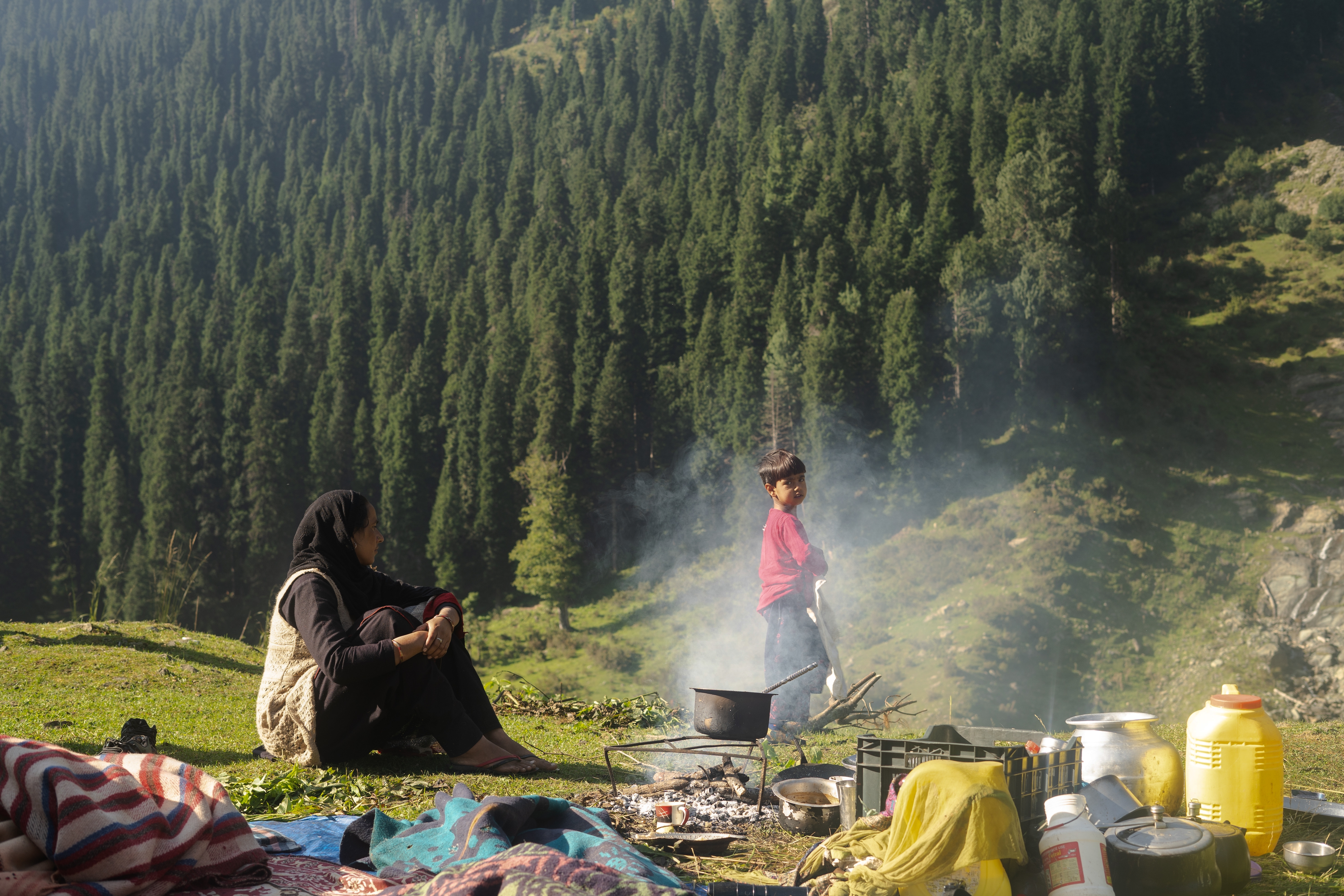
In the remote Himalayan village of Pahalgam, Zubaida Begum, a resilient 45-year-old mother of three, faces a daily battle against nature’s capricious wrath. Living in a mountainous place where the elements can be unforgiving, she stands as a beacon of courage, safeguarding her family's survival in the rugged terrain.
Her days begin at 5 a.m., with the responsibility of preparing breakfast for her extended family of 12. Despite the societal expectations that are meant to confine her to traditional gender roles, Begum defies these norms by actively participating in the physically demanding tasks of tending to her family’s flock of sheep alongside male family members. She skilfully navigates the treacherous terrain, ensuring the well-being of both her family and their livelihood.
But Begum’s chores have become harder and harder with the increasing frequency and intensity of extreme weather events. Each day, she must navigate the elements, constantly adapting and finding innovative ways to protect her loved ones from nature’s brutality.
“What was once a routine has now become a battle for survival,” Begum said.
The relentless onslaught of snow and rain on the Himalayan mountains has compounded the daily struggles of those who call these slopes home, turning what was once a sanctuary into a harsh terrain. For tribal women, and particularly for expectant mothers like Begum’s daughter-in-law, the consequences of these extreme weather patterns can be dire. Access to proper health care requires a perilous miles-long journey downhill. In this hostile landscape, the revered mountains become formidable obstacles that stand between these women and the care they urgently need.
A New Assessment Is Needed
Flash floods triggered by untimely rains has cast a shadow over Begum’s and her family’s lives, which are precariously lived to begin with.
“These deluges have the power to wash away our temporary tents, leaving us exposed to the elements without shelter, food, or clothing, and, nights under the open sky, once a peaceful tradition, have now become an unsettling norm,” said Begum, her voice carrying the weight of years of hardship. “Our mountains, once protectors, have turned into unpredictable adversaries, and we stand at their mercy.”
The nomadic Gujjar-Bakarwal community, whose way of life depends directly on the raising of livestock in mountainous areas, is directly impacted by climate change. The increase of extremes weather events in mountainous areas, such as flash floods, cloudbursts (a sudden, heavy rainfall), avalanches, landslides, and other hydro-meteorological disasters, negatively impacts the nomads’ way of life, said Shakil Ramshoo, an expert in earth sciences at the Islamic University of Science and Technology in Jammu and Kashmir.
Ramshoo makes clear that the first step toward reinforcing the security of the people who live on the mountains requires that initial assessments be done before changes can be made.
“In order to initiate robust climate change adaptation measures and lessen the negative effects of climate change on the community,” Ramshoo said, “it is necessary to assess the susceptibility of marginalized groups in society to climate change, such as nomads.”
One Woman’s Tragedy in the Mountains
In May of last year, tragedy struck Begum’s family. Begum’s voice trembles as she recalls what happened: “Our world came crashing down that day.”
Her pregnant daughter-in-law had begun experiencing labour pains on the mountain. It would require a dangerous downward journey to reach the hospital. Heavy rains cut off the family’s escape, and “desperation pushed us further into the heart of nature’s fury,” Begum said.
That’s when the unthinkable happened. “My daughter-in-law slipped from the steep mountain slope, and we lost our unborn child in an instant,” Begum said. “When the rain finally stopped, it was too late. Four agonizing hours later, we arrived at the hospital, only to receive the unbearable news that the infant had succumbed to the wounds sustained during that fall.” Her daughter-in-law survived.
“The mountain took something precious from us that day,” Begum said, “something that can never be replaced.”
Unexpected Risks Are on the Rise
Another, perhaps unexpected, result of climate change in the Himalayas is that tribal women have become at greater risk of attacks from wild animals. Data from the region’s wildlife department shows that from the beginning of 2010 to the end of March 2020, wild animals, such as bears and leopards, killed 166 people and injured 2,659 in Kashmir. Climate change and water scarcity are the main causes of the increase in mortality, according to experts.
Zubaida says that the impacts of climate change, like water scarcity and food shortages, are forcing wild animals to trespass onto land where people like her are living in their quest of food. “Wild animals not only kill our animals,” she said, “but also attack us and cause fear. Last year, a bear broke into our tent and hurt several of our family members.”
Beyond the immediate physical risks of life in the Himalayas, the newer unusual weather patterns take a severe toll on the women’s mental health. Living in constant fear of unpredictable, extreme weather and the devastating consequences that come with it has led to heightened anxiety, depression, and post-traumatic stress disorder, Begum and other women said.
For Begum, the emotional trauma of losing a grandchild in such a tragic accident amplifies the already overwhelming burden these women carry, and leaves her grappling with grief and a profound sense of loss while still trying to navigate a new reality — in which harder times will surely come.
More articles by Category: Environment
More articles by Tag:


