















Corporate Greenwashing at COP27
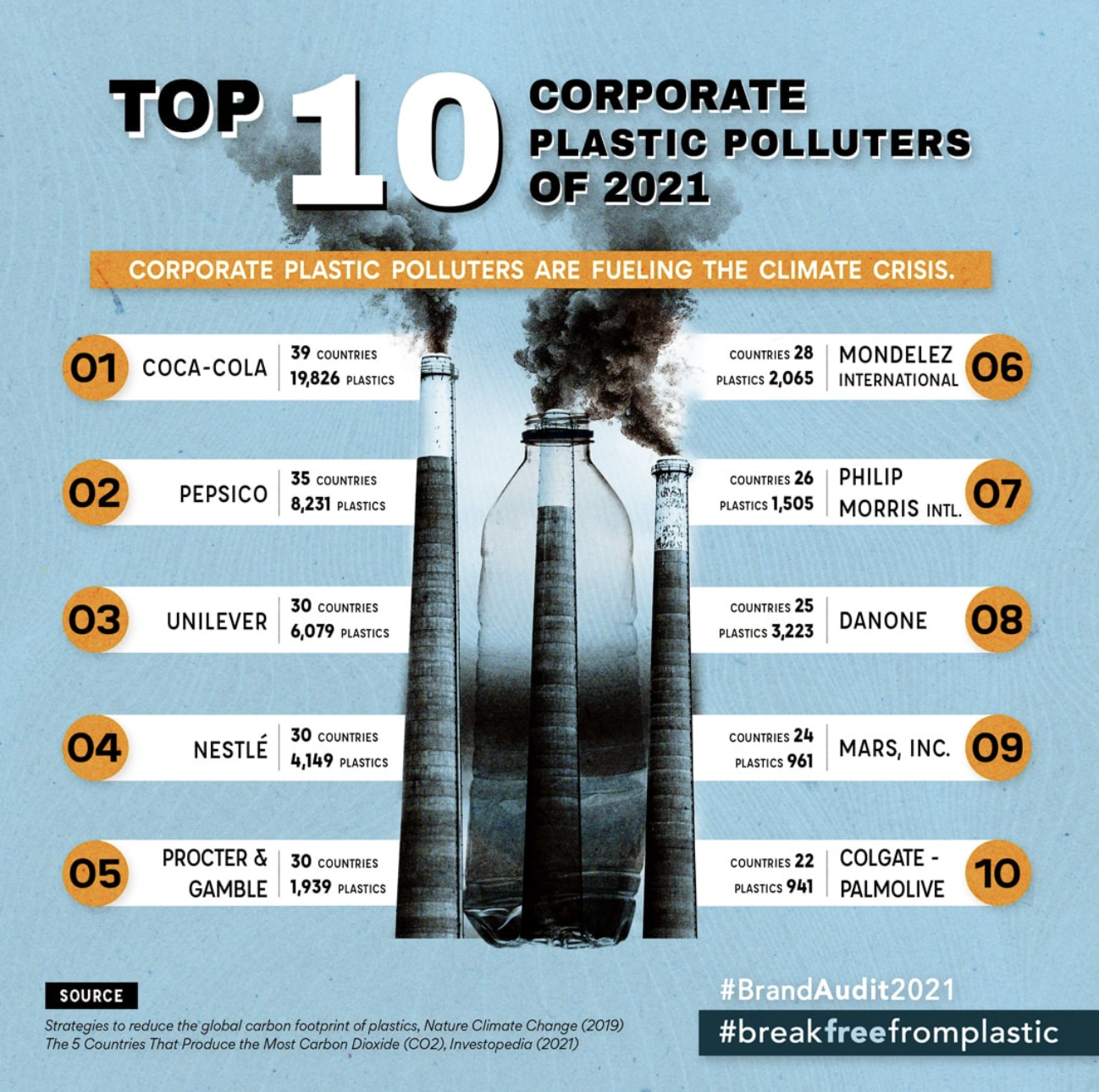
Coca-Cola is far and away the biggest polluter of plastics in the world. So why is it one of the sponsors of the 2022 UN Climate Change Conference in Egypt, known as COP27? The answer is insidious, and, unfortunately, this is not the only shady corporate-climate confluence happening this month in Sharm El-Sheikh.
In addition to having Coke as a sponsor, the Egyptians have hired a PR firm called Hill+Knowlton Strategies, which has been a leading mouthpiece for the fossil fuel industry — representing companies like ExxonMobil, Chevron, Shell, and Saudi Aramco — to head up the conference’s communications.
Today, 400 scientists published a letter to Hill+Knowlton, alleging that the company “has played an enabling role in these [corporate] campaigns to mislead the public through its work...” and is “incompatible” with its role at COP27. “These clients’ business plans to increase fossil fuel production run counter to the goals of the UN Framework Convention on Climate Change (UNFCCC) process to create a just, global process to limit the worst impacts of climate change,” the scientists wrote.
In plainer speak: “It’s like putting Philip Morris in charge of tobacco negotiations,” Jamie Henn, the founder of Clean Creatives, told the The Washington Post. The group puts pressure on PR and advertising agencies to stop working with fossil fuel companies.
The stealthy influence of corporate polluters — companies like Coke and corporations in the fossil fuel industry — shapes how countries respond to the climate crisis, particularly when they are operating in concert with the world’s most important conference on the issue. By allowing greenwashing to tint the conference, COP27 has crossed a line toward commercialization — basically, the world’s most pollutive companies are positioning themselves in a critical space about the climate crisis in order to increase profits and keep the pollutive world order as it is.
“The real deals are handled indoors, you know, in closed rooms,” Bobby Banerjee, a management professor at City University of London’s Bayes Business School, told The Associated Press. Bannerjee has been to three climate conferences. At his first one, he couldn’t get into a meeting about emissions in the mining industry, “But guess what?” he said. “They turned me away, and who walks into the room to discuss, to develop global climate policy? CEOs of Rio Tinto, Shell, BP, followed by the ministers. This group of people — mining companies and politicians — are deciding on carbon emissions.”
Since Coke was announced as a sponsor in September, an online petition to remove the company from the conference has gained 240,000 signatures.
Georgia Elliott-Smith, a sustainability consultant and environmental activist who created the petition, was appalled by what she witnessed last year at COP26 in Glasgow, Scotland. She told AP that she is “really shocked at the amount of corporates attending the conference,” adding that she has seen “open participation between CEOs and climate negotiating delegations in these conversations.”
According to AP, polluting companies signed up to partner with COP26, but British organizers allegedly banned them.
Apparently, not all is what it seems at COP27 in Egypt, which is situated in the perfect place for industry lobbying — North Africa and the Middle East have nearly 60 percent of the world’s oil reserves and about 40 percent of natural gas.
More articles by Category: Environment
More articles by Tag: Climate change


