
















When Congolese President Joseph Kabila tapped 49-year-old Jeanine Mabunda Lioko, a finance executive and a member of the National Assembly of the Democratic Republic of Congo, to be his special representative on sexualized violence in July 2014, UN representatives hailed the appointment as a “new dawn” in the fight to end rape and child recruitment in the country’s 20-year conflict.
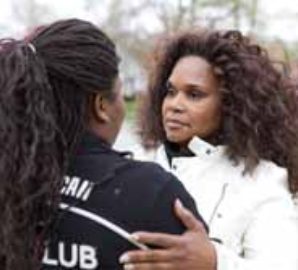
The newest project by Kim Longinotto, recently honored at the San Francisco International Film Festival, reflects her longtime interest in changemakers.

Last week, Human Rights Watch released a report on the campaign of rape being waged in Iraq by the Islamic State (ISIS) and called for medical and psychological help for the survivors. The organization interviewed 20 women and girls in the Iraqi town of Dohuk who escaped captivity by the militant group, and also spoke to medical workers who are doing their best to help the survivors.

On Monday, a report from the UN was made public by UN Secretary-General Ban Ki-moon that highlights sexualized violence in war. The report covers attacks conducted in 2014 and describes violence against women in 19 countries—13 conflict zones, five countries that are recovering from conflict, and one “additional situation of concern” (Nigeria).

In February, the London School of Economics and Political Science announced the launch of a new Center on Women, Peace, and Security at the school. The center, which is scheduled to open in 2016, will focus on the “participation of women in conflict-related processes and on enhancing accountability and ending impunity for rape and sexual violence in war,” according to its website.

In 2011, a Thomson Reuters poll found that Somalia was ranked among the top five most dangerous countries to be a woman. Fewer than three years later, Human Rights Watch concluded that two decades of civil conflict in the country had created a large population of civilians vulnerable to sexualized violence, in a report titled “Here, Rape is Normal.”


When the loudest voices against sexualized violence against women have never caused anyone discomfort, it is safe to say that no one thought that their attitudes on women were being challenged. India's Daughter is the first time that those who knowingly or unknowingly espouse rape culture have been unnerved enough that they feel the need to shoot the messenger.

Back in November, global attention shifted for a brief moment from apocalyptic breaking news cycles just long enough for us to have an honest discourse on sexualized violence, thanks to the campaign for 16 Days of Activism Against Gender-Based Violence. This month, we’ve been given that kind of opportunity again.

On February 24, a friend of mine posted an editorial on social media about a bill passed in the Pakistani Senate four days earlier, which punishes individuals who hinder prosecutions in rape cases or stigmatize the survivor. My friend asked: “How was this story not all over the news?”

In a visit to India in January, U.S. President Barack Obama said women everywhere should be able to “walk the street or ride the bus and be safe.” They should be “treated with respect,” he said. Yet less than two months before that visit, a 26-year-old woman from Delhi said she was raped by a taxi driver for Uber, a Web-based taxi firm that allows passengers to book rides using a phone app.

Twenty-five years of breathing in dust has led Mireille Mbale to drink milk when she can afford it; it is what she believes will guard her against lung disease. She makes less than $5 a day. Years of the eastern Democratic Republic of Congo’s brash sun have dried her exposed skin.

While the news cycle in January was dominated by reports on Japanese hostages held by the militant group Islamic State and the Paris attacks on the offices of the satirical newspaper Charlie Hebdo, some stories didn’t receive as much attention.
- All Categories
- Arts and culture
- Body image and body standards
- Disability
- Economy
- Education
- Environment
- Feminism
- Free Speech
- Gender-based violence
- Girls
- Gloria Steinem
- Health
- Immigration
- International
- Jane Fonda
- LGBTQIA
- Media
- Misogyny
- Online harassment
- Politics
- Race/Ethnicity
- Religion
- Robin Morgan
- Science and tech
- Sports
- Violence against women
- WMC Loreen Arbus Journalism Program