















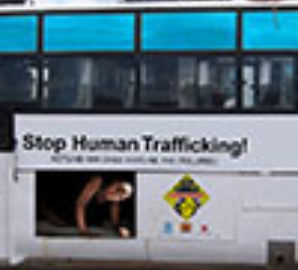
When I met Sophie Otiende, she was running late. I had reached out to her in December 2014 while I was in Nairobi doing research for a film about sex trafficking. Sophie and her boyfriend, Jakob Christensen, are volunteers at the anti-trafficking nonprofit HAART Kenya and had agreed to meet me for dinner. But as time wore on, I was beginning to think I’d been stood up.

A few months ago, an Indian-American Hindu, a Christian Armenian-American, an American Jew, and a Muslim Pakistani-American filmed 22 strangers addressing questions about their experiences regarding gender, race, and wealth. We wanted to produce a website of short videos that explore the concept of “privilege.”

The Women’s Resource Center of Armenia is leading a small but growing movement, working for domestic violence laws, women’s health, education, and more.

Dirty white gates fronted the detention center on the Italian island of Lampedusa, a tiny speck between Sicily and Tunisia, where 71 women were being held. Beyond the bars, I could just make out laundry hanging from the building in which they were housed—maybe 100 yards away—a yellow scarf, a hot-pink piece of cloth.

For the first time in the history of the Bosnian War Crimes Court, judges included compensation to a wartime rape victim as part of the court’s ruling. On June 24, 2015, Bosiljko Marković and Ostoja Marković were ordered to pay roughly $15,000 to the woman they raped during the war. The court sentenced each man to ten years in prison.

The end of June was hot and dry in Lampedusa, as summer always is. The week I spent on the island of an estimated 5,000-6,000 Italians there was a very separate center of town for a population of 771 people.

Often stories on the “Mediterranean migrant crisis” use shots of the rescue at sea: A rickety boat overfilled with desperate people wait to board some kind of Navy boat. But what happens to them next?

We began 2015 by looking at underreported stories of rape and sexualized violence around the world. Cases involving sexualized violence against women—its aftermath, its consequences—were falling below the public’s radar. Now, six months in, we thought we’d take a look at some of the good things that have happened—the steps forward in the march to end sexualized violence globally.
The Court reversed a conviction, but avoided First Amendment questions. Two feminist legal experts weigh in on what yesterday’s Elonis decision means.

In India, it is legal to rape your wife. And as of last month, when a government minister explained why he thought the issue can’t be remedied in his country, marital rape is back in the news.
- All Categories
- Arts and culture
- Body image and body standards
- Disability
- Economy
- Education
- Environment
- Feminism
- Free Speech
- Gender-based violence
- Girls
- Gloria Steinem
- Health
- Immigration
- International
- Jane Fonda
- LGBTQIA
- Media
- Misogyny
- Online harassment
- Politics
- Race/Ethnicity
- Religion
- Robin Morgan
- Science and tech
- Sports
- Violence against women
- WMC Loreen Arbus Journalism Program