
















Pandemic-related lockdowns disproportionally burden women. By asking the right questions, policymakers can create policies that alleviate that burden.

As men have increased their research while home these past couple months, women have lowered their submissions to academic journals, indicating that women are less able to do their research while in stuck in the house.

According to Quartz, any woman under the age of 45 seeking a hajj visa must travel with a mahram, or a male guardian, usually someone related to the woman by blood.

The many unnecessary barriers to abortion access in the U.S. have grown exponentially during the pandemic, forcing providers and patients to adapt.

Countries like Spain, France, the UK, Argentina, and Norway have devised schemes that allow women to seek help without alerting their partners.

Experts say censorship of reading material in schools happens more than many people realize.

Nurses, nursing home employees, domestic workers, and caregivers have long been industries dominated by women, who have long been underpaid.

The loss of resources, support systems, and general safety puts survivors at risk of further abuse.

Among those who are most affected by this virus aren’t just people who have COVID-19, but the nation’s domestic workers, the vast majority of whom are women.

More documentary films by and about women are getting awards recognition and finding sizeable audiences. Here is a list of docs, released over the last year, that are available for streaming.

The coronavirus pandemic has led to a massive surge in child abuse material being uploaded, according to a story from the Fuller Project for International Reporting co-published with the UK Telegraph.
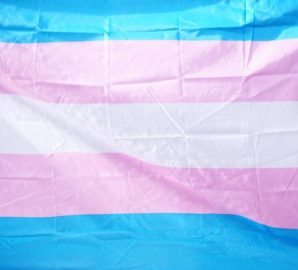
Cisgender people who have experienced gender discrimination are more likely to express empathy and solidarity with people who identify as transgender.

Almost six months since it was first performed, “Un Violador en Tu Camino” (“A Rapist in Your Path”) has become a universal feminist anthem that has crossed borders, languages, and cultures.

Despite composing less than 7% of world leaders, women have been spearheading some of the most effective policies in response to the rapid, global spread of the novel coronavirus.

Chinese American filmmaker Cathy Yan recently became the first Asian American woman to direct an American superhero film with the newest installment in the DC Extended Universe, Birds of Prey (and the Fantabulous Emancipation of One Harley Quinn).

The COVID-19 shutdown is wreaking havoc on child visitations and family reunification.

Six Republican-led states are attempting to ban abortions amid the coronavirus pandemic by claiming that abortions are nonessential medical procedures.

It’s taken nearly 100 years, but the Land O’Lakes company has finally removed the image of a kneeling Native American woman—nicknamed “Mia”—from its packaging.

The film follows the young women as they travel from their small Pennsylvania town to Planned Parenthood in New York City so Autumn can have a surgical abortion.
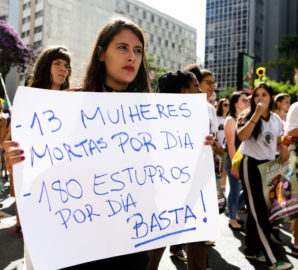
While murder rates are falling in Brazil, femicide rates continue to steadily climb, and with President Jair Bolsonaro at the helm, there are no promising signs of the violence abating.
Robin on glimpses into people’s homes, COVID-19’s impact on the vast Amazon jungle, Northern Ireland, new resources from the Comfort Zone, and pandas in love. Guest: Annie Finch on her major new anthology, Choice Words: Writers on Abortion.

The disparate impact of the coronavirus on Black women is revealing and deepening existing inequalities. Fighting it requires an intersectional approach.
- All Categories
- Arts and culture
- Body image and body standards
- Disability
- Economy
- Education
- Environment
- Feminism
- Free Speech
- Gender-based violence
- Girls
- Gloria Steinem
- Health
- Immigration
- International
- Jane Fonda
- LGBTQIA
- Media
- Misogyny
- Online harassment
- Politics
- Race/Ethnicity
- Religion
- Robin Morgan
- Science and tech
- Sports
- Violence against women
- WMC Loreen Arbus Journalism Program