
















It’s not often you hear the word “vampiric” coming out of a U.N. secretary-general’s mouth. But on Wednesday, Secretary-General António Guterres said at the U.N. Water Conference in New York that countries “are draining humanity’s lifeblood through vampiric overconsumption and unsustainable use” of water. Lengthy droughts are also wreaking havoc.

As countries continue to innovate ways to battle climate change, there is a new, related “slimy arms race” afoot. (Credit to The New York Times for the “slimy arms race” phrasing.) It seems that seaweed, in all its slippery glory, is a multifaceted, under-tapped, and potentially powerful weapon that can be used a number of ways in the ongoing fight to slow or stop global warming.

Today marks the one-year anniversary of the invasion of Ukraine. Hundreds of thousands of people have died, countless numbers have been forcibly taken to Russia, and nearly 1,600 Ukrainian cultural sites and churches have been purposefully destroyed. But there is another potentially catastrophic fallout from the war that is less talked about.

Dr. Robert Bullard, one of the founders of the environmental justice movement in this country, wrote in his 1990 book, Dumping in Dixie, that “white racism … has made it easier for Black residential areas to become the dumping grounds for all types of life-threatening toxins and industrial pollution.”

Global warming is melting the world’s glaciers. We’ve been hearing about this for a while. But what we haven’t been hearing about is the human cost of the dissolving of glaciers. A study out this week in the journal Nature Communications says that 15 million people are under threat globally from flooding caused by overflowing glacial lakes.

Natural disasters can and do cause deaths, but the disabled community suffers disproportionately, with researchers estimating that people with disabilities are up to four times more likely to die in floods, earthquakes, wildfires, and other climate-related events.

As the world suffered through record heat waves in 2022, the Middle East saw extreme temperatures rarely witnessed in history. Foreign laborers must withstand the oppressive heat for endless hours at a time — and with that exposure comes damage to their bodies, one type of which is now being identified as the root of a life-threatening disease.

COP27, the comprehensive U.N. conference on climate change in November, got a lot of attention. But in December, there was a lesser-known U.N. climate-related This one not only made strides toward preserving the natural world, it was also a landmark moment for women in the climate movement.

The Environmental Protection Agency is set to solidify a ruling that will cut down on the smog produced by heavy vehicles. But those deep in the fight to save the planet say that not only does the ruling not go far enough.

It’s been about a month since the United Nations climate conference began in Egypt. Called COP27, the annual forum was a chance to address an increasingly clear red alert for our planet.

At COP27, the UN climate conference in Egypt, which ends today, it appears to have been same old, same old when it comes to inclusion.

Coca-Cola is far and away the biggest polluter of plastics in the world. So why is it one of the sponsors of the 2022 UN Climate Change Conference in Egypt, known as COP27? The answer is insidious, and, unfortunately, this is not the only shady corporate-climate confluence happening this month in Sharm El-Sheikh.
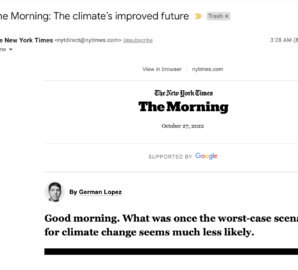
It’s true: The majority of people only read the headline, not the story. There have been a couple studies in recent years that show that only three or four people bother to read an article before sharing it on social media. Which is why it was so alarming to read the New York Times’s morning email the other day.
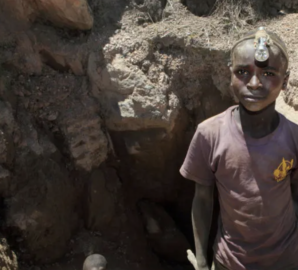
When it comes to the materials needed to keep our electronics going, there is often a hidden cost.

In the past 10 years, an environmental activist somewhere in the world was killed every two days. In 2021, three-quarters of such murders were perpetrated in Central America. The perpetrators have been mainly organized criminal groups and governments that want to destroy land for profit, such as through mining, logging, and extractive industries like oil and gas.
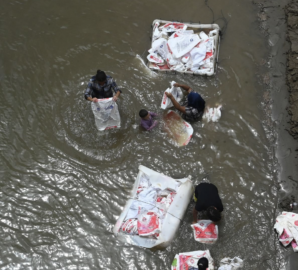
While the world watched in horror as Hurricane Fiona ravaged Puerto Rico and Bermuda this week, it was easy to miss another climate-related emergency. This one is not due to a single massive event, like a hurricane. Instead, it is an ongoing, worsening crisis, one which is devastating Central America.

The jury is out on whether coronavirus has spread more widely than it may have if the world were not undergoing climate change. It is not, however, when it comes to a rise in infectious diseases overall.
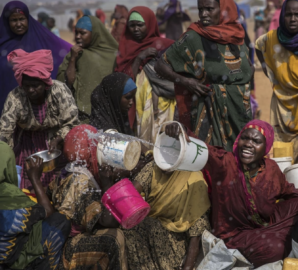
Among the horrors of the climate crisis is drought. In Somalia, in particular, it’s become too dry to grow crops, sustain livestock, or find fresh drinking water.
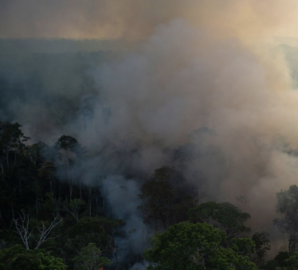
Perhaps it is no surprise that the people involved in that onslaught have found their ways into positions in which they can “legally” make decisions about the Amazon’s precious trees and fauna.
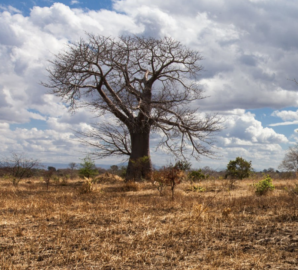
There is now evidence that can be used by countries who want to sue the heaviest polluters in the world: the United States, China, Brazil, Russia, and India.
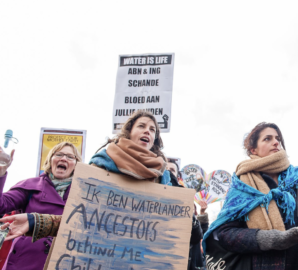
Because extractive industries are generally located in communities with the least power to fight their existence, people who live in areas mostly composed of indigenous people and people of color, among others, are poised to be hit hardest by a new reduction of environmental regulatory authority.

Throughout the Caribbean, from Jamaica to Dominica, developing island countries are suffering the misery of climate change, and they are doing so disproportionately to wealthy nations.
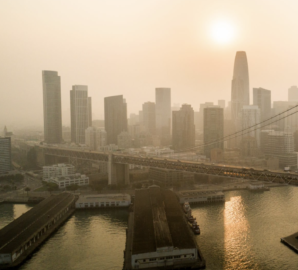
Climate change and inequality are locked in a perverse loop: Impoverished areas are home to pollutive NIMBY industries that release the gases that lead to more climate change, which in turn adversely affects these communities more than any other.

Before Peyton Gendron, 18, allegedly shot and killed 10 people in a Buffalo, N.Y., supermarket on Saturday, he posted a 180-page screed with the clear intention of killing “as many Blacks as possible.” But lesser publicized has been the fact that Gendron identified himself as an “ecofascist,” meaning he thinks people of color are taking up too much space on the planet, thus ruining the environment — and degrading his race.