
















WMC Women Under Siege
When rape became a war crime (hint: It’s not when you think)
Much confusion swirls around when rape was actually recognized as a war crime. Try Googling “rape as a war crime” and you’ll find the third result is a Huffington Post article declaring that it was made such a crime definitively in the International Criminal Tribunal for Rwanda’s initial case, in 1998. But this isn’t exactly right.

WMC Women Under Siege
How to build a rape case: From gathering testimonies to collecting forensic evidence
When former radio host Jian Ghomeshi was acquitted of all charges in a high-profile trial in March, the Canadian judge wrote, “The evidence of each complainant suffered not just from inconsistencies and questionable behavior, but was tainted by outright deception.” He also suggested that willful deception was to blame rather than faulty memory, according to CNN.

WMC Women Under Siege
December 18, 2015 | Kerry K. Paterson, Professor Sarah Deer, J.D. |
International,
Violence against women
Q&A: Sarah Deer on sexualized violence in Native America
When we talk about rape and sexualized violence, there is a tendency to think of it as something that happens to “others,” somewhere far away. But legal scholar, professor, and advocate Sarah Deer knows all too well that gender and sexualized violence is not limited to Syria, or Bosnia, or the Democratic Republic of Congo. It continues to happen right here in North America.
WMC Women Under Siege
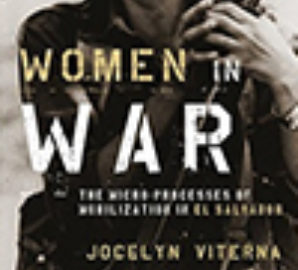
Required reading: 10 books on sexualized violence, gender, and war
Developing a full understanding of how sexualized violence plays out around the globe requires a lot of context. At its most basic, the issue is already difficult to comprehend, but when it happens in war, or when you begin to unpack its intersection with topics like gender, race, ethnicity, religion, or colonization, it can be intimidating just trying to figure out where to start.

WMC Women Under Siege
Safety a click away: The tech industry’s response to violence against women
To combat sexualized violence, advocates and technologists have created new, tech-based apps and services in recent years. Some recent anti-rape device creations include rape-resistant underwear, female condoms with teeth, hairy leg tights, and even “killer tampons.” But not all of the creations are that bizarre. Some tech-based responses include smartphone apps, GPS tools, and other personal safety services and software that may be useful in the right—or wrong—situation.

WMC Women Under Siege
10 must-read books on sexualized violence in war
Our mission here at WMC’s Women Under Siege is to add to the public record on sexualized violence in conflict. But if you’re just setting out to learn more about a topic as complicated as this, figuring out where to begin might seem a bit daunting.

WMC Women Under Siege
A competition of suffering: Male vs. female rape
One of the main components of our project at WMC’s Women Under Siege is to educate the public about how rape is used not only as a crime of war but also as a strategic tool. During our research on systemic sexualized violence in wartime, we have found that rape disproportionately affects women. But the key term here is disproportionately.

WMC Women Under Siege
Mali conflict is latest to employ forced marriage as tool of war
Saran Keïta Diakité painted a dismal reality for women in Mali in a speech she gave to the UN Security Council in April. “They carry out a form of ‘marriage’ so that, at night, you can be treated as a sexual slave,” Diakité said. “During the day, you are there to serve tea to the men and attend to their every need. This is why I always say that what’s happened in Mali is unprecedented."
WMC Women Under Siege
Q&A: A fresh look at rape during the U.S. Civil War
Crystal N. Feimster is no stranger to uncomfortable narratives. A feminist scholar in the department of African-American studies at Yale University, Feimster has spent much of her academic career addressing and unpacking the often-controversial stories woven through racial and sexualized violence. She has found 450 court martial cases from the Civil War related to rape and other sexualized violence, but says that, as we still find today, the crime was “overwhelmingly underreported.”
WMC Women Under Siege
Lack of clean water tied to rape in the Solomon Islands
On any given day, women around the world will find themselves in danger of rape while performing the most basic acts of survival. Acts borne of necessity, such as fetching clean water for cooking or washing, or gathering firewood, often leave women vulnerable to rape and gender-based violence as they are forced to venture to remote areas. In the Solomon Islands, the problem is severe.