















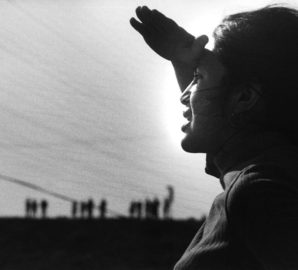
A new film spotlights the remarkable life and work of labor organizer and feminist Dolores Huerta. Emily Wilson talked to Huerta about the film and the activist's extraordinary contributions.

Like so many other scientific concepts, there is mnemonic device for the modern stellar spectral classification scheme, also known as the Harvard Spectral Classification Scheme.
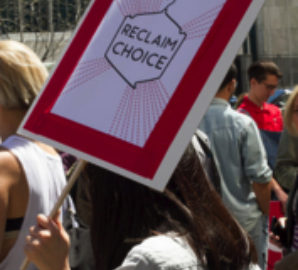
Democratic leadership has said abortion won't be a "litmus test" for candidates. But they can't make progress on economic and racial justice without fighting for abortion rights.

At the end of last month, the BBC was forced to reveal its employees’ salaries, and the results upset many—specifically, the considerable wage gap between its male and female employees. Two-thirds of the presenters who earned over £150,000 were men.

By now, most young feminist are aware of the well-documented efforts students have made to push back against sexist dress codes. Administrators and teachers across the country continue to shame their female students for wearing “revealing” tank tops and shorts, claiming their exposed skin “distracts” male students. These dress codes, young feminists claim, are an affront to feminist progress...

One day earlier this month, I woke up to several alerts from friends and acquaintances sharing with me articles about a Google software engineer, James Damore, who had written an internal memo called “Google’s Ideological Echo Chamber.” In the memo, Damore criticizes Google’s diversity efforts ....

Detroit, directed by Kathryn Bigelow, takes place in the midst of the infamous 12th Street riot, which was sparked after the police raided an unlicensed club for African-American veterans in 1967....

Ava DuVernay has never been afraid to bring issues like race, the unjust U.S. “justice” system, mass incarceration, and the criminalization of African-Americans and other PoC to the forefront of her films. From the Oscar-winning film Selma to the highly acclaimed 2016 Netflix documentary 13th, DuVernay has examined how the criminal justice system is actively used as an oppressive tactic to repress and discriminate against the Black population....

In July of this year, Columbia University settled alleged rapist Paul Nungesser’s lawsuit against the school for gender-based discrimination. Nungesser was accused of raping then-fellow Columbia student Emma Sulkowicz, who gained attention for her 2014 performance-art piece Mattress Performance (Carry That Weight).

No, Donald Trump is not Adolph Hitler.
That this horrific idea exists, floating in our collective ethos and demanding a refutation is shocking. But this is where we are, and the failure to address the horror only means a greater evil is sure to come.

In November 2016, a scholar named Sebastian Schutte—a Marie Curie fellow at the Zukunftskolleg and the Department of Politics and Public Administration at the University of Konstanz in Germany—wrote an interesting article in The Washington Post. In it he argued that Trump had not reached Hitlerian heights. Not yet.

Historically, changes in military policies have been indicative of broader fights for social change in America. For example, the military’s desegregation in 1948 reflected the Civil Rights movement’s progress made around racial discrimination against African Americans, and the 2011 repeal of “Don’t Ask Don’t Tell,” a policy that banned openly gay citizens from serving in the military, reflected the progress the LGBT movement had made (in fact, gay marriage was legalized soon after). So in the wake of this progress, it was all the more upsetting when Trump declared a ban on transgender people serving in the military last Wednesday.

A new resource on media and the suffrage movement sheds light on the central role of media in any campaign for social change.

The results of a recently published Georgetown Law study that found Black girls experience “adultification”—or are seen as older and less innocent than their white counterparts—might be surprising to some, but certainly not to those in the Black community. While this study isn’t the first to validate the inequitable experiences of Black women or Blackness in general, this study reflects the specific experiences of Black girls.

After immigrant youth spent years relentlessly organizing and protesting against U.S. deportation laws, President Obama signed an executive order called Deferred Action for Children Act (DACA) in 2012. DACA was created to provide temporary deportation relief to eligible undocumented youth who had migrated to the United States as children.
- 2026
- 2025
- 2024
- 2023
- 2022
- 2021
- 2020
- 2019
- 2018
- 2017
- 2016
- 2015
- 2014
- 2013
- 2012
- 2011
- 2010
- 2009
- 2008
- 2007
- 2006