
















Every Wednesday at half-past one, in the narrow lanes of the southern Delhi slum of Dakshinpuri, a group of local women congregate in a windowless room. They are members of the “Mahila Panchayat,” or “female village council.” They are bound by a common cause—justice for women who suffer violence and harassment in their homes.


I didn’t grow up in a very religious home. Concerts are where I know to worship. Joy, to me, in its most potent form, feels like expelling lyrics loudly at a stage. It feels like the rattle of drums in my bones. At concerts, I learned to find communion with strangers. I learned to be grateful for the sorrow and scars and coming of age from which great music is born. The performers are more preachers than deities, though we meet them with godly reverence. When we’re lucky, the artist is a young woman.
With this morning’s news that the Islamic State has claimed responsibility for the suicide bombing at the UK’s Manchester Arena Monday night, the obviousness of the target begins to make a sick kind of sense.

If tech companies truly want to embrace diversity, they need to reverse a pervasive culture of bias, harassment, exclusion, and bullying, according to a new study.

Over its 15 years on the air, The Bachelor franchise has had some of the most aggravatingly attractive, square jawed, toned, and tantalizing contestants a producer could dream of. Every season, a sea of white faces, usually decorated with an occasional pinch of color, descend upon the Bachelor Mansion to drunkenly vie for the immediate and undying attention of one beautifully sculpted white person. But now, for its 34th season (which starts tonight), the franchise has finally stemmed its wave of “caucasity” by casting its first black bachelorette, Rachel Lindsay.

The United Nations has committed to achieving gender equality and empowering women and girls everywhere by 2030. Some specific targets include ending all forms of discrimination against all women, eliminating all forms of violence against all women, ensuring women’s full and effective participation in public, economic, and political life, and ensuring universal access to sexual and reproductive health resources and reproductive rights.

As with other sport, there are several “official” competitions sanctioned by licensed organizations for college rugby. But there are also unofficial matches—our “friendlies,” our festivals. During these events, teams gather for weekends full of rugby matches, drinking, bruises, wearing over-the-top costumes, and even more rugby. Nothing says “fun” to these people quite like slamming into each other full force while a little buzzed and wearing a tutu.

This is meant as an informal guide for journalists who cover sexualized violence or want to, mainly in an international context.

Women have benefitted from the Affordable Care Act, and women have a lot to lose if the new Republican health care bill becomes law.

Emerging from a crowd of around a dozen women, Farida, a 32-year-old Syrian refugee living in Istanbul, stood in front of a cabinet full of bright and colorful threads and beads. Looking at the materials with friends, she mused what color she should use for her next earring project. “Let’s not use orange and pink this time,” she murmured to one of her friends, another Syrian refugee.

I was in seventh grade, a twelve-year-old pudgy, buck-toothed, frizzy-haired, acne-prone girl totally oblivious to my supposed physical flaws and shortcomings. I lived in my own sheltered bubble. I went to school, did homework when I got back home, and then played in the backyard with our neighbor’s kid. I went to the library with my mother a lot. Perhaps most informatively, though, I lacked exposure to most media. I watched TV only once a week and seldom watched movies (except for the occasional viewing of Dumbo). This fostered a sense of cluelessness about societal expectations of beauty.

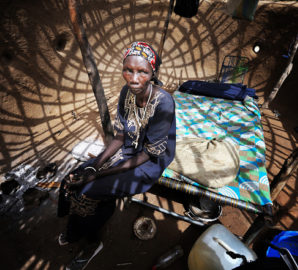
No one should ever have to choose between starving to death and exposure to HIV, however millions of women and children struggling to survive in the drought-stricken countries of southern Africa aren’t being given a choice.
- 2026
- 2025
- 2024
- 2023
- 2022
- 2021
- 2020
- 2019
- 2018
- 2017
- 2016
- 2015
- 2014
- 2013
- 2012
- 2011
- 2010
- 2009
- 2008
- 2007
- 2006