















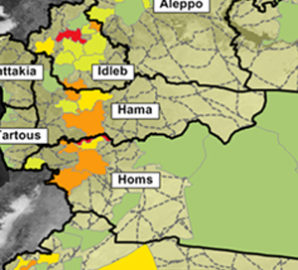
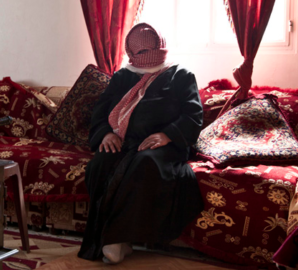
A woman swathed in black squares her shoulders and calmly looks into a camera. She holds a Quran. Only a sliver of her face—her eyeglasses—shows. “What happened to me hasn’t happened to anyone, or if it has affected anyone else I do not know,” she says. “But I will speak and let all the people know what [Syrian leader] Bashar al-Assad and his men are doing.” Over the next four minutes, her breathing grows labored and her voice breaks as she describes how, in May 2011, five men wearing black entered her home on the outskirts of Homs and raped her.


After Sen. Joseph Lieberman published this Washington Post op-ed advocating for the U.S. to step up its efforts to topple the Syrian regime last month, Jackie Blachman-Forshay and I wrote a response.
I met photojournalist Matilde Gattoni very recently on Facebook, which is to say we haven’t actually met in person. Even so, she’s already made an impression on me. Her work has a way of highlighting humanity—literally in chiaroscuro but also figuratively.


We know that thousands of women were raped during the Holocaust. We also know that rape was never part of any charges against anyone responsible for the era’s atrocities. In a thrilling new turn of events, files long locked away at UN headquarters in New York have revealed details of investigations into the use of rape by Nazis. Could this lead to justice for women brutalized in other wars?

Let’s blame men. Many of us do—many women and even men blame men for the mass rape of women in war. It’s easy to point our fingers and name the perpetrator. But what if we were to step back and ask how men can actually be part of the solution? It requires a couple of basic assumptions.

GUATEMALA CITY — A man in a mask opens a door. The smell of rot hovers in the air and everywhere there are piles of paper -- pink, yellow, white, all a bit aged and possibly very important. When searching through the 80 million documents dumped in the archives of the Guatemalan National Police, it's never clear what will turn up.
