
















Women Under Siege spoke with Dr. Maxine Margolis about the three religious fundamentalist communities she observes in her book Women in Fundamentalism: Modesty, Marriage and Motherhood and the role of gender in their ideologies.

Women Under Siege spoke with Lisa Wade, PhD, an associate professor of sociology at Occidental College and author of American Hookup: The New Culture of Sex on Campus, to better understand the relationship—and long history—between white supremacy, masculinity, and the American image.

Brazil has maintained its place as first among countries with the highest murder rate of trans and gender-diverse peoples. In a country that remains deeply conservative and religious, and under a president who has openly targeted the LGBTQ community to "rescue our values," Brazil's trans community especially is fighting to exist, freely, openly, and safely.

Rape "jokes" made by a YouTube star are stirring controversy in Brazil, where a rape takes place every 11 minutes.

A video of Brazilian supporters harassing a Russian woman during the Soccer World Cup shows the ugly side of machismo.

Brazilian TV star Barbara Thomaz says she was fired after taking maternity leave and reporting harassment by one of her superiors. Her experience isn't unusual.

Operation Condor, a France and U.S.-endorsed campaign of torture in South America, is long over. But the brutality it wrought still echoes today.
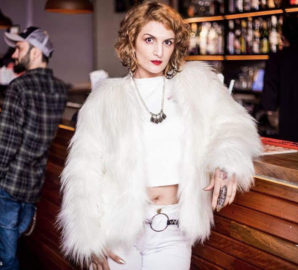
When in August Brazilian writer and feminist activist Clara Averbuck refused the advances of an Uber driver, he physically threw her out of his car, leaving her bruised and with a black eye. He then sexually assaulted her as she lay on the ground.

On December 14, 2016, 23-year-old feminist activist Débora Soriano de Melo was bludgeoned to death with a baseball bat in a bar in São Paulo, Brazil. There was evidence that the young activist suffered sexual abuse that same night. Detectives suspected Willy Gorayeb Liger, a manager of the bar, in the assault and called for his arrest on rape charges.

Within the first few days after Sandra Moreno’s daughter, Ana Paula, disappeared in 2009, Moreno reached out to a TV crew a few blocks from her home in the lower-middle-class neighborhood of Carapicuíba, in the Brazilian state of São Paulo.

In May, a 16-year-old girl reported that she had been raped by at least 33 men armed with assault rifles and handguns in a favela, or slum, in the western part of Rio de Janeiro in Brazil. The girl said she believed she was drugged after she went to a party with her boyfriend on May 21. She woke up naked and wounded in a house, she said, surrounded by more than two-dozen men. The attack was so vicious it ruptured her bladder.