
















Sexualized violence is widespread throughout the world. This is true even in times of peace and stability, but it escalates during humanitarian crises. In conflicts, women’s bodies can become battlegrounds, with rape used to humiliate and dominate. Protection systems also collapse during natural disasters, leaving women and girls vulnerable. And child marriage, a form of gender-based violence, is often seen as a coping mechanism among crisis-affected families.

Accusing migrant women of bringing ‘anchor babies’ to Europe misunderstands their journeys and motives, says researcher and anthropologist Sine Plambech. Understanding their real stories explains why so few are willing to return.

While the most recent extreme campaign to exterminate the Rohingya has shocked the world, it is an effort built upon a long history of oppression.

U.S. Ambassador to the UN Nikki Haley is going to Africa. South Sudan, the Democratic Republic of Congo, and Ethiopia, specifically. She says in an October 22 CNN op-ed that President Trump is sending her “to get a first-hand picture of what can be done.”

Unlike many other post-conflict African nations, Rwanda is working to support women widowed by the country’s 1994 genocide. With the establishment of care homes and other initiatives, the country’s elderly widows can finally find peace.
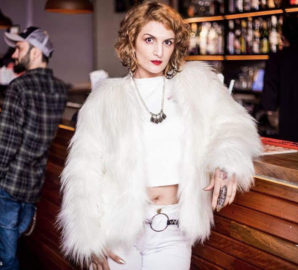
When in August Brazilian writer and feminist activist Clara Averbuck refused the advances of an Uber driver, he physically threw her out of his car, leaving her bruised and with a black eye. He then sexually assaulted her as she lay on the ground.

The Irish government announced in September they would hold a referendum on the 8th Amendment in mid-2018—a long-awaited move by many in the country. The announcement followed years of campaigning by pro-choice organizations in Ireland.
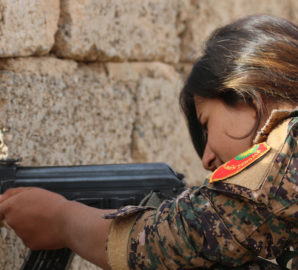
Ekhlas was 14 years old when Islamic State militants attacked the northern Iraqi city of Sinjar in August 2014. Her family tried to flee to nearby Mount Sinjar, but they never made it.

Just out of graduate school in Mexico City, Lissette Marquez longed to travel the world on an American cruise ship. She was thrilled to obtain a guest-worker visa that allowed her to join a ship crew in California. But instead of the ideal job she had envisioned, Marquez said she found herself toiling long hours, earning less than a $4 hourly wage, and feeling isolated.

In 2014, the so-called Islamic State abducted thousands of women and children when they invaded large parts of Iraq and tortured, enslaved, and killed many people affiliated with the Yazidi religious group. In response, in November 2015, the Jiyan Foundation for Human Rights, an Iraq-based organization that helps victims of human rights violations, opened a trauma clinic for women in the Kurdish city of Chamchamal.

On computer screens thousands of miles away from one another, some of the world’s leading feminist figures joined in solidarity with women in the Democratic Republic of the Congo at the country’s first-ever women’s summit on September 14.

Rahaf feared going home. Her clothes had been torn, making visible the painful red welts that would turn into eggplant-colored bruises. On her arms and legs, her family and fiance would be able to see the round burn marks where they put out cigarettes on her skin.

As the Caribbean and Florida have been pummeled by Hurricane Irma these past few days, people around the world have been desperate for news of their loved ones, while those stuck on battered islands and coasts with no electricity, no information on rescue activities, and little hope that their lives and property will make it through this A-bomb-level storm are left trying to find cell phones that work to learn what they can.

Women around the world continue to struggle not only with draconian laws that deny them ownership of their own bodies, but also the threat of hard-won rights being rolled back. Here, we take a look at some of the places around the world that are playing the long game for abortion reform.

No, Donald Trump is not Adolph Hitler.
That this horrific idea exists, floating in our collective ethos and demanding a refutation is shocking. But this is where we are, and the failure to address the horror only means a greater evil is sure to come.

In November 2016, a scholar named Sebastian Schutte—a Marie Curie fellow at the Zukunftskolleg and the Department of Politics and Public Administration at the University of Konstanz in Germany—wrote an interesting article in The Washington Post. In it he argued that Trump had not reached Hitlerian heights. Not yet.

In a primary school classroom, Deepa Das holds back tears as she explains to her 6-year-old daughter why she doesn’t have enough clothes for her. Eight days ago, as heavy monsoon rains lashed the state, Das’ home, which lies in a village behind the school where she is taking shelter, was completely flooded in the space of an hour.

The week after she handed in her AK47 rifle, Patricia found out she was pregnant. Patricia had been a rebel fighter in the Revolutionary Armed Forces of Colombia, or FARC, for 14 years. Last month, she was one of 7,000 rebels to hand in their weapons in a low-key ceremony that marked the end of the armed struggle.

In the violence that rocked Kenya following the disputed elections of 2007, the media reported hundreds of cases of sexualized violence. Jane’s was one of them. Today, Jane grapples with HIV, trauma, and empty promises of reparation. Her husband was killed in the violence, but his body has never been found.

Guatemala City—It’s not a stretch to say that the reproductive rights of women and girls are not fully recognized in Guatemala. On top of that—or perhaps because of it—Guatemala has one of the highest rates of teen pregnancy in Latin America, where one in three girls becomes a mother before reaching the age of 18, according to a 2014 UNICEF report.

“He said, ‘If you cry, I’ll kill you,’” Agnes says. “He clasped my throat so I wouldn’t scream, threw me to the ground and raped me.” The shy, anxious 18-year-old lowers her eyes and touches her throat. She’s barely said a word in two months.

With Trump dominating nearly every bit of news across the country and in many parts of the world, reports of major human rights violations against women are being overshadowed.
Milia Eidmouni’s family didn’t want her to be a journalist. They wanted her to choose a more typical career for an educated Syrian woman, such as teaching. But as a feminist, women’s rights defender and human rights campaigner, she pursued her desire to become a working journalist in 2007

Anneke Lucas survived being trafficked for sex not once, but twice. “I was 9 years old when an elderly English-speaking man took me to the United States in his jet and sex-trafficked me in a luxurious hotel,” says Lucas, an anti-trafficking advocate and the founder of the nonprofit organization Liberation Prison Yoga.

Every Wednesday at half-past one, in the narrow lanes of the southern Delhi slum of Dakshinpuri, a group of local women congregate in a windowless room. They are members of the “Mahila Panchayat,” or “female village council.” They are bound by a common cause—justice for women who suffer violence and harassment in their homes.