
















Many international donors want to invest in Afghan women’s economic potential. But the country needs to transform its entire gender infrastructure to really change women’s lives, writes Ayesha Ahmad.

In a new report, a troubling pattern in which journalists paid little mind to ethics and consent when interviewing survivors of sexualized violence emerges.

They are the hidden cost of Rodrigo Duterte’s drug war in the Philippines: single, teenage mothers whose partners have been killed by police or vigilantes. And without a job or government support, it’s near impossible for them to support their children.

When the women of Rwandit village learned how much initiation ceremonies for girls and boys were really costing them—in terms of money and lost education – they radically reformed their traditions, giving women and girls more power in the process.

“Women in Somaliland, especially younger women and girls, are now beginning to have hope for a better future,” 25-year-old Ahmed said of the bill, which is the country’s first piece of legislation to address sexualized violence.

Each year, hundreds of people—most of them women—have been killed for being suspected witches. Rights activists say raising awareness and investing in development can help stop communities from turning on their elders.

Niñas sin Miedo, or Girls Without Fear, works to promote human rights by educating young girls on sexualized violence and offering conferences and workshops on teen pregnancy prevention, sexual abuse, and harassment. It also empowers the girls by teaching them to ride bikes together.

This is the first time a mastermind of mass rape has been held legally responsible in DRC. But the story doesn’t end here. There are still a few major issues to watch.

Today a historic conviction came down in the Democratic Republic of Congo. It was the first time an official or commander has been convicted of masterminding rape in the country.

A call comes in at 4:58 p.m. The night shift hasn’t yet started, so the day team that has been working since 7 in the morning goes out. We leave at 5:30. There’s no explicit rush. The 11-year-old isn’t bleeding.

In India, it’s now illegal for a man to have sex with his wife if she is under the age of 18. But anti-rape activists in India are looking at the next fight ahead of them: making the rape of adult women in marriage illegal.

It is 9 a.m. on November 9, and hundreds—maybe 1,000—people have gathered to watch something many believed would never happen: the trial of a group of men who allegedly gang-raped approximately 50 little girls, aged 18 months to 11 years, in a village called Kavumu. Justice has been four years in the making.

Sexualized violence is widespread throughout the world. This is true even in times of peace and stability, but it escalates during humanitarian crises. In conflicts, women’s bodies can become battlegrounds, with rape used to humiliate and dominate. Protection systems also collapse during natural disasters, leaving women and girls vulnerable. And child marriage, a form of gender-based violence, is often seen as a coping mechanism among crisis-affected families.

Accusing migrant women of bringing ‘anchor babies’ to Europe misunderstands their journeys and motives, says researcher and anthropologist Sine Plambech. Understanding their real stories explains why so few are willing to return.

While the most recent extreme campaign to exterminate the Rohingya has shocked the world, it is an effort built upon a long history of oppression.

U.S. Ambassador to the UN Nikki Haley is going to Africa. South Sudan, the Democratic Republic of Congo, and Ethiopia, specifically. She says in an October 22 CNN op-ed that President Trump is sending her “to get a first-hand picture of what can be done.”

Unlike many other post-conflict African nations, Rwanda is working to support women widowed by the country’s 1994 genocide. With the establishment of care homes and other initiatives, the country’s elderly widows can finally find peace.
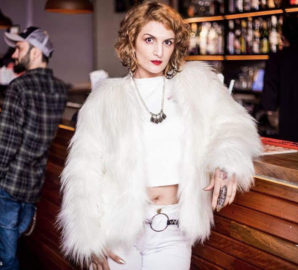
When in August Brazilian writer and feminist activist Clara Averbuck refused the advances of an Uber driver, he physically threw her out of his car, leaving her bruised and with a black eye. He then sexually assaulted her as she lay on the ground.
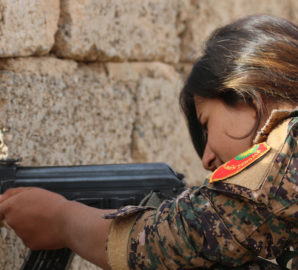
Ekhlas was 14 years old when Islamic State militants attacked the northern Iraqi city of Sinjar in August 2014. Her family tried to flee to nearby Mount Sinjar, but they never made it.

Just out of graduate school in Mexico City, Lissette Marquez longed to travel the world on an American cruise ship. She was thrilled to obtain a guest-worker visa that allowed her to join a ship crew in California. But instead of the ideal job she had envisioned, Marquez said she found herself toiling long hours, earning less than a $4 hourly wage, and feeling isolated.

In 2014, the so-called Islamic State abducted thousands of women and children when they invaded large parts of Iraq and tortured, enslaved, and killed many people affiliated with the Yazidi religious group. In response, in November 2015, the Jiyan Foundation for Human Rights, an Iraq-based organization that helps victims of human rights violations, opened a trauma clinic for women in the Kurdish city of Chamchamal.

On computer screens thousands of miles away from one another, some of the world’s leading feminist figures joined in solidarity with women in the Democratic Republic of the Congo at the country’s first-ever women’s summit on September 14.

Rahaf feared going home. Her clothes had been torn, making visible the painful red welts that would turn into eggplant-colored bruises. On her arms and legs, her family and fiance would be able to see the round burn marks where they put out cigarettes on her skin.

Women around the world continue to struggle not only with draconian laws that deny them ownership of their own bodies, but also the threat of hard-won rights being rolled back. Here, we take a look at some of the places around the world that are playing the long game for abortion reform.

When the Democratic Republic of Congo was dubbed the “rape capital of the world” in 2010 by Margot Wallström, the former UN special representative on sexual violence in conflict, understandably the government of DRC was not happy. Besides that, putting one country above all others when it comes to violence against women is a debatable move: So many places have horrifying records of rape and impunity for such cases. But Wallström had good reason for aiming her words at what is unambiguously a truly terrible place for women.