
















Judy Lubin is founder and president of the Center for Urban and Racial Equity (CURE), whose mission is to partner with people and organizations to advance equity through policy, systems, institutional, and community change. Since its inception, Lubin and her team have advocated for racial equity as a core value and process for assessing and building programs, services, public policies, work environments, and community-centered strategies for housing and community development institutions, national organizations, and government agencies such as the DC Office of Planning, U.S. Department of Health and Human Services (DHHS), Reinvestment Fund, ZERO TO THREE, Vera Institute for Justice, and American Medical Group Association. Lubin is a nationally recognized thought leader, researcher, and change catalyst with over 20 years of experience working at the intersections of racial equity, social policy, and public health. Media includes: Huffington Post, Ebony, Essence, The Hill, The Wall Street Journal, NPR, The New York Times, CNN.

Andrea Ritchie is a Black lesbian immigrant survivor who has been documenting, organizing, advocating, litigating, and agitating around policing and criminalization of Black women, girls, trans, and gender nonconforming people for the past three decades. She is the author of Invisible No More: Police Violence Against Black Women and Women of Color and co-author of Say Her Name: Resisting Police Brutality Against Black Women, Queer (In)Justice: The Criminalization of LGBT People in the United States, and the forthcoming No More Police: A Case for Abolition. She co-founded the Interrupting Criminalization initiative with Mariame Kaba, as well as the In Our Names Network, a network of over 20 organizations working to end police violence against Black women, girls, trans and gender nonconforming people. Media includes: The New York Times, The Washington Post, Teen Vogue, MSNBC, C-Span, NBC, NPR.
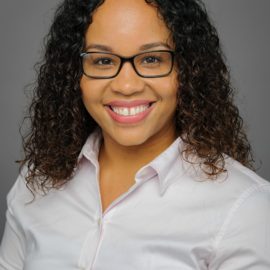
Andrea M. Headley is an assistant professor at the McCourt School of Public Policy at Georgetown University. She is a scholar of public management, racial equity, and criminal justice policy. At the heart of research lies the question how can we create a more effective and equitable criminal justice system? Headley’s research focuses on policing to understand how organizational, managerial, and individual level factors affect service delivery and outcomes, with a keen focus on inequities and disparities. Specific examples of her past work include improving police-community relations in communities of color, assessing the effect of race during use of force encounters, evaluating body-worn cameras, understanding national police reform commissions, analyzing dispositional outcomes in citizen complaints, and exploring the gendered norms and cultures in policing. Media includes: Dayton Daily News, The Conversation, NBC, PBS.

Charlene A. Carruthers (she/her) is a writer, filmmaker, community organizer, and Black Studies PhD Candidate at Northwestern University. A practitioner of telling more complete stories, her work interrogates historical conjunctures of Black freedom-making post-emancipation and decolonial revolution, Black/Native/Indigenous relationalities, Black governance, and Black feminist abolitionist geographies. As the founding national director of BYP100 (Black Youth Project 100), she worked alongside hundreds of young Black activists to build a member-led organization dedicated to creating justice and freedom for all Black people. Media includes: Huffington Post, The Grio, MSNBC, BBC, NPR.

Rinku Sen is a writer and social justice strategist. She is the executive director of Narrative Initiative and the former executive director of Race Forward, publisher of the award-winning news site Colorlines. Under Sen’s leadership, Race Forward generated some of the most impactful racial justice successes of recent years, including Drop the I-Word, a campaign for media outlets to stop referring to immigrants as “illegal.” Her books Stir it Up and The Accidental American theorize a model of community organizing that integrates a political analysis of race, gender, class, poverty, sexuality, and other systems. Since the 1980s she has been bringing racial justice to feminism and feminism to racial justice, and fair economy to all of it. She has mentored dozens of organizers, community leaders, philanthropists and artists through her nearly 40-year career. Media includes: Associated Press, USA Today, Los Angeles Times, MSNBC.

Kristal Brent Zook, Ph.D. is an award-winning journalist and professor of journalism at Hofstra University. She is the author of The Girl In The Yellow Poncho and I See Black People: Interviews with African American Owners of Radio and Television and Black Women's Lives: Stories of Power and Pain. Brent Zook speaks regularly on popular culture and gender, multiracial identity and blackness, as well as social justice issues involving health, the environment and criminal justice. Media includes: The New York Times, The Washington Post, CNN, C-SPAN, NPR, Fox.
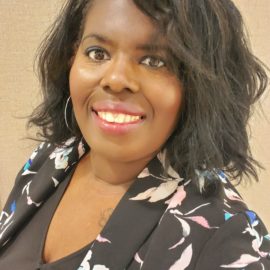
Christian F. Nunes is president of the National Organization for Women, and is leading the organization through an intersectional lens, bringing a diverse coalition of grassroots activists to work against structural sexism and racism. Nunes launched NOW’s Racial Justice Summit in 2020 and the 100 days of the Feminist Agenda Campaign in partnership with Black Women's Blueprint. She is an active community organizer and public speaker, regularly featured at events such as the March for Black Women, Women’s March Events, and rallies around the country in support of the Equal Rights Amendment and immigration rights. Media includes: Business Insider, Salt Lake Tribune, CBS, PBS.

Sylvia A. Harvey is an award-winning journalist and author of The Shadow System: Mass Incarceration and the American Family, a searing exposé of the effects of the mass incarceration crisis on families – including the 2.7 million American children who have a parent locked up. Harvey is a longtime expert on the intersection of race, class, policy, and incarceration. Harvey’s research and reporting investigate the way culture, politics, history, public health, and financial insecurity affect our lives. She focuses on how some of our most important social institutions – the criminal legal system, the child welfare system, and the education system – exacerbate the collateral effects of mass incarceration on families and communities. Media includes: The Nation, Elle, Politico, Vox, The Marshall Project, Imprint News, Colorlines, NPR, WBAI.

Chantá Parker is a partner with the Management Center where she coaches leaders to be more equitable, sustainable, and results-driven. She is the founding Managing Director of the Neighborhood Defender Service in Detroit where in 2019, she built a client-centered, holistic public defender office for residents of Wayne County. Previously, she served as the Special Counsel for New Initiatives at the Innocence Project in New York, NY. Chantá has over fifteen years of criminal defense experience, having worked as a supervising attorney in the Criminal Defense Practice of the Legal Aid Society’s Brooklyn office, and as a felony trial attorney with the Orleans Public Defenders. As a public defender, Chantá has seen up close the impact of mass incarceration on clients, their families, and their communities and has experienced the harms of mass incarceration both in her professional and personal life. Media includes: Detroit Free Press, The Gambit.

Melanie E. Bates, Esq. is the principal of Melanie Bates Consulting, LLC, a Washington, DC-based consultancy specializing in local government relations, criminal justice reform, and communications. Bates has a strong passion for criminal justice reform and believes it is incumbent upon our society to ensure that every person, regardless of socioeconomic status, has access to quality legal representation. It is her belief that poverty, lack of education, and other social issues should not feed the pipeline to prison. Media includes: The Nation, Rolling Out, D.C.ist, Fox.

Raine Gilchrist is a writer, strategist, and advocate based in Columbia, SC. In writing, the bulk of her focus has been on diversity, equity, and inclusion as they pertain to interpersonal and community relationships and their wider contexts. She is an expert on systemic and societal racism as a human rights issue, critical thinking in social justice movements, reaching beyond racial differences; race, ethnicity, and policy in the South. Her strengths lie in analysis, forming strong arguments based upon solid research, personalizing current domestic and international events for readers, and identifying trends and context in culture, policy, and politics. Media includes: The Washington Post, Charleston City Paper, Literary Hub, Longreads, The Daily Beast, Garden & Gun, MSNBC, NPR.

Debbie Hines is a Washington, DC based trial attorney, former Baltimore prosecutor, member of the Supreme Court bar, author Get Off My Neck: Black Lives, White Justice and a Former Prosecutor's Quest for Reform (MIT, 3/24), and legal commentator on CNN, MSNBC, NBC. Hines is an expert in criminal law, high profile criminal cases, gun control and gun laws, police brutality, death penalty, domestic violence and Supreme Court cases. She often addresses legal/political issues at the intersection of gender, race and class. As a former felony prosecutor, she tried homicides, attempted murders, rapes, burglaries, robberies, narcotics and economic crimes. Media includes: The Washington Post, Al Jazeera, BET, C-SPAN, CBS, CCTV, MSNBC, PBS, Sky News, Fox 5 News.

Recognized as an Inspirational Parent in 2018 by CADRE and as a Black Feminist Rising in 2017 by Black Women’s Blueprint, Trina Greene Brown is a leader who is taking Black parents and children along with her to higher heights. Bridging her 15 years of professional experience as a youth organizer in ending violence with her personal role as a parent of two Black children, Brown is a proud Black-feminist Mama-activist. In 2016, she founded Parenting for Liberation to support Black parents heal from & interrupt intergenerational violence to build resilient and joyful Black families in community. Trina lectures and writes on topics of African American families at Cal State Fullerton; her writing has been featured in “On Parenting” for the Washington Post, Essence magazine, LA Parent Magazine, and anthologies. Her book “Parenting for Liberation: A Guide for Raising Black Children” debuted on Juneteenth 2020 by Feminist Press. Media includes: The Washington Post, On-Air with Ryan Seacrest, Peace Over Violence.

Lenese Herbert is a professor of law at Howard University School of Law, where she teaches Evidence, Criminal Procedure, Criminal Law, Social Media and the Law, and Administrative Law. Herbert co-authors Constitutional Criminal Procedure, a problem-based casebook adopted in a number of law schools across the U.S., as well as Criminal Law: Skills and Values. She is a contributing author to Race to Injustice: Lessons Learned From the Duke Lacrosse Rape Case. Media includes: Voice of America, Al Jazeera, The Washington Post, NBC.

Sunnetta "Sunny" Slaughter is a master connect, vulnerability expert, executive consultant, and the CEO of Sunny Slaughter Consulting, LLC. As a highly skilled and qualified thought-leader, Slaughter offers her perspective on the intersecting complexities of vulnerability, crime, criminality, oppressive systems, and policy. She has committed her life and efforts to uplifting and empowering women through her substantive work on intersectional violence against women and girls, gender bias, and addressing the impact Culture. Race. Inclusion. Equity. Diversity. (CRIED), and intentional exclusion plays in societal norms and practices within corporate, college, and community culture. Media includes: CNN, ABC, CBS, NBC, FOX.

Koritha Mitchell, PhD (she/her + Koritha rhymes with Aretha) is an award-winning author, literary historian, cultural critic, and professional development expert. Her research focuses on African American literature as well as violence in United States history and contemporary culture. She examines how texts, both written and performed, help targeted families and communities survive and thrive. She is the author of Living with Lynching and From Slave Cabins to the White House: Homemade Citizenship in African American Culture. What lynching and anti-LGBT violence most have in common is the targeted group’s success. To emphasize that members of marginalized groups are attacked for their success, not because they have done something wrong, Mitchell coined the term “know-your-place-aggression,” and it has shaped public conversations and academic discourse. Media includes: ColorLines,The Feminist Wire, Feministing, Vox.

Beverly Daniel Tatum is the author of the New York Times best-selling book, “Why Are All the Black Kids Sitting Together in the Cafeteria?” and Other Conversations About Race as well as Can We Talk About Race? and Other Conversations in an Era of School Resegregation. An award-winning psychologist widely known for her expertise on race relations and as a thought leader in higher education, she is president emerita of Spelman College. Media includes: The Oprah Winfrey Show, The New York Times, Washington Post, Today Show, C-SPAN, CNN.

JeffriAnne Wilder, Ph.D. is a sociologist and leading scholar specializing in diversity, race relations and issues of women’s empowerment. She is currently the executive director for the newly launched Center for Justice, Equity, Diversity, and Inclusion at Oberlin College. Wilder holds a Ph.D. in Sociology from the University of Florida. As a public scholar and diversity expert, she is frequently called by the media for her perspective and commentary on a broad range of social, political, and cultural issues - from hip-hop to racial profiling to higher education. Media includes: The New York Times, The Grio, NPR.

Treva B. Lindsey, a full time professor at Ohio State University, is a Black feminist cultural critic, historian, and commentator. She is the author of Colored No More: Reinventing Black Womanhood in Washington D.C. Her 2015 three-part series for Cosmopolitan on an ex-cop, serial rapist who targeted Black women has been shared over 225,000 times. As one of the first writers to chronicle this harrowing story about Black women, sexual violence, and police brutality, Treva became a highly sought-after commentator, with editors from numerous outlets reaching out to her for new pieces on a wide range of topics. Media includes: Al Jazeera, Complex, Vox, The Root, Huffington Post, Popsugar, Teen Vogue, Grazia UK, The Grio, Cosmopolitan, BET.
 Dr. Jeanine N Gordon, DNP, RN, OCN, NE-BC
 Sharon Louden
 Dr. Anita Manion
 Dr. Maura Mills, Ph.D.
 Dr. Sarah Elizabeth Bruhn