















Women-Only Spaces Are Not the Solution to Gender-Based Violence
Recently, Uber rolled out a new feature across the United States allowing women riders and women drivers to be matched with each other. Lyft introduced a similar option in 2023 and expanded it nationwide in 2024. Both companies say the feature is in response to concerns people have raised about women’s safety on ride-hailing platforms.
Thousands of female ridesharing passengers and drivers have reported sexual assault, so I don’t disagree with this option being available to help them be safer. Indeed, I have used the woman-driver option on Lyft a few times. When I am heading to the airport for an early-morning flight or returning home late after an event, the option offers me a small measure of comfort. I know that the female driver is less likely than a male driver to harm or harass me when I am traveling alone or if I fall asleep in the car.
Even though I use the feature, the option also raises a deeper question: Why should women have to rely on other women for protection in the first place?
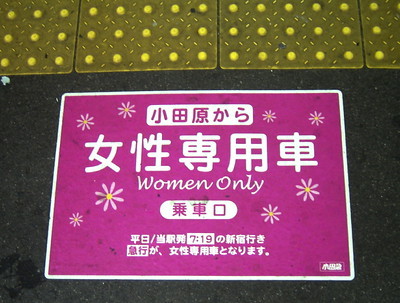
Women-only drivers are just the latest example of a broader trend: creating gender-segregated spaces so women are safe. Around the world, we see women-only train compartments and buses, women-only taxi services, women-only gyms and co-working spaces, and even women-only nightlife venues — from a club in Bengaluru to women-only nights in London — designed to offer relief from harassment. These spaces respond to a real need. But they also signal a troubling compromise: Instead of making shared spaces safer, we are redesigning them to exclude risk by excluding men.
In my work at the Red Dot Foundation, which focuses on ending sexual and gender-based violence, I have seen how this logic often begins at home. Families restrict daughters’ mobility “for their own protection.” Over time, those limits shape the choices girls and women make about things like their education and jobs. Opportunities are quietly abandoned. Risks are avoided before they are even considered.
The consequences are not abstract. Economist Girija Borker’s research shows that young women often compromise on their education because of safety concerns, choosing institutions closer to home rather than the ones that best match their ambitions. Many women also pay what is sometimes called a “pink tax on safety.” They spend more on hotels closer to conference venues, private transport instead of public transit, and safer neighborhoods, all to reduce the risk of harassment or violence.
At the same time, the demand for safer spaces is understandable. Sexual and gender-based harassment, ranging from nonverbal intimidation to physical assault, is a daily reality for many women. According to UN Women, one in three women globally experiences some form of gender-based violence in her lifetime. When women seek out women-only train carriages, nightclubs, or ride-hailing drivers, they are not making a political statement. They are trying to navigate a world where unwanted attention and harm are normalized and there may be little to no consequences for the perpetrator if they report it.
Still, the long-term effects of these solutions deserve scrutiny. When safety is achieved through separation, it subtly reinforces the idea that women do not belong in shared spaces. Instead of fixing the conditions that make public life unsafe, we carve out smaller, supposedly safer corners within it.
Cities have an opportunity to do better, and many already are. In Vienna, gender-sensitive research revealed how differently women experience urban spaces, leading to changes such as wider sidewalks, improved lighting, and more accessible transport. In Bogotá, women-led safety audits informed the redesign of pedestrian routes. In Seoul, the “Safe City” initiative brings together data, infrastructure, and public awareness campaigns to prevent violence before it occurs. Panic buttons and AI-enabled safety tools are paired with public campaigns aimed at men, challenging harmful norms, promoting bystander intervention, and reinforcing that preventing harassment is a shared responsibility.
These approaches show what is possible when the burden moves from individual women to collective systems — when safety is treated not as a personal precaution, but as a public good that must be designed, enforced, and culturally upheld.
The question, then, is not whether women deserve safer options. Of course they do. The question is whether these solutions address the root causes of violence, or simply help women navigate around them.
Safety features like women-only ride options can offer real and immediate benefits. They can increase women’s mobility, expand access to work and education, and provide a sense of control in environments that often feel unpredictable. But they cannot be the only answer. If they become the primary solution, we risk accepting a future where women navigate the world through parallel systems designed just for them.
I saw this dynamic play out recently in New York City at the United Nations during the annual Commission on the Status of Women. I participated in several discussions on access to justice. The rooms were full of women and only a handful of men. That imbalance worries me. It suggests that issues affecting half the world’s population are still seen as “women’s topics,” which women should debate, advocate for, and solve among themselves.
Technology companies can add safety features that pair women with each other. Governments can create women-only transport options. Families can impose protective rules for their female members. But none of these solutions address the underlying problem: Public spaces remain unsafe because some men harass and assault women and girls and too many of the other men do nothing about it.
Safety should not require segregation. It should require shared responsibility.
Until men see women’s safety as their issue too, the burden of navigating danger will continue to fall on the very people who face it most, and that is not acceptable.
More articles by Category: Gender-based violence, Violence against women
More articles by Tag: Violence, Politics, Travel


