















Feminist Leaders Offer Insights and Calls for Action for the Year Ahead
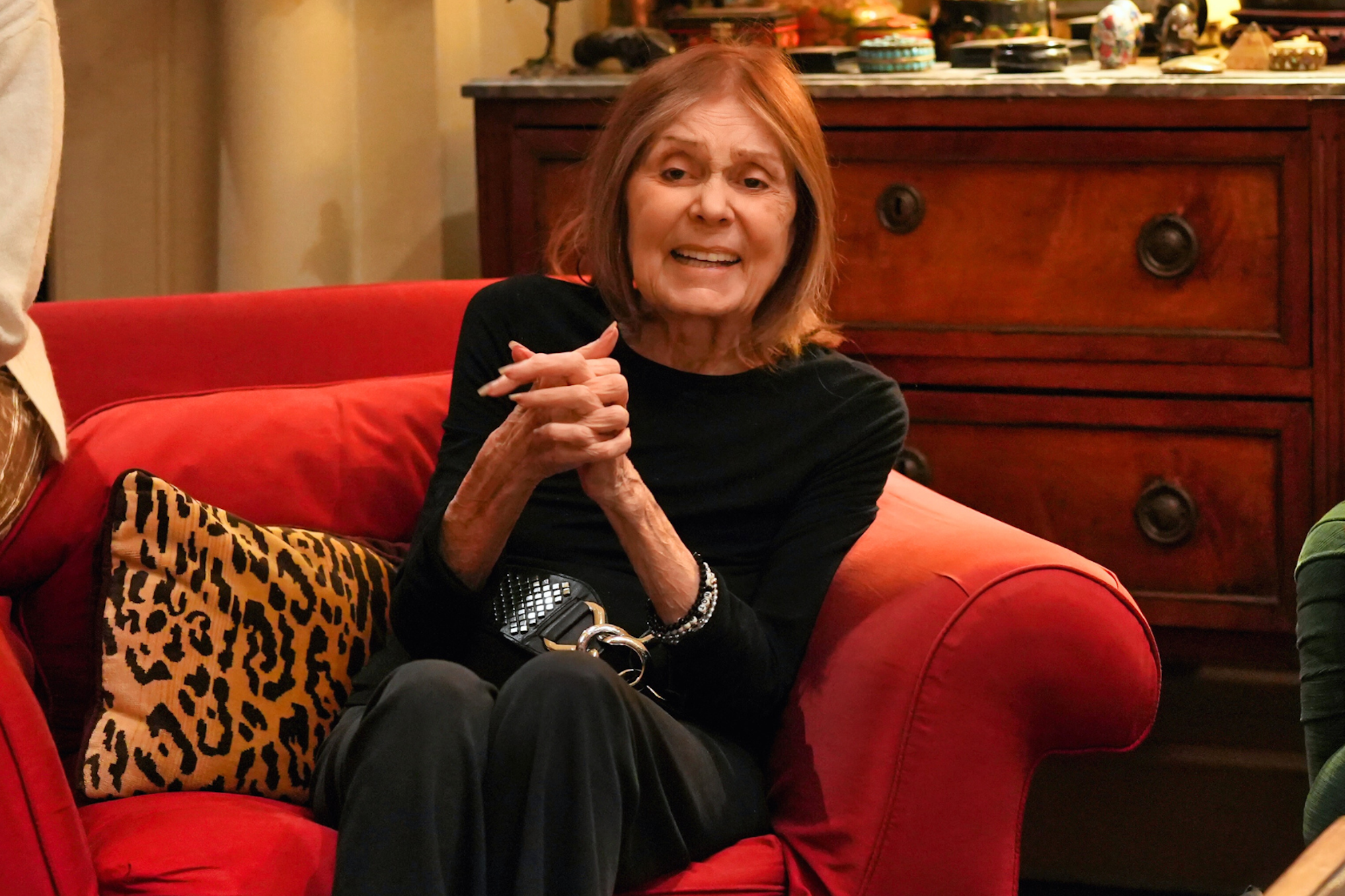
Last month, I hosted notable feminist leaders at a salon at Gloria Steinem’s home on the State of Feminism to mark the 30-year anniversary of Feminist.com, the nonprofit organization I founded in 1995. The evening brought together many women who have helped pave the way and continue to do the work of protecting and advancing equal rights, as well as other vital issues.
The event was set against the waning days of 2025, an alarming year for women and broader issues of equality. The impacts were seen in almost every aspect of society: attacks on rights for women and other marginalized groups; women arrested for lost pregnancies and dying because they couldn’t access reproductive care; a rise in political violence; the destruction of equity and inclusion efforts; an estimated 455,000 women leaving the workforce (of whom 300,000 were Black); the erasure of women’s achievements and contributions. We also saw more explicit misogyny and misogynoir in media and a concerning rise of anti-feminist rhetoric and assaults to our freedoms, a dangerous trend given that the feminist movement has been responsible for achieving, protecting, and advancing the hard-fought gains we are watching either regress or stall due to the current political and cultural backlash in this country.
As we begin 2026 and bear witness to a rise in authoritarian actions, including attacks on people in our streets and doubling down on assaults on women's rights, I felt called to uplift a selection of messages shared by some of the leaders at the salon. They feel urgent and relevant in this moment, as we face the tough start to the new year.
Their insights and their calls to action reflect the energy, perseverance, solidarity, and purpose of the work that lies ahead. They remind us that — despite the challenges we’re up against — there are many activists and leaders, like the ones included here, who are more committed than ever to working toward equality and building a better future for everyone.
Here are some snapshots from that conversation.
The Power of Collective Movements
S. Mona Sinha (global executive director of Equality Now): I just want to underscore that the reason we have pushback is because we have made progress, and that is very threatening. I represent Equality Now, and we have changed 134 laws around the world to center women. And that’s pretty scary for some people. Feminism is needed more now than ever because of the values we bring to the work and the world that we serve. We build communities, we lead with empathy, we do things in collaboration, and that’s what the world needs.
Pamela Shifman (president of Democracy Alliance): What’s so clear is, we’re living in fascism, we’re living in an authoritarian regime here, and authoritarianism is on the rise all over the world. And authoritarian regimes always, always use gender. That’s always the first thing. They go after reproductive rights, they ban gender studies. In Hungary, in Turkey, they banned legislation on domestic violence, and Russia, the same. That’s just what happens. And of course that’s happening here. The reality is that the only way we will overcome authoritarianism is feminist movements — intergenerational, intersectional. That is literally the antidote to ending authoritarianism. And they know that, which is why they’re working really, really, really hard overtime to shut it down. But they will not be successful.
Sheherazade Jafari (co-founder of The Ripple Collective and adjunct faculty at Georgetown): I’ve been thinking a lot about what is foundational in feminism — what are the core values? And it’s ultimately universal human needs, like equality, freedom, freedom of choice, safety, joy, being able to live lives of pleasure. And I think most people resonate with that. And throughout time and space, we’ve seen when these values, when these human needs are under attack, there’s resistance. Whenever there are forces of oppression, there are forces of resistance. And that gives me a lot of hope.
Intersectional, Intergenerational, and Inclusive
Carol Jenkins (host of Black America; former board chair, president, and CEO of the ERA Coalition): I would say that our feminism needs to be of a wider lens and a deeper lens. We have to understand that Black women and women of color generally are in dire straits and are afraid not only about losing their jobs but about losing their lives. Because the threats against us are very physical. So that’s what I say: Feminism has got to have a wider lens this time around. It really has to be an inclusive lens. And you really have to know that the biggest target is a woman of color.
Reshma Saujani (founder and CEO of Moms First, founder of Girls Who Code): I think this has just been a horrible year for women in every aspect. I’m working on a documentary right now, and I spent several days just talking to MAGA moms and liberal moms, and everybody was the same: They were just tired and lonely and exhausted and judged. They didn’t talk about policy; they talked about how they felt and that nobody was carrying them. Nobody was seeing them.
So in this moment right now, when I think about all the aspects of the work that I do that’s being touched, 13 states are outlawing Girls Who Code clubs. We have for the first time gotten more Black and brown engineers ever, and they're shutting that down. They deprofessionalized teaching and nursing. [Three] hundred thousand Black women were pushed out of the workforce. All of this is an intentional strategy. And when we look around at the work that we all do, our organizations are underfunded, we’re tired, we’re not getting the support that we need. So this feels like a moment where we have to invest more in women and more in our issues and more in our causes. And we have to find ways — and I know it’s hard to do big tent — to reach out to those MAGA moms, reach out to those young men, men in our lives that believe the same things that we believe, and figure out how we build the world that I think everybody wants to see.
Jamia Wilson (Feminist.com board member; award-winning author, editor, podcaster, and speaker): One thing that gives me hope is the intergenerational space that we have. I’m really grateful to be from a culture that teaches how we value the voices of people who’ve had more time on the planet than we have. That’s something that I’ve had one of my elders tell me: “Your purpose is to remind us that we’re all relatives. That’s what your ancestors want you to do.”
What gives me hope is if we deepen those bonds and we connect across our ages more and have the meaningful relationships of being together throughout our lives, we can be even more powerful. This is something that’s always been done by women, and capitalism and patriarchy have made us move away from that. This is something that I’d like to see more of in feminism. It brings my heart tremendous joy and tenderness to be saying, “We are all relations no matter what age we are. Each of us has a contribution that’s important.”
Ky Polanco (co-founder of FEMINIST): I’m of a generation that has less rights than my mother. My grandmother fought for that. We’re existing at a time where our very existence in public life is being erased and in some parts of the world is erased. And frankly, none of our work really matters if we don’t have a livable planet in the future. We can only have bodily autonomy on a livable planet. So I’ve been reflecting on the work of Robin Wall Kimmerer, an Indigenous writer who wrote The Serviceberry, [a book that] talks about mutual flourishing. So while our movement must be intergenerational, it must be intersectional, and definitely international. It actually has to be built off this idea of mutual flourishing in all of our practices. So I keep thinking about radical inclusivity, like who should be part of every discussion in every room? And if they can’t make it to the room, how do you just text them? Even if it’s like 3 a.m., be like, “Hey, sister, what are you thinking? I know you’re as frustrated as I am right now.”
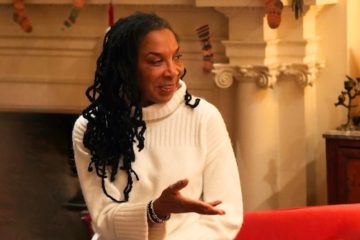
Kimberlé Crenshaw (co-founder and executive director of the African American Policy Forum, professor of law at UCLA Law School and Columbia Law School): Why is it that issues, particularly around racism, have been silenced as any kind of concern whatsoever? Why is it that the absolute misogyny that we saw on display every day against Kamala Harris is not included in the analysis of how we got here? Why is it that every conversation about how we got here is about how we’re not paying attention to working-class men? I’m sorry, last time I checked, Black women were disproportionately working-class. So make this make sense to me. Why is this not the story?
Here we are, five years after they first started attacking intersectionality, 10 years after they did crazy stuff with My Brother’s Keeper, 30 years after they didn’t believe a Black woman, Anita Hill. And because they didn’t believe a Black woman, and because we didn’t have intersectional politics, we got a Supreme Court that gave us the overturning of campaign finance reform, that gave us the collapse of the Voting Rights Act, that gave us Dobbs, that gave us the attack on affirmative action. So everything that we’re experiencing now is a consequence of what I call “intersectional failure.” Here we are in the middle of it. So I’m mad right now because we lost like 15 years of active capacity to speak back, to fight back, to understand what was at stake. This did not have to happen. And it happened. That’s why I want to hold on to feminism.
Laura Esquivel (civil rights, LGBTQ+, Latinx, and environmental activist; senior legislative representative at Earthjustice): Over half a century I’ve been an out lesbian, so patriarchy hits a little differently. Fifty-four years ago, I was part of the Lavender Menace in my own way, fighting to be included in this movement. So intersectionality, as a lesbian, as a woman of color, as a descendant of immigrants, is not a theoretical concept for me. And I love that more and more people are embracing that, or at least considering it and trying to integrate it into the work that needs to be done.
But what I do now is environmental justice, and the connections between environmental justice and feminism and patriarchy. The patriarchy sees women and nature as things to be controlled. And the disproportionate impacts of that on women around the world, particularly in the Global South, but here too, need to be part of feminist thought and feminist fights.
Solidarity and Community
Gloria Steinem (Women’s Media Center co-founder; writer, lecturer, political activist, and feminist organizer): We only experience real empathy when we are flooded with oxytocin, I believe, which is what happens when we are together. And it’s crucial that we are together in the most diverse ways possible, because otherwise oxytocin is not unifying in the way that it should be. We may have computers and iPhones and all of that, but they don’t generate oxytocin. They don’t allow us to really empathize and experience what everybody else is experiencing.
Reshma Saujani (founder and CEO of Moms First, founder of Girls Who Code): There are five companies that own everything that we see. We don’t want to hate each other. We don’t want to be this angry, but they’re doing it because they’re making money from it. So a lot of us are trying to lift each other’s work up right now. I think we have to spend that energy and that effort both on media and figuring out how we fight against the algorithms because that’s the way you fight today. Yes, we march, but we also march on Instagram, literally digitally.
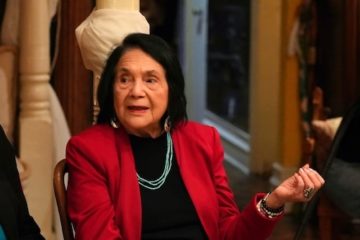
Dolores Huerta (founder and president of the Dolores Huerta Foundation, co-founder of United Farm Workers): We know that with everything that’s going on around us right now, we are in a precarious moment in our country. And all of us are working very hard to save democracy. But we really have to keep our eye on the prize, which is to make sure that we have a feminist future. And feminists have to lead the fight for the future of our country.
Susan Celia Swan (executive director of V-Day, Feminist.com board member): When I think about where we are now with feminism, this moment feels urgent — because it has always been urgent. And yet every day — in my Feminist.com world and in my V-Day world of artists, activists, and survivors rising across the globe — I see how powerful we are. We are needed more than ever. As I think about where we’re going and what the next 30 years might look like, I feel that as we dig deeper into community and solidarity, into art and culture, I see how art and culture bring us into the now, into the spirit of this moment. It brings us into community in a deep way that empowers us for the fight and also defines the reality we want to see.
Kimberlé Crenshaw (co-founder and executive director of the African American Policy Forum, professor of law at UCLA Law School and Columbia Law School): Yes, we can have the values, yes, we can have analysis, but if we don’t have a word that captures all of it, if we don’t have something that allows us to hail each other, to know what the project is, all that energy can easily be dissipated, which is what we’re seeing now. So when our young folk refuse to identify [as feminist], I realize that a number has been played on them. And that they’ve been robbed of our legacy and we’ve been robbed of what we’ve made possible. So I fight for feminism.
Quotes have been edited for length and clarity.
More articles by Category: Feminism, Gloria Steinem
More articles by Tag: Women's leadership, feminism


