














Damned If You Do, Damned If You Don’t: ‘Supergirl,’ Misogyny, and the Woman-Led Superhero Film
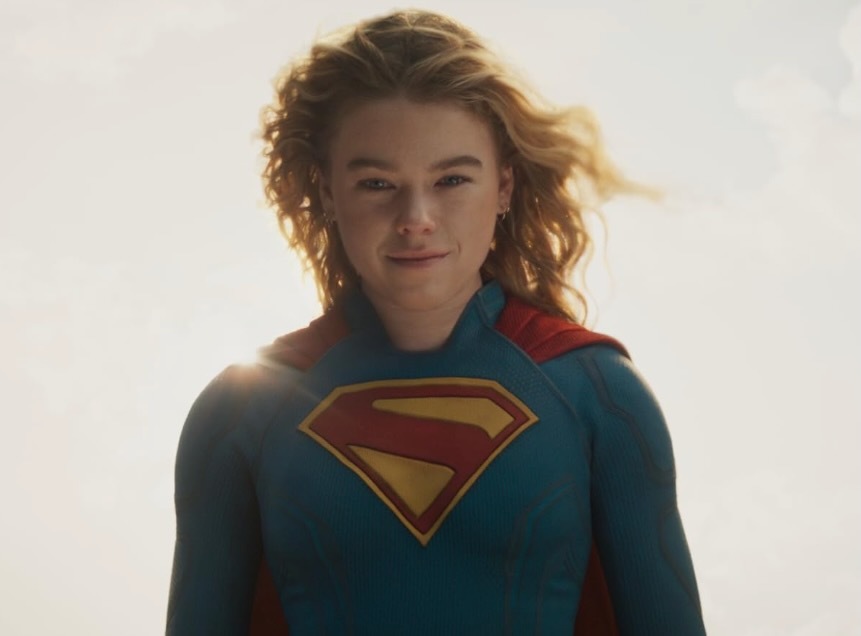
Just like the diminutive nature of the titular hero’s name, Supergirl is suffering from an image problem. The film, which was released nationwide in theaters on June 26 and is based on the graphic novel Supergirl: Woman of Tomorrow, finds Kara Zor-El/Supergirl (Milly Alcock) reluctantly helping teen Ruthye (Eve Ridley) track down a band of brigands who murdered Ruthye’s family. Far from a magnanimous hero at the outset, Kara only agrees to the quest when brigand leader Krem (Matthias Schoenaerts) poisons her dog, Krypto, and acquiring the antidote becomes her top priority.
Midway through the film, Ruthye asks why Kara is known as Supergirl back on Earth, rather than Superwoman as a counterpart to her cousin Superman (David Corenswet). While the teen’s question hints at the inequity of naming conventions grounded in the hero’s 1950s comic-book origins, the conversation is ultimately a throwaway one. In fact, the earlier, unrelated Supergirl television show (premiering in 2015 on CBS and then continuing on the CW from 2016 to 2021, it was a vital part of DC’s expansive Arrowverse franchise) featured a far more direct discussion of feminist perspectives on the name.
In other ways too, the new Supergirl film pulls its punches. While it includes a subplot involving the rescue of girls being sex trafficked, even that feels like an afterthought. Nevertheless, Supergirl was subjected to misogynistic review bombing and critiques of its supposed “wokeness.” Conservative commentator Megyn Kelly went so far as to opine, “It’s not that women can’t be empowered and fierce and all the great things. It’s just, stop forcing it on us in the form of Supergirl.” It’s unclear what Kelly imagines is being forced on viewers, given that there’s not much explicitly feminist about Supergirl except that its stars are women.
This disconnect, between a plot that hardly addresses gender inequities and the misogynistic outcries directed at the film, signals a larger issue with woman-led superhero fare. As reported in a 2019 Women’s Media Center study, science fiction and fantasy films with a female lead made up only 14% of the major releases from the prior decade. But with fewer women-led films comes a higher burden of representation, often leading to greater scrutiny of these films by audiences and critics. While films like Wonder Woman (2017) and Captain Marvel (2019) were wildly successful, women-led superhero and action films are disproportionately plagued by confirmation bias, with narrative flaws or general audience dissatisfaction more likely to be attributed to the gender of the film’s star.
It’s been a growing trend for writers and directors to reimagine the contours of the traditional film superhero. No longer content with showcasing straightforward do-gooders with clear ethics and steadfast virtues, movie studios have been steadily creating a generation of antiheroes, reformed villains, and unlikely champions. Last year’s Marvel venture Thunderbolts*, critically acclaimed but underperforming at the box office, openly explored its characters’ childhood trauma and struggles with mental health, grappling with what it means to have hope even when situations appear hopeless.
Supergirl fits easily into this landscape of complicated heroes. When Alcock’s version of the character was introduced in a brief cameo at the end of DC’s 2025 hit Superman, she literally crashed through the walls of Superman’s Fortress of Solitude, too drunk to find the door. As she leaves the way she came after picking up her dog, Superman tells his robot assistant that his cousin likes to “party” on planets with red suns, where her superpowers do not work, allowing her to feel the effects of alcohol. And this is the Supergirl we meet again at the start of her film, hungover and living out of her pigsty of a spaceship, seemingly uncaring about anything but Krypto and where to find the nearest bar.
Despite an opening just begging for an inspirational redemption arc, the film itself is yet another entry in a seemingly ever-expanding universe, boasting the typical fare of comic one-liners, alien vistas, predictable surges of heroic gravitas, and strung-together action sequences. Like other decent but middling films to come out of Marvel and DC in the last decade, Supergirl lacks emotional depth and suffers from a preponderance of scenes with unclear stakes. My feelings about it echo those of veteran New York Times film critic Manohla Dargis, who praised Alcock’s acting while declaring the film enjoyable if ultimately derivative.
Even before its release, critics expressed concern over whether Supergirl could make the $315 million needed for it to break even. Box office numbers for the multi-billion-dollar superhero film industry, which used to be a relatively sure thing, have become increasingly inconsistent. And yet, many of the superheroes we know and love have been around for almost a century and are still performing well in other media, suggesting that the recent so-called superhero fatigue goes beyond the numbers.
An Entertainment Weekly review cites “superhero blockbuster fatigue” as an impediment to Supergirl’s success, noting the particular vitriol aimed at the film seems to have more to do with misogyny than anything else. A New York Times analysis of the film’s lackluster box office similarly acknowledges “an uncomfortable truth: Female-led superhero movies have been rejected almost uniformly over the past five years or so, perhaps reflecting a resurgent misogyny among the core fan base, which is largely male.”
Both things can be true. On the one hand, a film like Supergirl may be more likely to face review bombing and misogynist bias that could lead fewer people to head to the movies on opening weekend. On the other hand, studios’ insistence on pumping out films lacking emotional resonance and suffering from predictable plots and action isn’t doing the genre any favors —whether the films are woman-led or not.
On paper, Kara is a compelling character with a tragic backstory: Unlike her cousin, who was sent to Earth as a baby to survive the destruction of their home planet Krypton, Kara grew up to witness the slow, painful deaths of the few Kryptonian survivors, including her parents, only to be shipped off alone to Earth as a traumatized teen with no knowledge of its languages or cultures and without the loving adoptive family who supported Clark/Superman. In the graphic novel Woman of Tomorrow, Ruthye is also a well-developed narrator whose rage and sorrow are thoughtfully explored and parallel Kara’s cynicism in meaningful ways.
In the film, Kara and Ruthye aren’t allowed to function as its emotional core, as they should; instead, they operate on the margins of a plot that drags them back and forth across the galaxy without ever developing their internal motivations. While the flashbacks fleshing out Kara’s backstory are some of the most resonant moments in the film, these are barely allowed to filter into present-day Kara’s ethos as a character. Could it be that fear of alienating viewers by making its female protagonists too emotional was Supergirl’s ultimate downfall?
The film seems intent on threading the needle of audience appeal: Its characters can’t be too feminine, too masculine, too feminist, or too explicit in their grief, rage, or pain. It’s not women-led films that are the problem, it’s the culture of apprehension around accusations of being either overly feminist or not feminist enough that means, ultimately, no one gets to be happy.
More articles by Category: Arts and culture, Media, Misogyny
More articles by Tag: Superhero, Film, Media


