
















Chloe Domont’s film is not just a story about terrible people doing terrible things — it’s also a commentary on the danger of abusive work cultures that dehumanize the people in them.

The blockbuster film, with ticket sales of $1.4 billion worldwide, is the highest-grossing movie ever directed solely by a woman.

This summer’s films about women were an odd mix of stories that expanded the scope of women’s roles and those that offered tired narratives.

A new play based on Emily Wilson’s translation tells the epic story through the experiences of young women refugees.
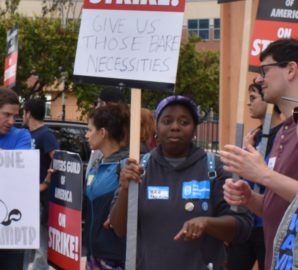
As writers and actors continue their work stoppage, are recent improvements in representation and opportunity in jeopardy?
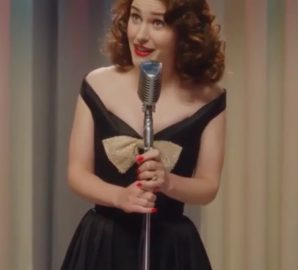
Set in the 1950s and 1960s, the Emmy-winning show wrapped up its five-year run by offering messages relevant to the present.

The Inclusion List, a first-of-its-kind resource, ranks creators based on cast and crew inclusion.
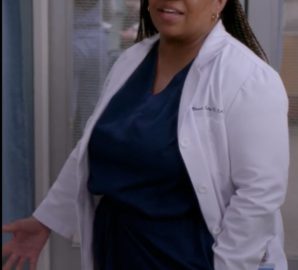
The progress Hollywood has made in recent years in behind-the-scenes and on-screen representation could be reversed if the strike is settled unfavorably for writers.
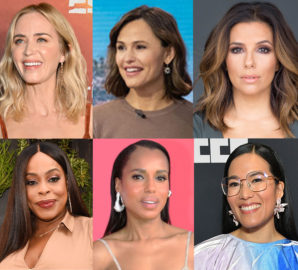
Women who are starring in TV series are taking more creative control in their shows.

“The Postcard Women’s Imaginarium” is a project that uses women's artwork to offer an alternative narrative to colonial-era postcards that framed MENA women as “exotic.”

As we approach what would have been Toni Morrison’s 92nd birthday, the author reckons with the deep impact of Morrison and her work, and living with the loss of this towering literary and cultural presence.

Two major reports on women’s participation in behind-the-camera jobs shows little progress over many years, as the percentage of women in these principal creative positions still has not topped 25%.

The documentary Nothing Compares provides a necessary reassessment of the Irish singer’s legacy.

Two new studies show that the percentage of women in key behind-the-scenes jobs has barely budged in recent years.

Black women in the U.S. are three times more likely to die from pregnancy-related causes than are white women. The new documentary Aftershock tells the stories of some of those women, and how their families are channeling grief into action.

A documentary and a dramatic film give a chilling portrait of the crushing impact of abortion bans — and of the courageous women who provided abortion care in pre-Roe Illinois.

Suffs, at the Public Theater in New York, does not shy away from the darker aspects of the suffrage movement, including conflicts among women.

Sculptor Amanda Matthews created the Girl Puzzle monument honoring Bly and dedicated to women whose histories are absent in public art.
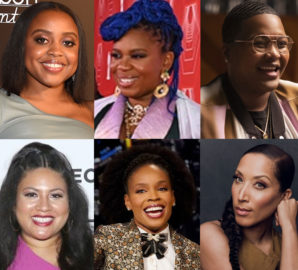
More Black women than ever before are becoming showrunners, controlling the narrative and giving valuable opportunities to other Black women for behind-the-scenes jobs.

As Saudi Arabia’s film industry expands, women see new opportunities.

While still a minority of those whose movies are selected to represent their nations in the category, women filmmakers often offer a distinct, female-centered point of view.

The first-of-its-kind show highlights the experiences of women in West Asia, North Africa, and South Asia while examining the intersectionalities of race, migration, and class.

The filmmakers who created the Emmy-winning RBG turn the spotlight on the chef and author who was “deceptively groundbreaking and culturally important.”

An ensemble of young women is helping to revive Sufi music, a traditionally male bastion.

The artist, perhaps best known for The Dinner Party, is being recognized with the first comprehensive retrospective of her decades-long career, at San Francisco’s de Young Museum.