















The Next Giant Leap: Women and the Future of Spaceflight
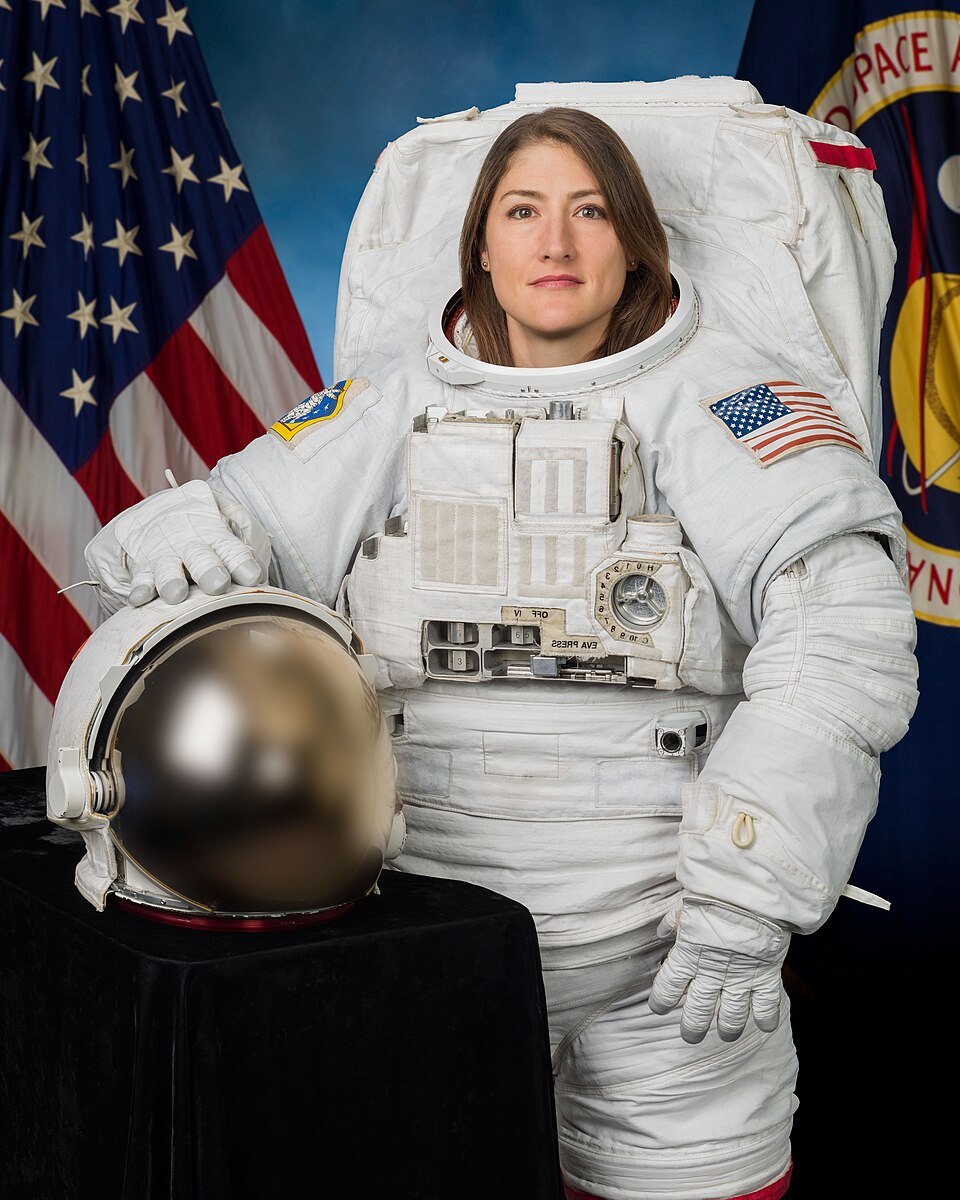
Women are increasingly playing a major role in space exploration and scientific discovery. For example, Christina Koch recently completed the longest-ever single spaceflight by a woman as part of the Artemis II Mission. That mission also featured a female launch director — Charlie Blackwell-Thompson.
I recently interviewed Princeton University space physicist Dr. Jamie S. Rankin; robotics researcher and professor at the University of Pennsylvania Dr. M. Ani Hsieh; and physician, scientist, and astronaut Dr. Shawna Pandya about the skills necessary to succeed in space exploration–related careers — and how women may be uniquely suited for them.
Dr. Rankin, whose research at Princeton focuses on understanding solar winds and the space environment through instruments designed for NASA missions, and who worked on the Interstellar Mapping and Acceleration Probe (IMAP) project, which contributed to our understanding of the sun’s interactions with the boundaries of the solar system, believes teamwork is important in space missions. In a scientific project, she noted, everyone relies on each other, and “if somebody over here isn’t quite doing their job, that [project] could fail in space.” Rankin added, “You’re only as good as your team.”
Dr. M. Ani Hsieh, a robotics researcher at the University of Pennsylvania and deputy director of the General Robotics, Automation, Sensing, and Perception (GRASP) Laboratory, also believes future scientific progress will depend on collaboration across fields.
“We always need to have people who are open to new ideas, but have the ability to work in highly interdisciplinary teams,” Hsieh said.
Multiple scientific articles examining the role of women on research teams back up the idea that women are well-suited to this work. A 2021 study found that women actually engage in more interdisciplinary collaborations, maintain broader networks, and demonstrate better social sensitivity, which allows them to work well within scientific teams.
Additionally, a 2022 study highlighted how mixed-gender teams came up with greater-impact scientific discoveries as compared to same-gender groups, suggesting that gender diversity in the field also produces better scientific innovation and collaboration.
The future of scientific discovery doesn’t only depend on technical expertise alone, therefore, but also on diverse teams, and Dr. Pandya emphasized just how interdisciplinary those teams are and must continue to be.
“We’ve evolved from spaceflight being the domain of military pilots from the Cold War era to involving pilots and scientists and engineers and doctors,” Pandya said. Women who are interested in space, therefore, should “pick what you love, become really, really, really good at it, and then find the path as to how it converges with space,” she advised.
Rankin hopes that diverse backgrounds will help future scientists communicate more effectively. Rankin believes that STEM students often underestimate the importance of writing, but that it’s crucial for scientists to communicate what they learn to others in order to encourage collaboration and inform the public of important discoveries.
Dr. Hsieh also emphasized the importance of communication. “You need to be well trained in the fundamentals of whichever STEM area you choose to specialize in, but then have the ability to communicate with other experts who are not necessarily coming from the same background,” she said. “I wish I knew the importance of being able to write well before joining the professional world … Writing is this notion you want to convey, not just to your peer scientists and researchers, but to actually write to a more broad audience.”
Multiple research papers highlight that women in STEM tend to be better communicators than their male peers. For example, one meta-analysis found that female physicians are more patient-focused in their communication than males, and also engage in better active listening, information sharing, and psychosocial discussion. Similarly, a 2017 study analyzed how over 270,000 scientists collaborated and found that women form more egalitarian scientific collaboration networks than men.
Then, of course, there are some qualities unrelated to gender that help anyone succeed in this profession.
Rankin emphasized the role of creativity in science. She earned both a music and physics degree, and compared scientific research to composing music. Engineering, she said, is “very much like the process of composing music. You have to understand the basics of the fundamental physics that’s happening when you’re a scientist and working in the space field. And that’s analogous to knowing the different musical notes. But what you do with it is your choice.”
Hsish stressed the importance of embracing the unknown. “Having an open mind is so helpful when experimenting,” Hsieh said. “You should always ask yourself why things came out the way they did. You should always ask why things work the way they [do] and be able to explain that.”
One of Pandiya’s most powerful messages was to focus on self-confidence. “There’s a way to be hard on yourself in a way that’s productive or in a way that’s destructive,” she said. “We’re all going to experience failure in our lives. We’re all going to have undesirable setbacks or even suboptimal outcomes … [so] we need to stop thinking about success and failure as opposites.”
Finally, Pandiya said, “Don’t let anyone tell you you don’t belong. Make space for yourself and then act like you belong there because you do.”
As the next generation of STEM professionals looks to the future, that message may be as important as a technological breakthrough.
More articles by Category: Science and tech
More articles by Tag: women leadership


