















The Author of Self-Care for Black Women Shares Her Tips for Navigating School and Work
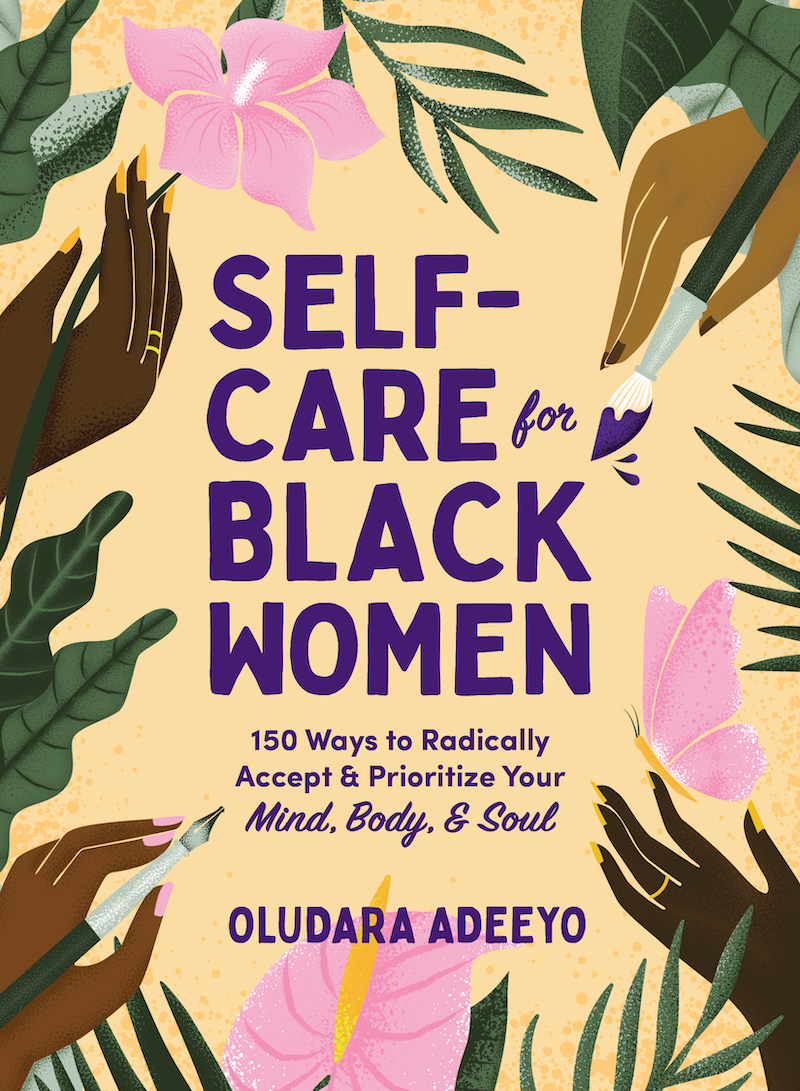
The pandemic has led many of us to reassess our relationship to self-care, particularly when handling the stresses of school and work. In her new book, Self-Care for Black Women, psychotherapist and social worker Oludara Adeeyo provides readers with a road map for navigating familial and career pressures, school-related worries, and more.
We recently had the chance to chat with Adeeyo over email about her new book and how young women can figure out how to take the time and space they need to shine.
Over the last two years, there has been a renewed interest in self-care, particularly in terms of handling the stresses of the workplace. How have you seen this phenomenon in your own life and therapy practice?
The pandemic has definitely slowed things down for many of us. More of us are working from home and being less social. It’s caused so many of us to be introspective — looking within to figure out if we’re living the life we actually want to live. For me, it definitely forced me to slow down and evaluate the way I was moving in my work and home life. I realized that I was a victim to grind culture, and I measured my self-worth by how productive I was at work and in my free time. I had to embrace rest as a state of being and work on that. I can’t really say how that looks in my therapy practice exactly, but overall there has been an increase in individuals seeking mental health treatment because of the pandemic.
As you write in your introduction, self-care is a radical act for Black women in particular. How do you make time and space for self-care in your own life, particularly on stressful days?
Self-care is an ongoing practice for me. I try to make it a priority by paying attention to the needs of my mind, body, and soul. And while self-care can be defined as an activity, sometimes it’s simply recognizing that I am exhausted today and that I need to just rest and not judge myself for choosing to rest instead of being productive. On days that are particularly stressful, I lean towards what I know works for me. The thing with practicing radical self-care is that there will be trial and error with figuring out what is best for you. So on days where I have one of those days at work, I may make sure I go to yoga, go to bed early, watch my favorite movie to make me feel better, or eat my favorite meal. Or, I might make sure I am simply breathing throughout the day with a breathing exercise. It’s important to take a moment for yourself when you are having a stressful day because it’s on these days that you feel out of control. Practicing self-care allows you to be reminded that you are able to dictate your wellness.
Many of our readers are juggling school, jobs, and internships at the same time. Unfortunately, engaging in the academic and working worlds often also means dealing with racist and sexist microaggressions. How can readers use your book to practice self-care when dealing with and processing those moments?
The book is great to give readers an idea of what they can do to deal with these tough moments. It’s best to go through the book and perhaps find something that you have never tried and see if you like it. However, in the book, I talk about several practices to deal with microaggressions [that involve] limit[ing] interactions with well-meaning white people and processing racism encounters with a safe person. The first one encourages readers to decrease the interactions they have with people who are microaggressive. This can look like staying away from that problematic classmate or co-worker. With the second one, it’s important to have safe people who you can disclose encounters with microaggressions to so that you can feel validated and heard. After being the victim of a microaggression, you can often gaslight yourself into thinking that you didn’t experience it, but it is helpful to talk to someone who understands you and can provide you with support. This can be a trusted friend or family member.
The worst part about microaggressions in the workplace is that they are so easy to internalize. How can young Black women and other women of color protect themselves from this in the workplace?
It’s important to create boundaries at work. Boundaries can look like only engaging in work-related conversations with microaggressive co-workers or accepting that there may be office conversations and activities that you do not need to be a part of. And, if possible, attempt to create a work-related bond with another Black woman or WOC at the job. This way, if you experience a microaggression so bad, you have someone to confide in.
What is one thing that you wish you knew about self-care when you were first starting your career?
Do not be afraid to prioritize it. Your workplace will be able to survive without you for a couple of days. Work culture will always attempt to make you feel bad for using your vacation or sick days, but those are days that you are given to take off. Use them without guilt and enjoy your days off.
More articles by Category: Arts and culture
More articles by Tag: Books, Black


