
















Despite the ever-growing preponderance of evidence that Trump is, indeed, the sexual predator that he revealed himself to be in the Access Hollywood tape, he has yet to face any consequences for his alleged actions.

According to the National Sexual Violence Resource Center, two out of three girls are harassed and one in four girls are sexually assaulted by the age 18.

Nipsey Hussle’s passing not only leaves a crater in hip-hop but also illuminates a far more pervasive dilemma within hip-hop as well: the endurance of misogyny as a cultural norm and the understanding that a rapper’s legacy and artistry is always considered more important than the treatment of women who surrounded him.
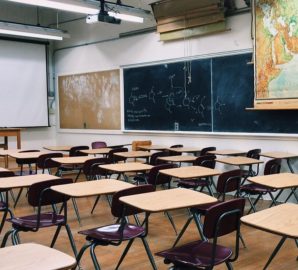
Zimbabwean students, both male and female, are struggling to pay for higher education. In response, a number of female Zimbabwean university students have begun to engage in transactional sex to pay their tuition and otherwise survive.

Thousands of Albanian students are protesting on the streets right now. But even though the media has started to cover these protests generally, it has failed to note the feminist principles at the heart of them and how women in particular have contributed to the movement.

Louis CK’s self-redemption asks the public: What do we expect of the men accused of sexual misconduct after they face public condemnation? Can we, should we, forgive them?
The high rate of violence against women in Albania, and the perception that neither the police nor the Albanian government are doing enough to guarantee a minimum level of security for women and girls, inspired dozens of people to gather to ask a seemingly simple question: What role do our government and police force serve, if not to protect us from, and ideally prevent, violence and crime?

In 2017, Forbes listed Morocco as the second most dangerous country in the world to which women can travel. Earlier this year, the Moroccan government, thanks in no small part to complaints made by women’s rights organizations, finally acknowledged the country’s problem with harassment by passing the Violence Against Women Act in February.
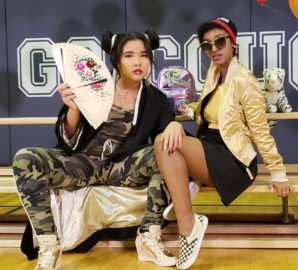
As a peer educator at Sex Education by Theatre (SExT), a youth-led, theater-based sex education program, I have a place to express my thoughts and frustrations about the precautions my friends and I take when we go out.

It was only a matter of time before the echoes of Hollywood’s #MeToo and #TimesUp movements reached Bollywood, India’s film industry. That watershed moment finally arrived this September, when Indian actress Tanushree Dutta made accusations of harassment against industry veteran Nana Patekar

Priscila Gama, a 34-year-old Brazilian architect and entrepreneur from wanted to do something to help women in the face of pervasive violence. In 2016, she and a team launched the Malalai app, which enables women to let pre-authorized friends follow their routes when moving around the city by any means, whether by foot, car, or public transportation.

The stories of the silenced matter, even when the outcome of sharing them are not necessarily concrete.

In light of the Women's Media Center's brand new report evaluating the impact of #MeToo, Ashley Judd — Chair of the WMC Speech Project and one of the instigators of the #MeToo movement — spoke to Women Under Siege's Lauren Wolfe about her role in the movement, what #MeToo has accomplished, and what it will still accomplish in the future.
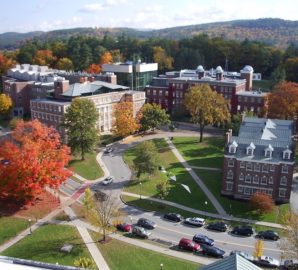
After almost a year of unprecedented media attention on the topic of rape culture, America’s newest college students may be better armed with a clear understanding of the once-taboo topic of sexual assault than any before them.

Students aren’t just vulnerable because of powerful professors whose prestige allows them to go unchecked, but also because nobody tells them what good relationships with professors are supposed to look like, or presents a clear pathway for how to develop them.

With every successful movement inevitably comes backlash, and the #MeToo movement is no exception.
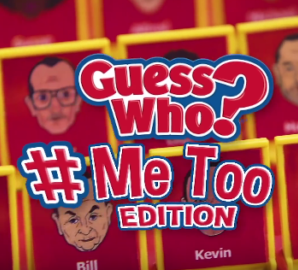
Sexual harassment is no laughing matter, but a recent Funny or Die sketch has managed to add some humor (dark though it may be) to the plague of sexual misconduct that spawned the #MeToo movement.
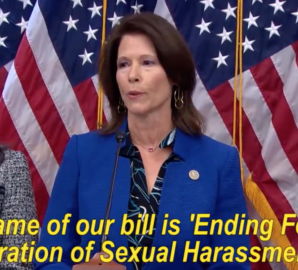
The Ending Forced Arbitration of Sexual Harassment Act aims to eliminate corporate policies that allow companies to silence victims of sexual harassment in the workplace.
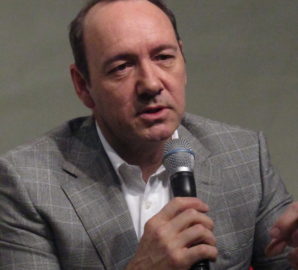
Sexual assault can and does happen to anybody, no matter their gender, race, sexuality, or any other factor. The more survivors who share their stories, the more those people are supported and believed by the public, the closer we’ll come to actually making a change.
Over 12 million women — some famous, many not — have since used #MeToo to share their experiences with harassment and/or assault.

For weeks now, our country’s culture of shaming and silencing survivors has once again been in the spotlight. In the wake of this revelation, many other instances of sexual assault in Hollywood have started make headlines, too.