















Muslim women still struggle to navigate discriminatory laws in Saudi Arabia
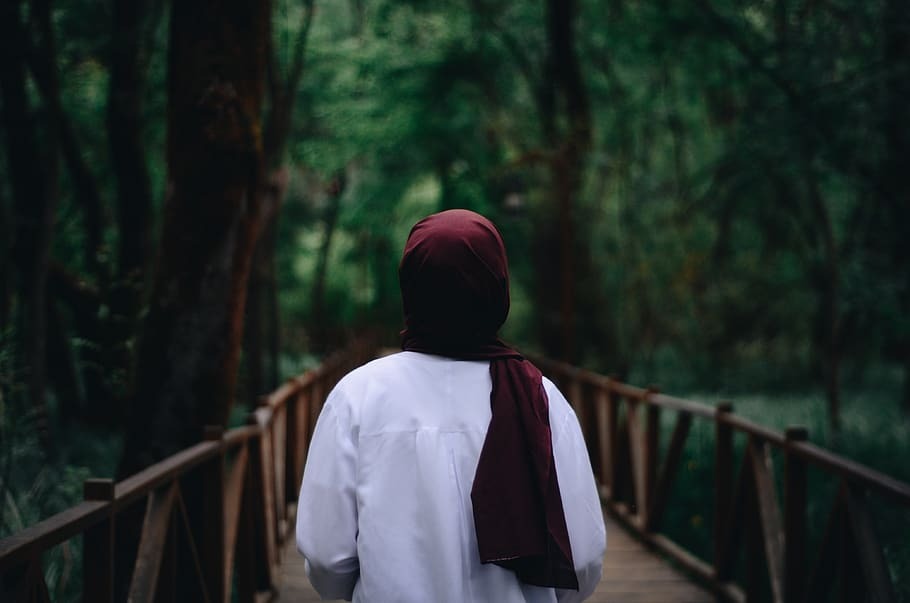
My grandmother was a successful businesswoman and had the freedom to travel whenever she wanted. She often chose to travel from Ghana to Saudi Arabia and perform hajj, as it is an essential pillar in Islam. She sometimes invited my mother to travel with her on this pilgrimage as well, but I stayed home. For a significant period of my childhood, travelling — specifically going for hajj — was my number one priority.
After my grandmother passed away in 2012, my mother started to process her visa to go for Umrah (a pilgrimage to Mecca that can be done at any time of the year). She didn’t tell me until this past December just how incredibly difficult it actually is to visit Saudi Arabia as a single woman. My grandmother had built networks over the years that made her travel possible, but my mother had to find an agent who would facilitate the process of finding a man who would pose as her "husband" so that she could pass the visa requirements. That process, which was required by Saudi Arabia, failed, and my mother eventually gave up on going to Saudi Arabia — or at least showed less interest in trying to make any more pilgrimages.
According to Quartz, any woman under the age of 45 seeking a hajj visa must travel with a mahram, or a male guardian, usually someone related to the woman by blood. Once they’re over 45, however, women may travel with an "organized group" instead of a mahram, provided she presents a “no objection letter” from her husband, son, or brother authorizing her to travel for hajj with the named group. This letter should be notarized, according to a Saudi government website.
Notably, these laws do not apply to women who belong to the Shia sect of Islam; they are not required to travel with a Mahram. The restrictions only apply to Sunni women, who are the majority of Muslims (about 85% to 90% of Muslims are Sunnis). In 2012, a section in the visa application requiring women to specify whether they were Sunni or Shia was introduced. These laws don’t just reinforce patriarchal systems that infantilize women but also reiterate classism. Only women who are able to afford to pay extra costs to agents to make sure they get all the necessary documents are able to make this pilgrimage. Saudi feminist activists have protested these laws for these very reasons. In 2018, three people were jailed for fighting against discriminatory guardianship laws.
In response, in August 2019, the Saudi Council of Ministers approved a royal decree put forth by Crown Prince Mohammed bin Salman to loosen some of the restrictions placed on women through the kingdom's network of so-called "guardianship laws." According to Vox, the new law permits unprecedented mobility to women, including the right to obtain a passport and travel abroad without a male relative's permission. Any Saudi over 21 — regardless of gender — is now able to get, renew, and use a passport. Additionally, many of these potential changes echo those unveiled by crown prince Mohammad bin Salman as part of the government's Vision 2030 agenda, which include allowing unmarried tourists to share a hotel room. He has also reintroduced movie theaters into the country — they were abolished in 1979 — and given Saudi women the right to drive and rent a room alone. Despite these seemingly progressive royal decrees, the Saudi hajj ministry claims it is not within its power to cancel the mahram condition, as it is a religious requirement and would need the consent of other parties, especially Sunni scholars.
Yet, this law only applies to women from Saudi Arabia travelling anywhere else and tourists who want to visit The Kingdom — not to Sunni women who wish to travel to the Kingdom for hajj. To actually repeal the law that restricts women from performing hajj, Sunni scholars and Sunni institutions would also have to get on board, but Sunni scholars are mostly men, who still argue that women traveling without a mahram or the consent of one violates Sharia law.
Additionally, not all countries have access to these new, less restrictive travel laws, and very few African countries are included. Black Muslims have very little power to influence changes in Saudi laws, as this community lacks power, and continues to fight for their legitimacy in Islamic culture — and Black Muslim women even less so. As Egyptian feminist Mona Eltahawy has stated, Muslim women are vulnerable to what she calls a “trifecta of oppressions” — misogyny, racism, and Islamophobia.
What’s more, some say that these so-called reforms were only implemented to deflect people's criticism from the continuous human rights violations committed by Saudi Arabia, including the aforementioned jailing of women’s rights activists and the relatively recent killing of the journalist Jamal Khashoggi. Even more recently, a young Saudi rapper named Ayasel Slay was arrested for her song "Bint Mecca'' (which means “a girl from Mecca”) because Saudi officials claimed her song was offensive to the customs and traditions of the holy city.
Muslim women, therefore, are still restricted when it comes to visiting the holy city of Mecca for hajj. Muslim women are systematically marginalized within both our local and global societies, and as our eyes are increasingly open to this truth, we must continue to liberate and defend ourselves from limited notions of womanhood.
More articles by Category: Feminism
More articles by Tag: Middle East and North Africa, Sexism, Discrimination, Women of color


