















Crown Prince Mohammed bin Salman’s Performative Promise of Gender Equality
On December 28, Saudi women’s rights advocate Loujain al-Hathloul was sentenced to six years in prison by Saudi Arabia’s Specialized Criminal Court, which is used to try cases involving terrorism. The activist was arrested in 2018, along with other female activists, for leading the movement calling for Saudi Arabian women to be allowed to drive — a movement that drew global attention in 2014, when a video of Hathloul driving from the United Arab Emirates to Saudi Arabia, an illegal act at the time, went viral. The activists were arrested just six weeks before women were legally permitted to drive in the country, but were nevertheless charged with being threats to national security. In the two years since Hathloul has been in prison, she has allegedly been the victim of torture, electrocution, harassment, and solitary confinement.
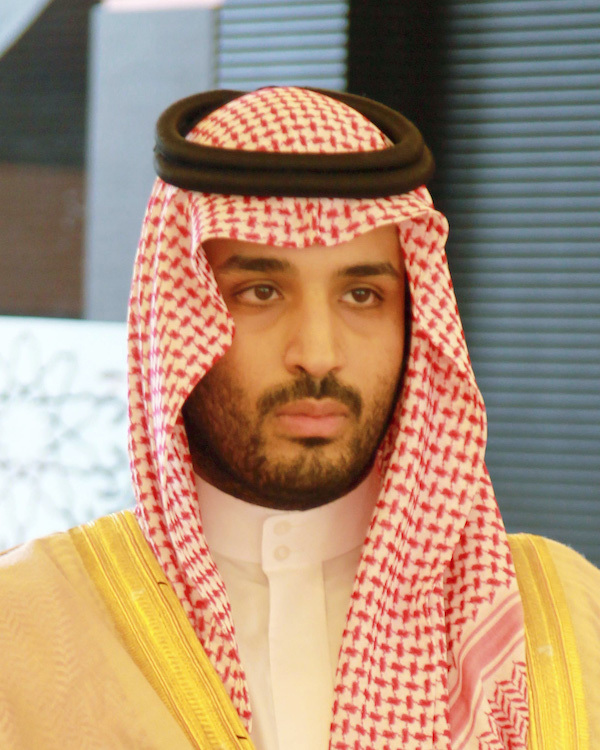
This treatment has happened under Crown Prince Mohammed bin Salman (known to many as “MBS”), despite his supposed reputation for reforming women’s rights. After MBS took power in 2015, his new government introduced Saudi’s 2030 Vision, an ambitious plan to stimulate the economy. The 2030 Vision website proclaims the government is dedicated to promoting “the talent, potential, and dedication of our young men and women” and includes the promise of revisionist social reforms that permit women to enter the workforce, drive, and participate in government positions.
Yet Salman’s hypocrisy has been apparent all along. For example, the Salman government allegedly undermined the voices of female activists fighting for the legalization of women driving, giving credit to government leaders while simultaneously silencing the efforts of female activists who have been pushing for social change within Saudi Arabia long before the introduction of government reform. More recently, in the weeks leading up to Hathloul’s trial this past December, Saudi leaders apparently saw no irony in proudly hosting the G20 and Women20 Summit, events at which leaders from around the world disregarded the human rights violations and instead applauded the kingdom’s modern reforms.
These contradictions suggest liberation movements under the crown prince may simply be performative, driven by economic advancement instead of social reform. Considering that crude oil is a limited natural resource, the transition away from oil by international investors and the growing volatility of oil prices over the past 10 years has increasingly left Saudi Arabia, a rentier state, heavily dependent on oil revenues and desperate to diversify its public and private sectors. Women participants not only increase the capacity of the workforce, but also help Saudi Arabia appear modern and therefore attractive to international investors.
Some might argue that even disingenuous reform does not negate the Crown Prince’s progressive measures toward women’s equality. But if Saudi Arabia was interested in convincing local and global audiences of its devotion to women’s rights, a quick and easy solution would be to drop the charges against and release female activists imprisoned for actions the government later legalized.
What’s more, seemingly superficial reform efforts are actually dangerous, as they introduce change without securing durable checks and balances, regulations which would ensure the longevity of social progress instead of leaving it up to the whim of current leadership. For example, at the G20 summit, Saudi Arabia’s U.S. ambassador, Reema Bandar Al Saud, dusted her keynote speech with state-backed rhetoric suggesting that reform takes time and the country is committed to gender equality. Similarly, at the W20 summit, attendees attested to Saudi Arabia’s efforts to end discrimination against women and commended reforms supporting opportunities for all. This type of discourse loses all credibility if there is counterevidence, and loud opposition, pointing to Saudi’s inappropriate manipulation of the women’s rights movement to divert attention away from human rights abuses and suppressed female voices.
If there are contradictions between and inconsistencies in Saudi Arabia’s implementation of women’s rights and how they express their positions on those rights, MBS’ “reforms” cannot really be taken seriously. Hathloul recently revealed the Saudi government offered her freedom in exchange for her silence, but she turned down the tokenistic offer. Hathloul, as a person determined to advocate for authentic equality, rejects superficial reforms, instead demanding women’s voices be heard, ultimately sacrificing her own freedom, health, and safety in hopes of securing sincere, deep-rooted amendments to women’s rights in Saudi Arabia’s future.
More articles by Category: Feminism
More articles by Tag: Middle East and North Africa, Women of color, Equality, Sexism, Discrimination


