











Colombian Lawyer Sofía Cabarcas Maciá on the Women, Peace and Security Agenda
Nearly 26 years ago, the United Nations Security Council adopted resolution 1325, also known as the Women, Peace and Security (WPS) agenda. The agenda essentially acknowledges that women and girls are distinctly harmed by conflict and deserve meaningful participation in peace processes.
Unfortunately, the agenda is failing to realize tangible progress. Since its introduction, women’s participation in global peace negotiations has only risen from 25% to 29%. There is a persistent chasm between WPS’s normative commitments and their implementation in practice. Too often, women’s inclusion in the four pillars of WPS — participation, prevention, protection, and relief and recovery — is more symbolic than substantive or purposeful.
There is one meaningful blueprint for success, however, that is consistently overlooked: Colombia’s 2016 Peace Accords. The 2016 peace accords between the Colombian government and the Revolutionary Armed Forces of Colombia (FARC-EP) resulted in a peace agreement with over 100 gender-based provisions. The negotiation teams were made up of the highest share of women in modern history, and gender-sensitive provisions were institutionalized throughout the final agreement and postconflict transition processes. Colombia’s activists notably embedded women’s participation and protection into the peace process without a National Action Plan (NAP) to guide efforts.
A recent study argues that Colombian women activists used a process of norm localization by adapting the WPS framework as a tool to legitimize gender equality, participation, and empowerment in their own local discourse and practice. By focusing on local implementation, which some did by creating Local Action Plans (LAPs), the activists were able to reshape norms in their own contexts. Women’s organizations prioritized mobilizing around the participation pillar so that they could achieve inclusion in the peace agreement.
The WPS agenda has failed to fully learn from the Colombian peace agreement example, but doing so may help it overcome its criticism and backlash. By embracing locally driven reform and political agency, the WPS community may be able to overcome stagnation and backlash.
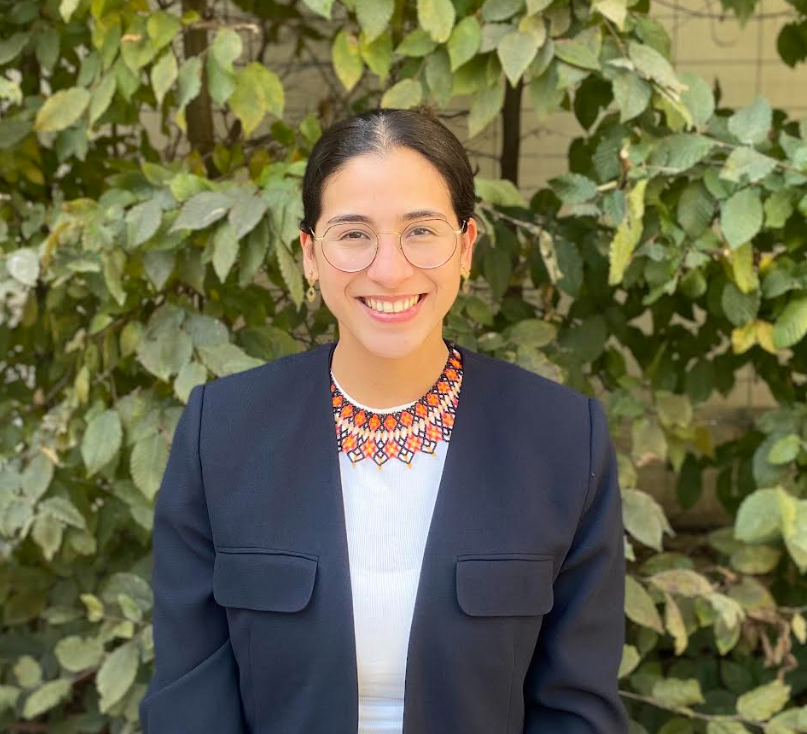
To further explore the local realities of Colombia’s peace process, I spoke with Sofía Cabarcas Maciá, a Colombian lawyer and anthropologist with a master’s in law, anthropology, and society, who worked in several transitional institutions throughout the peace-building process.
___
What roles did you play in the peace agreement?
After the peace agreement was signed in 2016, I worked in the Ministry of Justice, where I was in charge of the gender approach in the Criminal and Penitentiary Policy Direction. At the Ministry, I designed guidelines to prevent sexual violence against women and girls.
From 2017 to 2018, I worked at the President's Office of the High Peace Commissioner in the implementation and follow-up of the Final Peace Agreement. I served as an advisor for the Joint Follow Up Committee with FARC and Government members (CSIVI for its initials in Spanish) and as the leader of the Gender Group in the Office. Specifically, I accompanied the Special Women's Instance for the follow-up of gender measures in the Agreement, designed and conducted public servants’ training in peace-building and the gender approach.
Afterwards, I served as an advisor for nonrepetition at Colombia’s first Truth Commission from 2018 to 2022, a product of the final peace agreement.
To what extent do you view the WPS agenda as a catalyst for women’s inclusion in the peace process? Did local activists adopt the WPS agenda, or was it a label applied to their efforts?
The peace agreement … happened parallel to a moment of recognition and inclusion of women’s and LGBTQ+ rights in Colombia. When formal peace talks between the government and the armed group, FARC, began, women were hardly included. In 2013, women’s organizations hosted a National Summit of Women for Peace that resulted in formal recommendations on land reform and political participation being submitted to negotiators in Havana. The final peace agreement in 2016 addressed gender on almost every page as a result of social mobilization.
Peace-building is not just a formal process happening at the government level, but a collective process that encompasses the work of all levels: the local, the government, the international. The Women, Peace and Security agenda was central to the movement and adopted a more formal role because it represented all of the values the local movements were fighting for. It built on the work done by the women trying to get involved in the peace negotiations. It seemed natural to adopt the agenda.
However, it by itself was not enough. There is still a need for resources, which is why the adoption of a National Action Plan — a country-specific framework outlining how the WPS mandate will be adopted domestically — is so important. In all, the Women, Peace and Security agenda was treated more as a formality, but it was still very important. We were already doing the work of Women, Peace and Security, and we were able to begin working under its mission.
In the absence of a National Action Plan, many Colombian women’s organizations developed “Local Action Plans” that introduced gender perspectives on the ground. Should the WPS agenda as a whole focus on adopting similar initiatives that are community-led, instead of internationally imposed?
Of course. I see it as a matter of peace-building. Peace is only possible when it is pursued from all levels — international, state, and local. Sometimes there are disconnects between those levels, but the goal is achieved more efficiently if there is interaction between all.
Colombia is a very diverse country with different ethnicities trying to meet at a common point. It was not easy, especially when different groups held different ideas on equality and gender. Peace needs to be built by working to connect diverse groups. One way of doing that is using an ethnic approach to peace-building that focuses on transforming relationships. The Women, Peace and Security agenda served as a cohesive point to bridge these divisions. It was a huge opportunity. It helped bring on-the-ground movements together for better connection between all levels.
However, the women driving this work are now burnt out. They are running out of resources, and they do not have the political backing [they need to continue their work]. Without resources, to make up for the weak political backing, the movement is losing motivation.
I think it is important to push forward, but we need to take the lessons already learned into account and not do double the work. The question should not be: “How can we achieve peace and participation?” We already know how to do that. Same with National Action Plans. They are not novel. When Colombia gets one, it will simply be the sum of the work already done. Peace-building needs resources and motivation just as much as it does support on all levels.
Do you think that WPS should focus more on participation than protection in peace processes? Would it be more effective to place less emphasis on victimhood and more on empowerment?
Yes, the advancement of women’s participation helped bring inclusion in the peace agreement, but it never felt at the expense of protection. The movement always included all groups: those pushing for participation and those impacted by conflict. We hosted workshops with women impacted by the conflict that focused on finding new ways to connect.
It is essential to have acknowledgment of victimhood. There needs to be a balance of both participation and protection within the movement. Participation can come in the form of women accessing transitional justice mechanisms as victims. This is the key to understanding continuity of efforts independent of government efforts.
___
Colombia’s peace process suggests that women’s empowerment and inclusion is effective when it emerges from sustained local engagement, an insight that the WPS agenda can learn from. While WPS implementation must be determined on a case-by-case basis, several lessons from the Colombia example stand out.
First, Colombian activists demonstrated that global frameworks can be normalized when translated into local practice. Through grassroots initiatives, women’s organizations adapted WPS principles to address the realities of their own communities, allowing them to pursue participation in the peace agreement. Moreover, Sofía noted it is possible to turn objectives of the peace agreement into norms if there is will to translate it into material action. Indicators can both direct resources and monitor implementation. If the WPS agenda prioritizes bottom-up initiatives that mimic norm localization and implements indicators, it might narrow the divide between commitments and their implementation.
Second, the WPS community must move beyond debates that fragment political momentum. Discussions that frame participation and protection — or gender violence and conflict-related sexual violence — as competing priorities risk dividing attention, resources, and political will. Colombia’s experience suggests that these issues are deeply interconnected and most effective when pursued together, rather than treated as mutually exclusive agendas. If the WPS agenda hopes to overcome stagnation, it must spend less time revisiting divisive questions and more time investing in local actors who are already building peace.
Finally, Colombia’s experience reminds us that gender inclusion in peace processes is rarely immediate. In a society where anti–gender equality narratives were deeply entrenched, it took years of activism and multiple failed attempts for women to gain meaningful influence over peace negotiations. Transitional justice processes, like Colombia’s, may face criticism for slow implementation, but such critiques often overlook the reality that durable peace takes time. The continued persistence of women’s organizations and activists in Colombia demonstrates that progress does not depend solely on government action. Rather, it is sustained by the intersection of participation, protection, prevention, and relief and recovery on the local level.
Ultimately, the lessons from the Colombian peace process show that gender-sensitive peacebuilding is neither immediate nor linear: It is a long-term process sustained by local actors, persistent participation, and the willingness to translate commitments on the ground.
More articles by Category: Feminism
More articles by Tag: Peace


