
















Priscila Gama, a 34-year-old Brazilian architect and entrepreneur from wanted to do something to help women in the face of pervasive violence. In 2016, she and a team launched the Malalai app, which enables women to let pre-authorized friends follow their routes when moving around the city by any means, whether by foot, car, or public transportation.

Gender inequality and sexism are still embedded in the Middle Eastern workplace, even in progressive workplaces like International NGOs and even if they try invoke equitable policies.

On September 3, Brazil's National Museum caught on fire — an enormous tragedy that should serve as a reminder of how important it is for our country to maintain and value institutions that question the social inequalities in our country.

Like Trump, the current front-runner in the Brazilian presidential election, Jair Bolsonaro, is white, far-right wing candidate who symbolizes a great threat to women and democracy in the country.

From Brazil to México, from Chile to Venezuela, from Peru to Costa Rica, from Bolivia to Ecuador, the green wave protesters’ call for legal, safe, and free abortion has intensified. The right to choose is influencing and energizing the activists in these countries, and these countries’ political institutions are paying more attention to their activism.

In Nigeria, adulterous men are commonly excused and the blame for their actions is placed squarely on women.
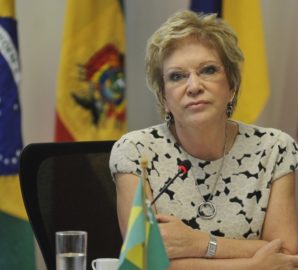
Suplicy, who is now 73, served in Brazilian politics for years. But even before her political career, Suplicy brought discussions of important issues straight to Brazilian homes through a television show called TV Mulher, during which Suplicy gave sex advice to female viewers in a political era of dictatorship.

Over 42 women had been kidnapped or killed in Uganda since May 2017. Ugandan politicians didn’t seem to take these deaths seriously. A feminist group called the Women’s Protest Working Group transformed Ugandan feminists' Twitter conversations into a march.

Girls marrying before the age of 18 are more likely not to finish their education, putting them at the risk of financial dependency.

Religion is the thread that runs through the heart of India, but these questions have hardly been explored in public. Indian women’s ideas about religion have particularly been ignored by these institutions. So I decided to ask them about it.

Yemeni singer, songwriter, and multi-instrumentalist Methal began her music career during the Arab Spring in 2011; that political escalation inspired her to more creatively address issues of religion and social justice. She most recently collaborated with the American rock band X Ambassadors and recorded the song “Cycles,” which depicts her relationship with her home country.

There are currently no policies in Zimbabwe that protect girls who become pregnant while in school. Pregnant students are frequently forced out of their schools due to rules and regulations within the education system that discriminate against them.

While there are no laws that blatantly incriminate homosexuality, same-sex marriage is not legally recognized in Kenya, a country that is also generally quite socially hostile to members of the LGBTQ+ community.

The feminization of poverty is the phenomenon in which women experience poverty at rates that are disproportionately high in comparison to men. According to UN Women, as of 2015, a majority of the 1.5 billion people who live on $1 a day or less are women. Of all the people in the world living in poverty, 70 percent are women.

For the past few years, Yemen has been experiencing a catastrophic humanitarian crisis. The country has been wrought with a number of problems, and young Yemenis, especially young women, have been particularly affected by this conflict. Despite this troubling situation, however, a portion of Yemeni youth still dream of a better future. Among those who remain hopeful and productive are artists — a large number of whom are women.

Marielle Franco’s murder was not an ordinary crime but one with a triple meaning: It was an act of femicide, black genocide, and an act of silencing the downtrodden.

An average of more than 2500 people were murdered per year between 2008 and 2011 in Juarez, and female residents of the city have particularly been the targets of femicide, or killing women because of their gender. Yet experts estimate that only one out of every four cases of murdered women in Juarez are even investigated by authorities, and criminal charges were only filed in 2 percent of those cases.

In early May, a 19-year-old girl named Noura Hussein was sentenced to death by a court in Sudan. The verdict came after Hussein killed her husband, whom she was forced to marry at 15 and who allegedly raped her.

How can we translate Asian women’s leadership in their respective countries to the international stage?

On April 26, 2018, the provincial court of Navarra, Spain, ruled that five men had not raped a Spanish woman, but sexually abused her. Under Spanish law, sexual abuse is a crime that does not use intimidation or violence, and therefore warrants a lesser sentence than does rape.
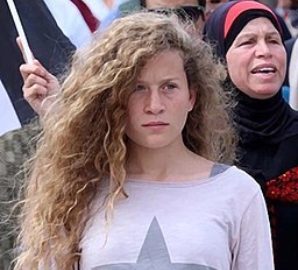
Ahed Tamimi is more than an emblem of Palestinian unity or a symbol of the resistance. She is an inspiring figure for all young feminists to look up to.

Mama Tingó, a Black woman revolutionary who fought for working-class farmers, is seldom heard about or celebrated yet was crucial to Dominican history.

Kunumí MC is a teenage rapper calling attention to the struggles Indigenous people face in Brazil.

17-year-old Najem, who resides in a suburban area in southwestern Syria that surrounds the city of Damascus, has been documenting the Syrian Civil War through his Twitter account since December 7, 2017. The teen posts photos, videos, and messages that capture what it’s like to be one of the many children and teenagers forced to fight to survive in the middle of the war.

I have found myself critically examining elements of my own privilege as an American from a metropolitan area that I had previously taken for granted.