















Argentina Just Legalized Abortion, But Other Latin American Countries Are Making Progress Too
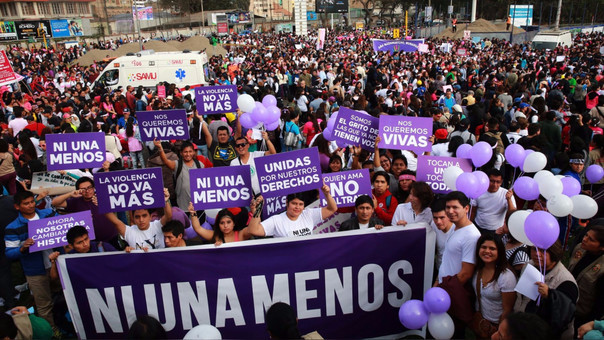
2020 ended with good news for Argentinian women: On December 30, Argentina’s Senate approved legislation that not only legalized abortion until the 14th week of pregnancy, but also made the procedure free of charge. Previously, abortion in Argentina — a country strongly influenced by the Catholic Church and in which the current pope was born — was only allowed in case of rape or if a person’s life was in danger.
In 2018, a bill similar to the one just approved was rejected in the Senate. The following year, then-presidential candidate Alberto Fernández promised to present a bill decriminalizing abortion in Argentina if elected, and planned to follow through on that promise after his election, but the pandemic changed those plans. All efforts went to fighting the pandemic and non-COVID related bills had to be put on hold.
This eventual approval wouldn’t have been possible without the mobilization of millions of women identified by a common symbol: a green handkerchief. The handkerchief is a reference to the white handkerchiefs women used during the Argentinian military dictatorship to protest the disappearance of their loved ones and which, in 2015, were revived as a symbol of the “Ni Una Menos” (not one less) campaign on social media to protest femicide. In the years since, the movement has spread beyond the internet to the streets, and has come to advocate for abortion rights as well.
Conservatives celebrated the virus slowing down Fernández’s bill. One politician even drew a connection between the two events, tweeting that liberals “wanted to legalize death and death came to visit them.” At marches protesting the coronavirus lockdown that occurred in May in the Plaza de Mayo — a square in Buenos Aires at which famous protests against the Argentinian military dictatorship between 1976 and 1983 were held — a photo of one participant wearing a T-shirt with the words “Yes to life. No to vaccines” went viral.
Argentina’s ability to pass this legislation isn’t impressive just in the context of a pandemic, but also in the context of abortion laws in the region. In fact, Argentina is only the third South American country to legalize abortion; abortion is allowed in all circumstances in Uruguay and Guyana. In six Latin American countries, abortion is completely forbidden, including in Nicaragua, which completely prohibited abortion in 2007.
There has been recent movement in South American countries to reinforce abortion restrictions as well. In Brazil, after a 10-year-old victim of rape was nearly denied a legal abortion, the government published an ordinance to make access to abortion after rape more difficult in August. Then, in October, Brazil, the United States, and 30 other countries signed the Geneva Consensus, a document vowing to protect the traditional family and ban abortion, and a new ordinance “promoting the right to life from conception until natural death, observing the rights of the unborn,” is listed as a governmental priority for the next 10 years
While abortion is allowed in Mexico City and in the province of Oaxaca up until 12 weeks of pregnancy, the other 30 states have are different, but restrictive, abortion laws. This past July, the Mexican Supreme court voted against a proposition that could have led to the decriminalization of the procedure all over the country. This year, Mexican religious leaders and politicians blamed the pandemic on “sins” like abortion and gay marriage and made efforts to pass more restrictive antiabortion laws.
In Chile, abortion was totally forbidden until 2017, when it became legal in three circumstances: when the pregnancy is the result of rape, when the fetus is not viable, or when the pregnant person’s life is in danger. Some abortion advocates have hope for change with the prospect of rewriting the country’s constitution; in October, 78% of the population voted to rewrite the constitution, as the current one was written during Pinochet’s dictatorship. The new constitution will be written by a gender-balanced assembly, so there is hope that this makeup will increase the likelihood of language that guarantees abortion rights.
In early March, a top court in Colombia refused to rule on a case that could have prohibited abortion. Just weeks later, the pandemic caused additional obstacles for Colombians trying to obtain legal abortions and in response, in September a group of organizations and activists filled a lawsuit to eliminate the crime of abortion from the penal code. The Colombian Constitutional Court will analyze the case in the future.
Even in Uruguay, where abortion has been legal since 2012, president Lacalle Pou called for changes to abortion laws in early May, stating that “Uruguay must have strong protection for unborn children, that there must be a policy to discourage abortions, that Uruguay in its constitution and accordance with the ratified covenants understands that there is life from conception and, in that sense, an unborn child has rights.” The pandemic certainly slowed down progress in Argentina and brought other challenges for abortion rights in Latin America. However, the Argentinian case shows the power of grassroots movements that, hopefully, will take over Latin America in a green wave.
More articles by Category: Feminism
More articles by Tag: Abortion, Reproductive rights, South America


