















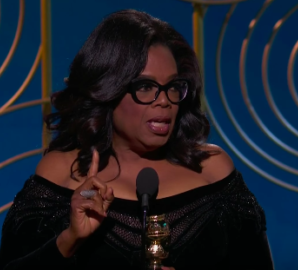
Winfrey, who is the first black woman to receive the Cecil B. DeMille award for lifetime achievement, used this platform to highlight important issues related to both the #MeToo movement and her own experiences as a black woman.

The ACLU, along with three other legal advocacy groups, filed a federal class action lawsuit late Sunday night against Dallas County, Texas, alleging that poor people charged with misdemeanors and felonies are being detained indefinitely while those who can afford bail are walking free.

Just as my initial coping mechanism post-assault was to demonize my perpetrator and eschew nuance in the name of healing, I worry that perhaps that has been our wider cultural approach.
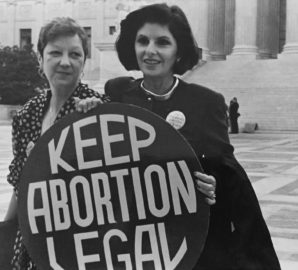
On January 22, 1973, the Supreme Court handed down its decision in the Roe v. Wade case. That decision, made 45 years ago, gave women the legal right to have an abortion.

The Women's March marks its one year anniversary with huge turnouts at marches all over the U.S., and launches a campaign to mobilize candidates and voters.
Robin on the Women's March anniversary, WeAreMarchOn.org, sea turtles—& a government shutdown? Guests: Young Jean Lee, Broadway's first Asian American woman playwright; Yoruba Richen on her film about anti-abortion crusades on black communities.

Thousands of people are feeling the immediate impact of the decision to force thousands of immigrants to leave the U.S.

Today, the Trump administration established yet more barriers for women, LGBTQ people, and others to access the urgent care they need by providing additional protections to health care workers who refuse to provide treatment because of their moral or religious beliefs.


In a year when an unprecedented number of female producers brought stories about women to the big screen, Academy Award nominations could include more women than ever — but still, few women of color are likely to be up for awards.
Men have only been surprised by #MeToo because they haven't been forced to confront the ways in which women’s lives are so frequently tinged with the feeling that they must defend themselves against men’s tendencies to sexualize them.

Winfrey recently made headlines for her incredible acceptance speech at the Golden Globes. In fact, many seemed to think the speech set the stage for the media mogul’s future presidential run.
2018 Premiere! Robin on the state of the world—and of Trump's mind, Orwellian speech, ongoing MeToo fallout, the rising electoral blue wave, and predictions for the future. Guest: Leah Greenberg, cofounder of Indivisible. Expanded Surrealism Corner.

On December 12, Merriam-Webster declared that the word of 2017 was “feminism.” Their choice highlights not only our culture’s struggle to define the word “feminism” itself, but the way in which the movement the word represents played out in the spheres of politics and entertainment last year.

Each year, hundreds of people—most of them women—have been killed for being suspected witches. Rights activists say raising awareness and investing in development can help stop communities from turning on their elders.

The U.S. federal minimum wage is just $7.25 per hour, and most states' under $9. Minimum-wage workers — more than two-thirds of whom are women — have made some gains, and this year their fight continues.

Those accused of misconduct, assault, and harassment have ranged from small actors to big-shot producers, but almost all were male. Almost, but not all: female singer Timothy Heller recently accused alternative pop singer Melanie Martinez of assaulting her.
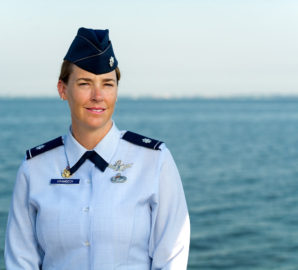
Close to 50 military veterans, service members, and their supporters gathered outside of the Pentagon for a #MeTooMilitary demonstration today. The protest came just hours after Sunday night’s Golden Globes ceremony.

The one thing that characterized my childhood in the Bronx has been fire. Growing up there, it was clear that the borough hadn’t been, wasn’t, and perhaps never will be a priority for New York City officials.

Since her release earlier this year, Manning has been speaking about issues like gender identity and surveillance in the press and at colleges and universities. On November 15, I had the chance to see her speak at Wesleyan University.

While American women reach new milestones, including holding a record number of seats in the Senate, their representation in national legislative office still lags behind a hundred other countries, including falling two places below Saudi Arabia, which is notorious for its terrible treatment of women.

The first year of the Trump administration has been marked by attacks, direct and indirect, on the rights of people with disabilities, including the latest — a bill to weaken the Americans with Disabilities Act.

Despite the way they treated me, none of the individuals I served could take away the power I still had — power I earned — at work.
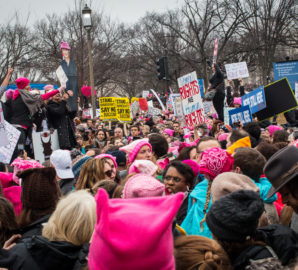
Now that we’ve made it through 2017, it’s important to remember how much the feminist movement accomplished this past year even in the face of political adversity.

Choosing journalism as a profession in Syria in the late 1990s was almost as unusual for a young girl as choosing to become a professional soccer player. “There were a lot of women studying media, but we already knew that we [would] not work as journalists,” said Rula Asad.
- All Categories
- Arts and culture
- Body image and body standards
- Disability
- Economy
- Education
- Environment
- Feminism
- Free Speech
- Gender-based violence
- Girls
- Gloria Steinem
- Health
- Immigration
- International
- Jane Fonda
- LGBTQIA
- Media
- Misogyny
- Online harassment
- Politics
- Race/Ethnicity
- Religion
- Robin Morgan
- Science and tech
- Sports
- Violence against women
- WMC Loreen Arbus Journalism Program