















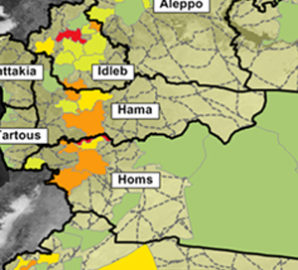
A woman swathed in black squares her shoulders and calmly looks into a camera. She holds a Quran. Only a sliver of her face—her eyeglasses—shows. “What happened to me hasn’t happened to anyone, or if it has affected anyone else I do not know,” she says. “But I will speak and let all the people know what [Syrian leader] Bashar al-Assad and his men are doing.” Over the next four minutes, her breathing grows labored and her voice breaks as she describes how, in May 2011, five men wearing black entered her home on the outskirts of Homs and raped her.


In many regards, Safiya Ishaq is an unremarkable 25-year-old. She is excellent at braiding hair but terrible at being on time. She studied fine arts at Khartoum University in Sudan. Not unusually for a student, Ishaq became involved with politics.

After Sen. Joseph Lieberman published this Washington Post op-ed advocating for the U.S. to step up its efforts to topple the Syrian regime last month, Jackie Blachman-Forshay and I wrote a response.


