















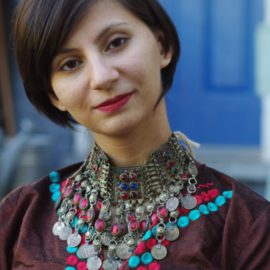
Noorjahan Akbar is an outspoken women right's advocate and author from Afghanistan. She has worked with several Afghan and global organizations focusing on women’s empowerment and ending gender-based violence and led nation-wide campaigns and protests in defense of human rights. She runs Free Women Writers, a collective of activists and writers in Afghanistan and the diaspora advocating for gender equality and social justice, and is the Communications Manager for the Young Center for Immigrant Children’s Rights. Media includes: Al Jazeera, The New York Times, CNN, ABC, NPR.

At 40 days old, against the backdrop of the Soviet invasion, Ilaha Eli Omar & her family fled Kabul towards an unknown future. Today, as an experienced Afghan-American female entrepreneur and founder of a successful technical staffing company, Eli champions women's rights and supports various women's causes with specific focus on creating sustainable solutions. Omar obtained her Global MBA from Thunderbird School of Global Management where she continues to mentor Afghan women (via Project Artemis) to help them build, manage and expand their businesses in Afghanistan. Media includes: Financial Times, Los Angeles Times, Yahoo News.

May Jeong reported from Afghanistan from January 2013 to 2018. Through 2015 and 2016, she conducted two major investigations, one on the bombing of the MSF hospital in Kunduz, and another on a drone strike that killed an entire family in Kunar. Since 2013, she has covered various aspects of America’s ongoing war in the country – the results of drone strikes, airstrikes, suicide attacks, as well as failures in border policy, empathy and development theory. She hopes to write the definitive take on the war in Afghanistan through the experience of Helmand province, where the civil war between the US-backed Afghan government forces and the Taliban insurgents has been the deadliest. Media includes: The New York Times, Intercept, Guardian, London Review of Books, Harper’s, New York Times Magazine.
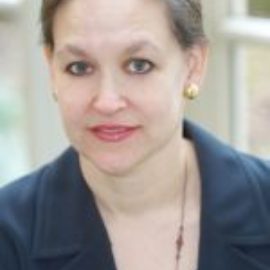
Carla Koppell has a long and distinguished international affairs career. She is currently a distinguished fellow and Senior Advisor for Diversity, Equity and Inclusion at Georgetown Institute for Women, Peace and Security. Prior to arriving at Georgetown, Koppell was a U.S. Institute for Peace vice president, leading the Center for Applied Conflict Tranformation. During the Obama Administration, Koppell was USAID Chief Strategy Officer and Senior Coordinator for Gender Equality and Women's Empowerment. She has worked extensively with leaders from volatile conflict zones, including Afghanistan. Media includes: Voice of America, Christian Science Monitor, Washington Times, CNN, ABC, NPR.
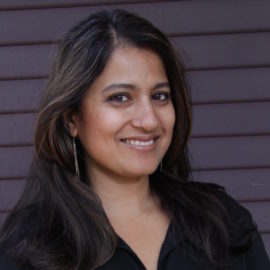
Sonali Kolhatkar is the author of Bleeding Afghanistan: Washington, Warlords, and the Propaganda of Silence and has also contributed to anthologies including “September 11, 2001: Feminist Perspectives,” and “Stop the Next War Now! Effective Responses to Violence & Terrorism.” Currently, Kolhatkar is the founder, host and executive producer of "Rising Up With Sonali," a political news show that airs on Free Speech TV. Extensive media experience.

Lina AbiRafeh is Executive Director of the Arab Institute for Women at the Lebanese American University, established in 1973 as the first women’s institute in the Arab region – and one of the first globally. The Institute advances women’s rights and gender equality at the intersection of academia and activism. She is an accomplished feminist leader with over 20 years’ international experience in women’s rights and gender equality – particularly focused on ending violence against women in humanitarian emergencies. Abirafeh has worked in senior positions in complex crises such as Afghanistan, Mali, Central African Republic, Haiti, Papua New Guinea, etc. Media includes: Al Jazeera, France 24, The Conversation, CNN.
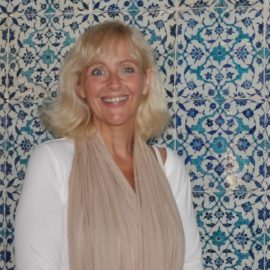
Elizabeth Hessami is a Faculty Lecturer of International Environmental Law and Policy for The Johns Hopkins University Advanced Academic Programs and an Adjunct Professor of Environmental Governance for Linfield College. Hessami is a noted expert on environmental issues and armed conflict in Afghanistan and has published widely on the topic. She was a founding member of the Environmental Peacebuilding Association for which she is currently producing content such as webinars on hydro-diplomacy and hydro-governance, and the emerald trade in Afghanistan. Media includes: The Conversation, Foreign Policy.

Frances Z. Brown is a senior fellow and co-director of Carnegie’s Democracy, Conflict, and Governance Program, who previously worked at the White House, USAID, and in non-governmental organizations. She writes on conflict, governance, and U.S. foreign policy. In her last role before leaving government, Brown served as director for democracy and fragile states on the White House National Security Council (NSC) staff, where she helped manage policy processes on democracy support, key political transitions, and post-conflict stabilization efforts. Serving under both the Obama and Trump administrations, she also convened a fragile states interagency committee, aimed at elevating comparative insights on conflict into policy deliberations. She has published field research projects on Afghanistan stabilization and subnational governance with the U.S. Institute of Peace. Other experience includes a year at the Kabul-based Afghanistan Research and Evaluation Unit. Media includes: The American Interest, Foreign Policy, The Washington Post, The Los Angeles Times, The Christian Science Monitor.
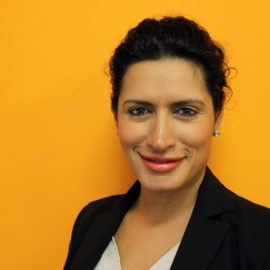
Shukria Dellawar is Friends Committee on National Legislation’s (FCNL) Legislative Associate for the Prevention of Violent Conflict and the Coordinator of the Prevention and Protection Working Group. She has served as a peace and security expert, human rights advocate, and a gender specialist. Over the course of the last decade, she has worked in various capacities to maintain focus on peace-building efforts in Afghanistan. Dellawar is a Senior Fellow with the Center for International Policy (CIP). She served as the Director of the Afghanistan Study group with CIP in 2012, working closely with policy-makers in Washington DC to address insecurity, corruption, and human rights violations. Media includes: The Guardian, USA Today, U.S. News & World Report, Voice of America.

Lisa Schirch is a Senior Fellow with the Alliance for Peacebuilding and Visiting Scholar at George Mason University’s School for Conflict Analysis and Resolution. She holds a PhD in Conflict Analysis and Resolution from George Mason University. She taught in the graduate program on peacebuilding at Eastern Mennonite University for 23 years. Schirch is also Senior Research Fellow for the Toda Peace Institute where she directs the Institute’s “Social Media, Technology and Peacebuilding” program to commission policy briefs and case studies on the impact of social media on conflict dynamics. A former Fulbright Fellow in East and West Africa, Schirch has worked in over 20 countries in conflict prevention and peacebuilding, most recently in Afghanistan, Pakistan, Iraq, Fiji, and Lebanon. Schirch’s current research interests include the design and structure of a comprehensive peace process in Afghanistan, conflict assessment and program design, civil-military relations, and the role of the media in peacebuilding. Media includes: Huffington Post, Washington Post, CNN, NPR, Fox News.

Lina Rozbih is an acclaimed and award-winning Afghan writer and poet in the Dari language. Her works include Dari and English short stories, poetry, as well as social and political commentaries. The recipient of several poetry awards and journalism awards, Rozbih’s literary contributions have been recognized and featured in books about contemporary Afghan poets and female writers. Rozbih is a frequent speaker and panelist on Afghanistan issues and has been interviewed by Afghan and international media including the BBC, Voice of Amera, Radio Free Europe, Afghan German Online, Washington Prism, and others.

Sarah (Holewinski) Yager is the Washington Director at Human Rights Watch, and leads the organization’s engagement with the United States government on global human rights issues, with a particular focus on national security and foreign policy. For nearly a decade Yager was executive director of Center for Civilians in Conflict (CIVIC), leading efforts to advise warring parties on civilian protection and responsible use of force. In that role, she worked extensively with the U.S. military and its allies in Afghanistan, Iraq, Somalia, CAR, Burma, and elsewhere. Media includes: The New York Times, The Washington Post, BBC, CNN, PBS, NPR.

Trudy Rubin is the foreign affairs columnist for The Philadelphia Inquirer and travels abroad frequently to South Asia and the Middle East. She has special expertise on Afghanistan, Pakistan, Iran, Iraq, the Israeli-Palestinian issue, international terrorism, and U.S. foreign policy. Media includes: Christian Science Monitor, Philadelphia Inquirer, The Economist of London, Moscow News.

Marla B. Keenan is an Adjunct Senior Fellow at the Stimson Center. Her areas of expertise focus on issues relating to international security, including human rights in armed conflict, protection of civilians, civilian harm tracking and analysis, and civil-military relations in armed conflict. Marla was senior director of policy and advocacy and previously senior director of programs at Center for Civilians in Conflict (CIVIC), a Washington, DC-based NGO working on armed conflict and the protection of civilians. She has worked on conflict and crisis in Afghanistan, Iraq, Pakistan, Somalia, Syria, Ethiopia, Lebanon, Mali, Israel, Jordan, Nepal, South Sudan, the Democratic Republic of the Congo, Ukraine, Yemen, and the Central African Republic. Media includes: Rolling Stone, Reuters, Buzzfeed, The Christian Science Monitor.
 Dr. Jeanine N Gordon, DNP, RN, OCN, NE-BC
 Sharon Louden
 Dr. Anita Manion
 Dr. Maura Mills, Ph.D.
 Dr. Sarah Elizabeth Bruhn